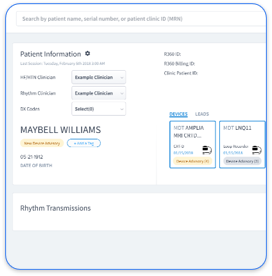
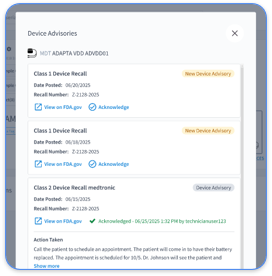
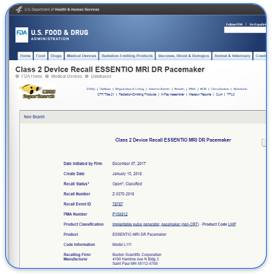
The login challenges described above reflect a deeper structural problem created by multiple OEM portals. A clinic that implants devices from Medtronic, Boston Scientific, Abbott, and Biotronik must maintain active credentials across at least four separate, non-interoperable portals. Each portal has its own login cadence, password policy, data format, and alert threshold configuration. Staff must constantly switch between systems to compile a complete picture of a single patient's status, and that burden multiplies across a panel of hundreds of monitored patients.
Traditional on-premise healthcare IT systems suffer from fragmented data silos, limited interoperability, and barriers to advanced analytics, as the volume and diversity of data from EHRs, medical imaging, and IoT sensors strain legacy storage and computational infrastructure. In a cardiology practice, this fragmentation produces alert fatigue: an overwhelming volume of non-actionable notifications from multiple systems that desensitizes staff and increases the chance of missing a clinically significant event, such as new-onset atrial fibrillation or a lead integrity alert.
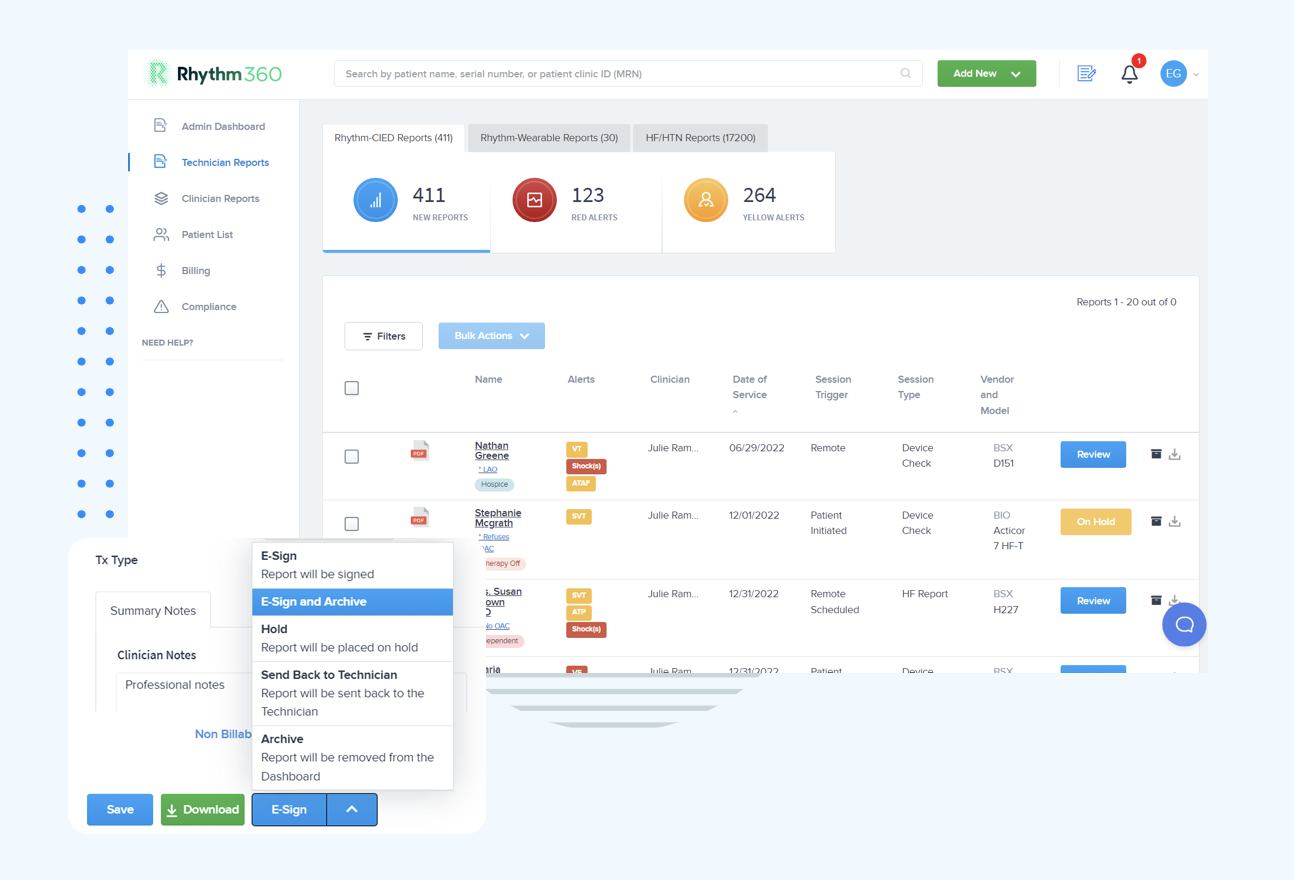
Vendor-neutral, cloud-based remote monitoring platforms solve the structural problem that OEM-specific portals cannot. They ingest data from all major device manufacturers into a single normalized dashboard. These platforms automate report generation, support CPT code documentation for codes such as 93298, 99454, and 99457, and integrate bidirectionally with EHR systems including Epic and Cerner. Cloud-based deployment has become a leading choice for the AI in cardiology market because it supports centralized data access, faster software updates, and remote reading and collaboration across multiple hospitals and outpatient centers.
Legacy on-premise systems were architected before multi-OEM device populations became standard. They store data locally, require manual export and import steps for interoperability, and cannot scale to handle the continuous physiological data streams generated by modern CIEDs and wearable sensors. Cloud computing addresses key limitations of on-premise systems, including lack of scalability, high administrative costs, and inefficient resource utilization, and can provide cost savings through pay-as-you-go models and reduced capital expenditures on traditional IT infrastructure. When AI outputs live in a separate portal, they add clicks, interrupt routine workflows, and increase the IT workload of building, testing, and maintaining integrations, which slows deployments and makes it harder to scale AI beyond a pilot site, especially for hospitals running mixed-vendor systems and legacy infrastructure.
An effective unified cardiac monitoring platform first needs to ingest data via API, HL7, XML, and unstructured PDF parsing through computer vision to normalize disparate OEM formats. Because data ingestion has limited value if transmissions are lost, transmissibility should exceed 99.9%, supported by redundant data feeds that stay active if an OEM server experiences downtime. Once data arrives reliably, AI-powered alert triage can filter non-actionable notifications and surface clinically significant events in near real time. Finally, bidirectional integration with Epic, Cerner, Athenahealth, and other major EHRs turns this curated data into a single longitudinal patient record and removes the need for manual transcription.
Practices that consolidate OEM data into a single platform dramatically reduce the time required to respond to critical alerts by removing the manual steps needed to locate, retrieve, and reconcile data across multiple portals. Automated CPT code capture and documentation close the revenue gap created by missed or incorrectly coded billable events, redirecting previously lost revenue back to the practice. Staff hours that once went to redundant logins and manual data entry instead support direct patient care and higher-value administrative work.
AI-driven alert triage lowers the volume of non-actionable notifications that contribute to clinician burnout and desensitization. A prioritized alert for new-onset AFib on a weekend can reach the on-call clinician through a HIPAA-compliant mobile application, which supports same-day anticoagulation initiation and may prevent a stroke. Cloud platforms support real-time processing and predictive analytics for remote monitoring applications, giving electrophysiologists and device technicians actionable data wherever they are instead of tying them to a desktop workstation.
Remote monitoring reimbursement depends on complete, time-stamped documentation that satisfies payer audit requirements. Automated platforms generate reports tied directly to CPT codes 93298 (pacemaker remote monitoring), 93299 (ICD remote monitoring), 99454 (remote physiological monitoring device supply), and 99457 (RPM treatment management), among others. A full audit trail of every transmission, alert, clinician response, and patient communication stays within the platform record, which reduces compliance risk and supports clean claims submission.
Bidirectional HL7 integration allows patient demographics, device data, and signed reports to move between the monitoring platform and the EHR without manual re-entry. Rhythm360 integrates with Epic, Cerner, Athenahealth, eClinicalWorks, Greenway Health, and other major systems. Implementation, including EHR integration configuration, typically finishes within a few days to a few weeks, which limits disruption to ongoing clinic operations.
| Capability | PaceArt (Legacy On-Premise) | Rhythm360 (Cloud + AI) |
|---|---|---|
| Deployment model | On-premise, with limited scalability and high administrative costs | Cloud-based, with pay-as-you-go pricing and cost savings vs. on-premise |
| OEM coverage | PaceArt stores remote monitoring data from all top cardiac device manufacturers (PaceMate acquisition) | Vendor-neutral view of Medtronic, Boston Scientific, Abbott, Biotronik, and others in one dashboard |
| AI-powered alert triage | Not available, and separate AI portals add clicks and interrupt routine workflows | Built-in AI triage that delivers significantly faster critical-alert response |
| Mobile access | No native support, desktop workstation required | HIPAA-compliant mobile app for review, signing, and care coordination |
| EHR integration | Manual export and import, and custom integrations create substantial operational and maintenance burden | Bidirectional HL7 with Epic, Cerner, Athenahealth, and other major EHRs |
| CPT billing automation | Manual documentation required | Automated CPT capture that supports substantial revenue recovery |
The PaceArt login portal represents one access point in a broader ecosystem of fragmented, non-interoperable OEM systems that create a compounding administrative and clinical burden for cardiology practices. Separate credentials, incompatible data formats, no mobile access, and manual billing workflows reflect structural limits of the legacy on-premise model that no troubleshooting guide can fully resolve. A vendor-neutral, cloud-based platform that consolidates all CIED and RPM data, automates triage and documentation, and integrates bidirectionally with existing EHR systems offers a more sustainable path forward. Rhythm360 is built for this purpose and delivers faster response times, recovered revenue, and a lighter administrative load for your team.
| Portal | Login URL | Notes |
|---|---|---|
| PaceArt / PaceMate | Contact PaceMate for access | Managed by PaceMate, supports multiple cardiac device manufacturers |
| PaceMate | https://app.pacemate.com | PaceMate's primary cloud platform login |
| Medtronic CareLink | https://carelink.medtronic.com | Medtronic remote monitoring portal for clinicians |
| Boston Scientific Latitude | https://www.latitudeprivacy.com | Boston Scientific device remote monitoring |
| Abbott Merlin.net | https://merlin.net | Abbott/St. Jude Medical device portal |
| Biotronik Home Monitoring | https://homemonitoring.biotronik.com | Biotronik remote monitoring service portal |
What is the PaceArt login portal and who manages it now?
PaceArt started as an on-premise database from Medtronic for organizing cardiac implantable electronic device data within electrophysiology clinics. Medtronic later divested PaceArt to PaceMate, a cloud-based cardiac monitoring company. PaceMate now manages the login portal. Clinics that used PaceArt under Medtronic's ownership may need to re-register or migrate credentials through PaceMate's onboarding process. Historical PaceArt data is not vendor-locked and can move into newer cloud-based workflow platforms.
Is my clinic's PaceArt data secure if we migrate to a new platform?
Data security during migration depends on the receiving platform's compliance posture and the migration methodology. Any platform handling cardiac device data must be HIPAA-compliant and should provide a Business Associate Agreement. Rhythm360 is a HIPAA-compliant, cloud-based platform that uses encrypted data transmission and storage. During migration, data travels through secure, audited pipelines. Clinics should request documentation of encryption standards, access controls, and audit trail capabilities from any prospective vendor before starting a data transfer.
How long does it take to implement a unified platform and replace multiple OEM logins?
Implementation timelines vary by clinic size, the number of OEM data feeds being consolidated, and the complexity of EHR integration. For most cardiology practices, Rhythm360's onboarding process, including EHR integration with systems such as Epic or Cerner, finishes within a few days to a few weeks. The process runs in parallel with existing workflows so that active patient monitoring continues during the transition. Staff training is included in the onboarding plan.
Which CPT codes does a unified remote monitoring platform support?
A comprehensive cardiac remote monitoring platform should support the full range of billable CPT codes for CIED monitoring and remote physiological monitoring. For CIED monitoring, these include 93298 (pacemaker remote monitoring, 90-day period) and 93299 (ICD remote monitoring, 90-day period). For remote physiological monitoring of chronic conditions such as heart failure and hypertension, relevant codes include 99453 (initial setup and patient education), 99454 (device supply with daily recordings), and 99457 and 99458 (treatment management services). Rhythm360 automates the documentation and tracking needed to support clean claims submission for all of these codes, which reduces the manual burden on billing staff and minimizes claim rejections.
Can clinicians access patient data on mobile devices without compromising HIPAA compliance?
Clinicians can safely use mobile devices when the application is purpose-built for healthcare and implements appropriate security controls. Rhythm360 offers a HIPAA-compliant mobile application that allows electrophysiologists, nurse practitioners, and device technicians to review transmissions, sign reports, and coordinate care from their smartphones. The application uses encrypted connections, session timeouts, and role-based access controls to protect patient data. This mobile capability is particularly valuable for on-call clinicians who need to respond to critical alerts, such as new-onset atrial fibrillation or a ventricular tachycardia episode, outside standard office hours without returning to a desktop workstation.
What happens to patients monitored on legacy systems like PaceArt during a platform switch?
Patient monitoring continuity remains the primary operational concern during any platform transition. A well-structured migration plan maintains active monitoring throughout the switchover by running the new platform in parallel with the legacy system during a defined overlap period. Rhythm360's redundant data feed architecture ensures that transmissions from all connected OEM devices are captured even if an individual OEM server experiences downtime. Historical patient records from PaceArt can move into the new platform, preserving longitudinal device history. Clinics should confirm with any prospective vendor that a parallel-run period and data migration support are included in the implementation agreement.