Paceart Optima Overview: Limitations & Modern Alternatives
Key Takeaways
Paceart Optima is an on-premise CIED data management system from Medtronic that aggregates remote monitoring transmissions but lacks native cloud access, AI triage, and broad multi-OEM support.
Legacy on-premise systems like Paceart create fragmented workflows, forcing clinics to log into multiple OEM portals and reconcile data manually, which drives alert fatigue and revenue leakage.
After PaceMate's 2024 acquisition, Paceart Optima's core limitations, including on-premise architecture, single-vendor design, and the absence of AI or robust EHR integration, remain unchanged in 2026.
Modern cloud platforms must provide vendor-neutral data ingestion, AI-powered alert triage, bi-directional EHR integration, automated CPT code capture, and HIPAA-compliant mobile access to replace legacy systems effectively.
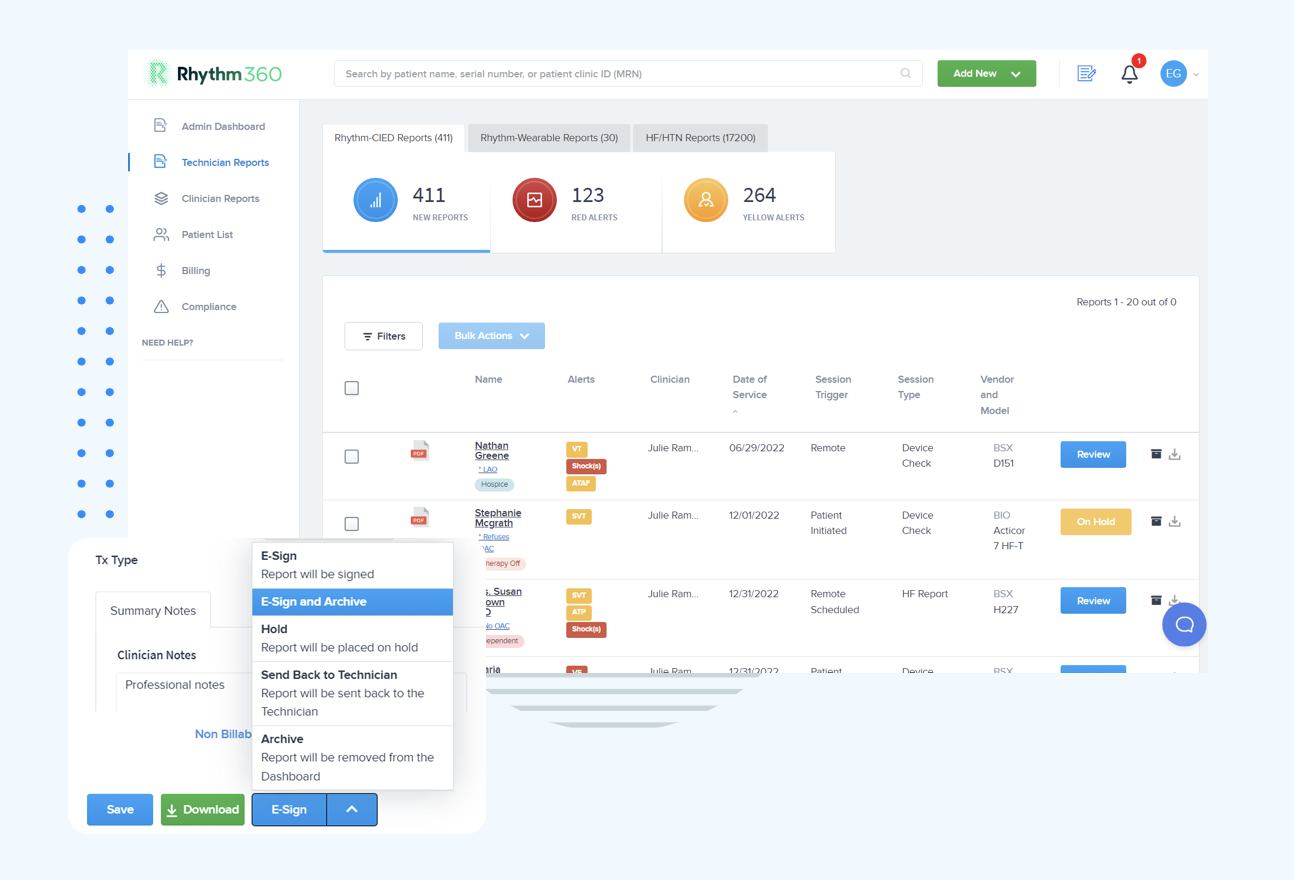
Rhythm360 delivers these capabilities through a unified, AI-driven platform; connect with the Rhythm360 team to explore migration from Paceart Optima.
The Problem: How Legacy On-Premise Systems Fragment CIED Workflows
Cardiology practices that manage patients with devices from multiple manufacturers such as Medtronic, Boston Scientific, Abbott, and Biotronik must log into separate, non-interoperable OEM portals to retrieve transmission data. Each portal operates independently and creates data silos that staff must reconcile manually before clinicians can make decisions. On-premise architectures intensify this problem because data lives on local servers, access is tied to specific workstations, and clinicians lack real-time mobile review when they are off-site or on call.
Billing documentation breaks down under the same pressure. Many remote monitoring programs struggle to reach even 50% patient connectivity. When patients fail to transmit, clinics lose the ability to bill for 30-day heart failure monitoring, 90-day CIED monitoring, and qualifying alert-based transmissions. Revenue leakage from incomplete CPT code documentation for codes 93298, 93299, and 99454 represents a direct financial consequence of fragmented, manual workflows.
What Paceart Optima Does Inside the Device Clinic
Paceart Optima sits at the center of many device clinics as a local database and scheduling tool. It stores device interrogation reports, tracks scheduled follow-up windows, and organizes patient demographic records linked to implanted device data. The system supports a range of CIED types, including pacemakers, implantable cardioverter-defibrillators, cardiac resynchronization therapy devices, and implantable loop recorders. It primarily serves Medtronic's own device portfolio, although it can ingest reports from other OEMs in limited formats.
Daily workflow in Paceart Optima requires staff to log into the system from a designated on-site workstation. Transmission data from OEM remote monitoring networks such as Medtronic CareLink must be retrieved separately and then reconciled within the Paceart interface. The platform does not include a native AI layer to triage alerts by clinical urgency, automated CPT code capture, or bi-directional EHR integration that pushes finalized reports directly into Epic, Cerner, or Athenahealth. Staff must rely on individual expertise and manual data entry at every step, which increases variability and risk.
Current Ownership and 2026 Status After the PaceMate Acquisition
What Modern Cloud-Based CIED Platforms Need to Deliver
A modern CIED management platform must address each structural limitation of legacy on-premise systems. The minimum functional requirements for a viable replacement include vendor-neutral data ingestion across all major OEMs via API, HL7, XML, and PDF parsing. The platform must provide AI-powered alert triage that filters non-actionable transmissions and surfaces clinically urgent events by priority. It must also support bi-directional EHR integration that removes manual transcription, automated CPT code documentation for compliant billing, and a HIPAA-compliant mobile interface that allows clinicians to review transmissions and sign reports from any location.
EHR integration has become a fundamental component of modern cardiac device clinic workflows because cloud-based platforms can push data directly into the EHR. This direct data flow improves efficiency compared to legacy on-premise systems that require manual transcription in CIED management. The contrast with Paceart Optima is direct. Paceart requires manual portal logins, while a cloud platform consolidates all OEM feeds into one dashboard. Paceart lacks an alert intelligence layer, while a modern platform applies AI triage to reduce noise. Paceart produces static reports that require manual EHR entry, while a modern platform pushes finalized documentation bi-directionally.
Rhythm360 meets these requirements in a single environment. Its vendor-neutral architecture ingests data from Medtronic, Boston Scientific, Abbott, Biotronik, and other manufacturers, then normalizes disparate formats through computer vision and AI-powered extrapolation to achieve greater than 99.9% data transmissibility. Automated CPT code capture and documentation support codes including 93298, 93299, and 99454, which helps recover revenue that manual workflows routinely miss. Client data shows critical alert response times can drop by up to 80% when AI triage replaces manual queue review, while revenue generation can increase by as much as 300% through improved CPT capture and the addition of RPM service lines.
Planning Migration and Tracking ROI From Paceart Optima
When a cardiac device clinic migrates from a legacy on-premise system like Paceart, data migration and clean data practices are critical to avoiding the true cost of bad data in cardiac monitoring. Practices should audit existing patient records, device schedules, and billing documentation before cutover. They should also select a platform with a structured onboarding process that includes EHR integration setup. Rhythm360's implementation timeline typically runs from a few days to a few weeks, depending on practice size and EHR complexity.
Beyond the performance improvements described earlier, practices need a clear view of operational impact. Remote CIED support workflows that eliminate travel can save substantial time per patient. That time savings converts directly into staff capacity for higher-value clinical work and supports sustainable growth in remote monitoring programs.
Metric
Paceart Optima (On-Premise)
Rhythm360 (Cloud, Vendor-Neutral)
Source
Data access model
On-site workstation only
Cloud plus HIPAA-compliant mobile app
Company context; product architecture
OEM vendor support
Primarily Medtronic-native
All major OEMs (Medtronic, BSc, Abbott, Biotronik)
Deciding When to Keep Paceart Optima Versus Replace It
Paceart Optima still functions as an organizational tool for very specific practice profiles. A single-site clinic that implants only Medtronic devices, manages a small patient panel, does not run a remote monitoring billing program, and has no plans to expand into heart failure or hypertension RPM may not see immediate value from migration.
Replacement becomes the logical step when certain conditions appear. The practice manages devices from more than one OEM. Staff log into multiple portals every day. Critical alert response times are measured in hours rather than minutes. CPT code billing for remote monitoring is incomplete or inconsistently documented. Clinicians need mobile access to patient data, or the practice is evaluating new RPM revenue streams. Practices that have grown beyond a single-vendor, single-site model have structurally outgrown what Paceart Optima was designed to support.
Paceart Optima is an on-premise CIED data management system that Medtronic originally developed to help device clinics organize patient records, store device interrogation reports, and schedule follow-up transmissions. In 2026, PaceMate owns the system after acquiring it from Medtronic as part of a broader consolidation strategy in the cardiac data management market. The acquisition did not change the system's underlying on-premise architecture or add cloud, AI, or broad multi-vendor capabilities.
What are the main limitations of Paceart Optima compared to modern platforms?
Paceart Optima's primary limitations include its on-premise architecture, which restricts access to designated workstations, and its single-vendor design, which does not natively normalize data from Boston Scientific, Abbott, or Biotronik portals. The system also lacks an AI alert triage layer, automated CPT code documentation, and bi-directional EHR integration. Modern cloud platforms address these gaps by consolidating multi-OEM data into a single dashboard, applying AI to prioritize clinically urgent alerts, automating billing documentation, and enabling mobile access for clinicians.
How long does it take to migrate from Paceart Optima to a cloud-based platform like Rhythm360?
Rhythm360's implementation process, including EHR integration setup, typically takes from a few days to a few weeks. The exact duration depends on practice size, the number of OEM data feeds being consolidated, and the complexity of the existing EHR environment. A structured data migration audit before cutover helps ensure that historical patient records, device schedules, and billing documentation transfer accurately.
What CPT codes does a modern CIED platform help practices capture that Paceart Optima does not?
Modern platforms with automated billing documentation support the full range of remote monitoring CPT codes. These include 93298 and 93299 for remote interrogation of implantable cardioverter-defibrillators and pacemakers, and 99454 for remote physiological monitoring device supply and daily recordings. Paceart Optima does not include automated CPT code capture or compliant documentation generation. Practices that rely on it must track billable events manually, which routinely results in missed claims and revenue leakage.
Does Rhythm360 support all CIED device manufacturers, or only Medtronic?
Rhythm360 is fully vendor-neutral and ingests data from all major CIED manufacturers, including Medtronic, Boston Scientific, Abbott, and Biotronik. The platform normalizes data from each OEM's remote monitoring network using API connections, HL7 feeds, XML parsing, and AI-powered computer vision for PDF-based reports, achieving greater than 99.9% data transmissibility. This approach removes the need for staff to log into separate OEM portals and reconcile data manually.
Conclusion: Moving From Legacy Constraints to Unified Cardiac Data Management
Paceart Optima served a defined purpose when single-vendor, on-premise device management represented the standard of care. In 2026, following its acquisition by PaceMate, the system still operates under the constraints outlined earlier, which have become critical gaps as practices expand beyond single-vendor device populations. Clinics that manage multi-OEM device populations, pursue remote monitoring revenue, and require mobile clinical access now need a platform built for the current environment.
Rhythm360 provides vendor-neutral CIED data management, AI-powered alert triage, bi-directional EHR integration, automated CPT code documentation, and a HIPAA-compliant mobile application in a single cloud-based platform. The measurable outcomes, including up to 80% faster critical alert response and up to 300% revenue growth, highlight the operational and financial gap between legacy on-premise architecture and modern cardiac data management.