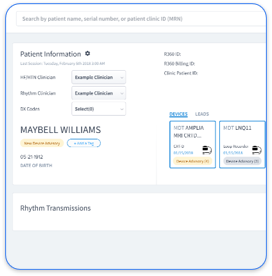
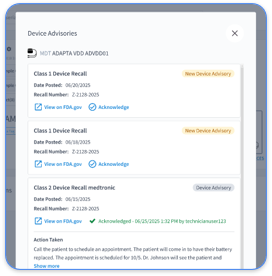
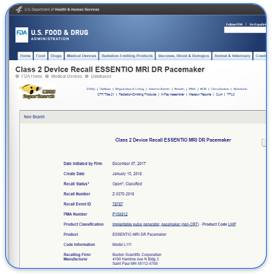
PaceArt Optima functions as a local database for storing and retrieving CIED interrogation records. Clinics use it to log in-clinic device checks, archive transmission reports, and maintain a searchable patient device history. Its architecture is server-based, so the software and data reside on hardware the practice owns and maintains.
In multi-OEM environments, where a single practice implants devices from Medtronic, Boston Scientific, Abbott, and Biotronik, PaceArt natively consolidates data from multiple competing CIED manufacturers. Staff still access each OEM portal separately, then reconcile records inside PaceArt by hand. For practices managing hundreds or thousands of CIED patients, this workflow creates unsustainable administrative overhead and persistent data silos.
This limitation is by design. PaceArt Optima's product documentation describes its core function as device data organization and retrieval, a scope that predates the cloud-native, AI-driven expectations of modern CIED programs.
On-premise medical software carries an inherent security burden for healthcare delivery organizations. Teams must work with vendor technical support for patching and updates to the local server environment. Legacy CIED systems have historically been attractive targets for healthcare-sector cyberattacks.
The CISA Known Exploited Vulnerabilities catalog documents a persistent pattern of healthcare software vulnerabilities being actively exploited in the wild. That pattern underscores the risk of running unpatched on-premise systems in clinical environments.
For PaceArt Optima specifically, maintaining current patch status requires working with Medtronic (now PaceMate) technical support to install updates. Small-to-mid-size cardiology practices rarely have abundant IT resources for this work. Any gap in patching cadence translates directly into HIPAA exposure and potential ePHI breach liability.
This maintenance burden drives many practices toward cloud-native platforms. Cloud vendors apply security updates continuously, without clinic downtime or internal IT intervention.
Three friction points consistently surface in practices still operating PaceArt-centered workflows in 2026.
Medtronic divested PaceArt to PaceMate, a cloud-based cardiac monitoring company. PaceMate gained exclusive access to PaceArt device data and is now the only cardiac monitoring company with comprehensive access to both historical device data and SessionSync in-clinic device checks for PaceArt users.
This consolidation has practical implications for existing PaceArt customers. Support, software updates, and the SessionSync workflow for wireless in-clinic interrogations now sit with a single commercial entity that has its own platform roadmap and pricing structure. Practices that previously viewed PaceArt as a neutral Medtronic utility now operate within a vendor relationship that carries competitive incentives.
Administrators evaluating long-term platform strategy should factor this dependency into their 2026 planning cycle. Contract terms, data access, and migration flexibility all sit inside that new relationship.
Transitioning from an on-premise CIED system to a cloud platform is operationally manageable with a structured plan. Clinics implementing modern cloud-based CIED platforms can often go live within weeks. Vendor-managed onboarding typically covers workflow configuration, staff training, integration setup, and go-live readiness, although timelines vary by organization size and IT availability.
Key migration steps for most practices follow a logical sequence. First, teams audit the existing PaceArt patient and device database for completeness to establish a clean baseline. With that baseline confirmed, they establish EHR integration, such as Epic, Cerner, or Athenahealth via HL7, and configure OEM data feeds for all active manufacturers, which can run in parallel.
Once data flows are validated, clinics train clinical and administrative staff on the new platform using live data. Finally, they run parallel operations briefly to validate data fidelity before full cutover, which helps ensure no patient records or alerts are lost in transition.
Rhythm360's implementation process, including EHR integration, takes from a few days to a few weeks. No hardware procurement or server provisioning is required, and operational continuity is maintained throughout.
| Capability | PaceArt Optima | Rhythm360 |
|---|---|---|
| Multi-OEM data unification | Natively consolidates data from multiple competing CIED manufacturers | Automated ingestion from all major OEMs into one dashboard |
| Mobile access | Not available, workstation-bound | HIPAA-compliant mobile app for review, signing, and care coordination |
| AI alert triage | Limited | AI-powered filtering prioritizes clinically significant events |
| EHR integration depth | Can send data to EHR | Bi-directional integration with Epic, Cerner, Athenahealth, eClinicalWorks, and others via HL7 |
| CPT billing automation | Manual documentation required | Automated CPT capture and compliant documentation for 93298, 93299, 99454, and related codes |
| Security patching | Requires working with Medtronic (now PaceMate) technical support to install updates | Vendor-managed, continuous cloud updates with no clinic downtime |
Seeing these gaps in your own workflow is the fastest path to a decision. Walk through a live comparison of your current PaceArt setup and Rhythm360's unified workflow.
Rhythm360 clients report two headline outcomes that directly address the core limitations of legacy on-premise CIED management.
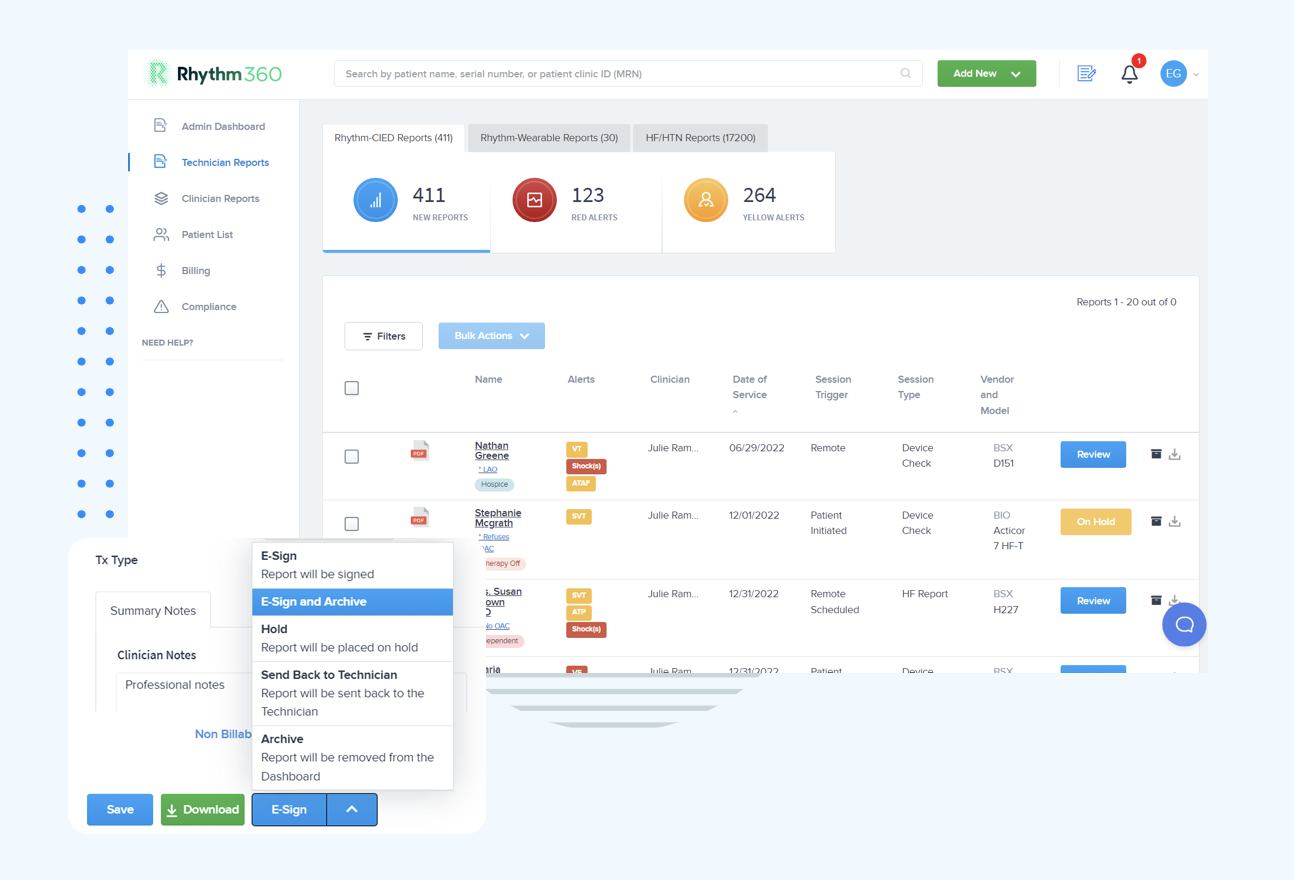
These outcomes are not theoretical. They reflect the operational difference between a system designed to store data and a platform designed to act on it. See how these response-time and revenue metrics apply to your specific patient volume and payer mix.
Administrators evaluating whether to continue with PaceArt or migrate to a cloud-native platform can use the following questions as a structured checklist.
If more than two of these questions surface unresolved gaps, your current system is creating measurable operational risk, which makes a platform evaluation overdue. Benchmark your current state against a cloud-native workflow in a focused consultation and quantify the cost of inaction.
PaceArt Optima functions primarily as a data management and retrieval system, not a full multi-OEM remote monitoring platform. It does not natively pull data from all manufacturers in a unified feed. As noted earlier, this multi-portal workflow introduces transcription risk and significant time overhead, friction that vendor-neutral platforms eliminate through automated ingestion across Medtronic, Boston Scientific, Abbott, Biotronik, and others into a single dashboard.
PaceArt Optima does not include automated CPT code capture or billing documentation workflows. Practices using it for remote monitoring must manually track transmission counts, clinical review time, and documentation requirements for codes such as 93298, 93299, and 99454. This manual process is a primary driver of under-billing and claim rejections in legacy CIED programs. Cloud platforms with integrated billing automation close this gap by generating compliant documentation as part of the standard clinical workflow.
PaceArt Optima is a workstation-bound, on-premise application. There is no native mobile application, so clinicians cannot review transmissions, triage alerts, or sign reports from a smartphone or tablet. This limitation is particularly consequential for on-call coverage and weekend alert management, where delayed response to critical arrhythmias carries direct patient safety risk. Rhythm360 provides a HIPAA-compliant mobile app that enables full clinical review and care coordination from any device, anywhere.
Migration costs vary based on practice size, the volume of historical data to be transferred, EHR integration complexity, and the cloud vendor selected. Many modern platforms, including Rhythm360, use SaaS-based pricing that scales with clinic size and usage, with no large upfront hardware or licensing fees. Implementation timelines typically range from a few days to a few weeks.
The more relevant financial question for most practices is the ongoing cost of staying on PaceArt. Staff hours, missed CPT revenue, IT maintenance, and compliance exposure often outweigh the subscription cost of a cloud-native alternative.
PaceArt Optima served a defined purpose in an earlier era of CIED management. In 2026, its on-premise architecture, absence of AI-powered alerting, manual billing workflows, and workstation-bound access create measurable operational and financial drag for any practice managing a multi-OEM device population. The PaceMate acquisition adds a layer of vendor dependency that administrators should evaluate carefully when planning long-term platform strategy.
Rhythm360 addresses each of these constraints directly through vendor-neutral data unification, AI-driven alert triage, automated CPT capture, bi-directional EHR integration, mobile access, and cloud-managed security, all on a SaaS model that scales with practice growth. The outcomes documented earlier, 80% faster critical-alert response and up to 300% revenue recovery, reflect the operational difference between legacy and cloud-native CIED management.
For EP teams and cardiology administrators ready to move beyond the limitations of legacy on-premise software, the practical next step is a direct platform walkthrough. Meet with the Rhythm360 team to review your current workflow and map a path forward.