Paceart Optima is an on-premises database system built for a pre-cloud era. A July 2023 American Hospital Association report cited a CISA warning of a significant high-risk vulnerability in Medtronic's Paceart Optima System, which compiles and manages patients' cardiac device data. That warning signaled to EP lab managers and cardiology administrators that the platform's architecture carries structural security risk, not just a single patchable software bug.
The infrastructure underneath Paceart compounds the problem. Windows Server 2022 reaches the end of mainstream support on October 13, 2026, and Windows Server 2016 reaches end of extended support on January 12, 2027, which means clinics on either version face a narrowing window before routine security updates stop entirely. That operating system risk sits on top of an equally urgent database issue: when SQL Server reaches end of support, organizations lose access to security updates and bug fixes, creating a double layer of risk for every application that depends on those databases. These security gaps translate directly into financial exposure.
Hidden costs accumulate quickly. Extended Security Updates for SQL Server are available for up to three years after end of support at escalating costs (75% in year 1, 150% in year 2, 300% in year 3 of the original on-premises license price), providing Critical and Important security updates with no bug fixes or new features. At the same time, upgrading an on-premises SQL Server instance requires the largest up-front investment and ongoing management costs because organizations must buy, maintain, and manage their own hardware and software.
Security is only one dimension of the problem. Fragmentation in cardiovascular information systems creates workflow inefficiencies, increases integration costs and implementation time, and prevents healthcare providers from achieving a unified view of patient data for real-time decision-making. Manual billing workflows tied to these fragmented systems produce revenue leakage on CPT codes such as 93298, 93299, and 99454, which represents revenue that never appears on a rejected claim because it was never submitted.
The following checklist frames the core decision. Each criterion maps to a documented risk or capability gap.
For clinics that choose to remain on Paceart, understanding what the v1.12 patch does and does not address is critical.
The v1.12 update addresses the remote code execution vulnerability flagged by CISA by removing the Paceart messaging service component identified as the attack vector. Installation requires administrative access to the on-premises server, a maintenance window for service restart, and validation that dependent SQL Server and Windows Server versions meet Medtronic's minimum requirements for the patched build.
Limitations persist after patching. The messaging service removal reduces one attack surface but does not modernize the underlying architecture. Windows Server 2025, the current LTSC release, receives mainstream support until November 13, 2029, and extended support until November 14, 2034, which means clinics on older server versions must still plan an operating system migration to maintain a supported stack beneath a patched Paceart installation. The patch also does not add cloud connectivity, EHR integration, or automated billing capabilities.
PaceMate acquired the Paceart product line from Medtronic and offers a migration path for existing Paceart customers. The transition introduces its own complexity. Data migration from a legacy on-premises schema to a cloud database requires field mapping, validation, and clinical review to confirm record fidelity. That work varies in complexity based on how long a clinic has been running Paceart and how customized its local configuration is.
Maintaining legacy systems tied to older SQL Server versions can add hidden costs through upgrade planning, database migration work, testing, and ongoing administration, and those costs apply whether the destination is PaceMate or any other platform. Clinics evaluating PaceMate should also assess whether the platform supports all OEM device types in their current patient population, provides bi-directional EHR integration with their specific system, and includes automated CPT documentation for both CIED and RPM service lines.
The table below compares Paceart and PaceMate against a modern cloud platform across four operational dimensions. All figures are drawn from cited sources or documented Rhythm360 outcomes.
| Dimension | Paceart / PaceMate | Modern Cloud Platform (e.g., Rhythm360) |
|---|---|---|
| Security | High-risk CISA vulnerability documented in Paceart Optima, on-premises SQL Server end-of-support removes security update access, Extended Security Updates cost about 75% of license annually | HIPAA-compliant cloud architecture, no on-premises operating system or database attack surface, vendor-managed security patching |
| EHR Integration | Fragmentation hinders seamless data exchange and prevents a unified patient data view, no native bi-directional EHR integration documented | Bi-directional integration with Epic, Cerner, Athenahealth, eClinicalWorks, Greenway Health, and others via HL7, with data flowing in both directions |
| Billing Automation | Manual CPT documentation, workflow inefficiencies from fragmented systems increase integration costs, revenue leakage on codes 93298, 93299, 99454 | Automated CPT code capture and documentation, practices report up to 300% revenue increase, supports CIED and HF/HTN RPM billing |
| Alert Response | Lack of standardization across devices and platforms contributes to manual workarounds in legacy cardiac data environments, alert fatigue from non-actionable notifications | AI-powered alert triage reduces critical response times by up to 80%, greater than 99.9% data transmissibility via redundant feeds and computer vision |
Request a personalized TCO analysis based on your clinic's device population and current software stack.
A platform built for 2026 and beyond delivers capabilities that no Paceart software update can match. Wireless connectivity, modular design, and cloud-based data management enable faster clinical decisions and improve workflow efficiency. The core capabilities to evaluate include:
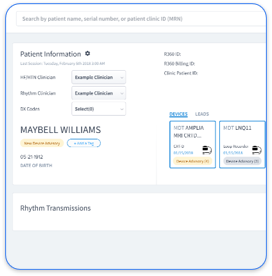
Rhythm360 by RhythmScience is purpose-built to replace the fragmented, on-premises workflows that Paceart represents. The platform eliminates multiple OEM portal logins by consolidating Medtronic, Boston Scientific, Abbott, Biotronik, and other device data into a single dashboard. Its redundant data feed architecture and AI-powered extrapolation deliver greater than 99.9% data transmissibility, a level that legacy on-premises systems cannot match.
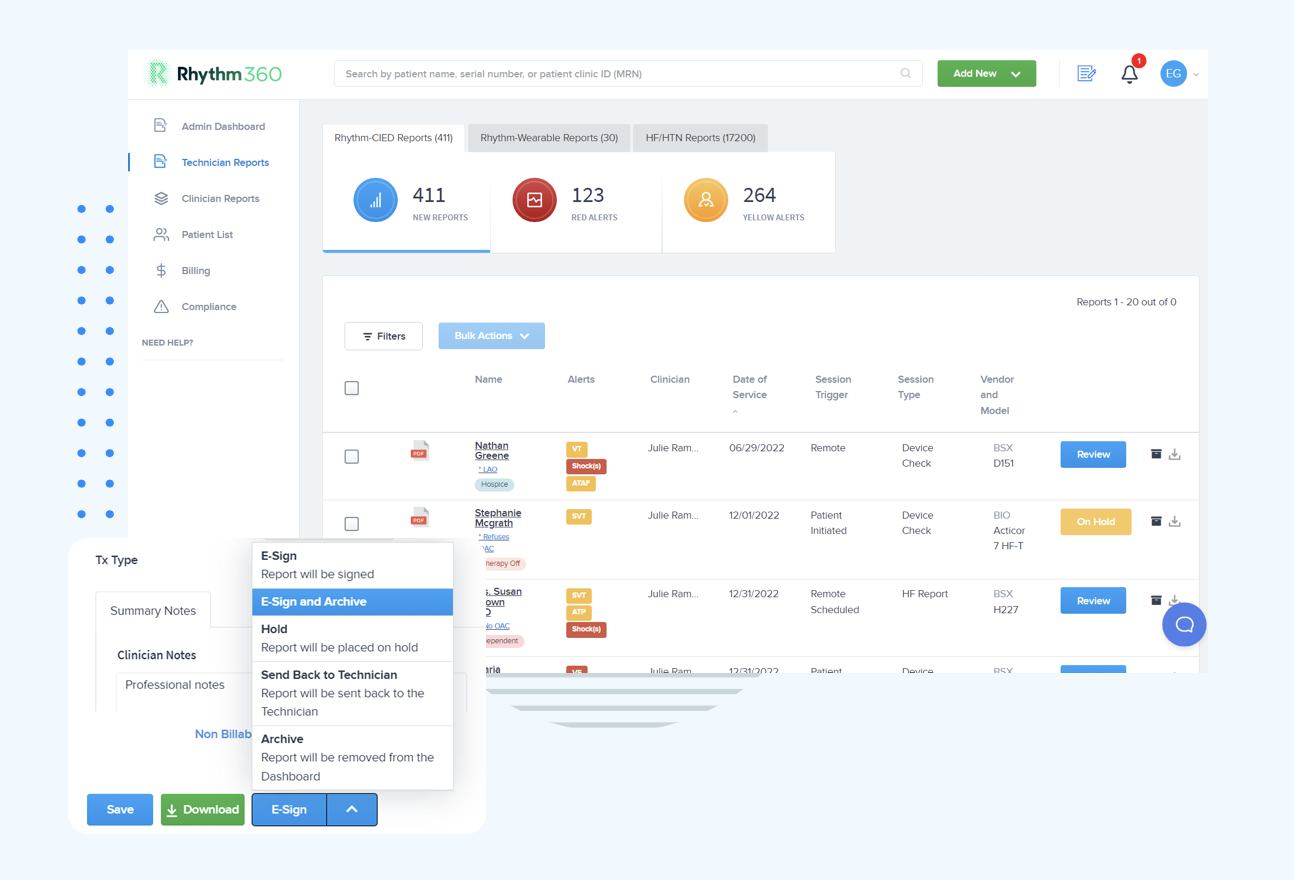
Rhythm360 supports both the Rhythm-CIED service line for implantable device monitoring and the HF/HTN RPM service line for heart failure and hypertension management, which gives practices a single platform to grow both programs. Optional 24/7/365 oversight by certified cardiac technicians (CCTs) supervised by physicians provides an additional clinical safety layer without requiring additional in-house headcount. Cloud-based cardiovascular information systems are projected to grow at a CAGR of 7.0% during the 2025–2032 forecast period, which confirms that the market is moving decisively away from on-premises architectures.
Migration concerns about disruption are common, yet Rhythm360's onboarding process, including EHR integration setup, typically takes only a few days to a few weeks. The SaaS pricing model scales with clinic size and platform usage, which removes large up-front hardware investments. Data migration from legacy systems is supported with field mapping and validation to ensure record fidelity from day one.
The window to act is narrowing. With the October 2026 support deadline approaching, clinics still planning their infrastructure path will face compounding costs if migration is deferred. Begin your scoped migration assessment before the support deadline.
Medtronic transferred the Paceart product line to PaceMate, which now owns the migration and support roadmap. The v1.12 patch addresses the documented CISA remote code execution vulnerability by removing the messaging service component. The long-term support trajectory for Paceart as an on-premises product remains limited. Clinics should request a formal end-of-life and support commitment from PaceMate in writing before deciding to remain on the platform and should separately assess whether their underlying Windows Server and SQL Server versions will remain supported through their intended use period.
Migration complexity depends on the volume of historical patient records, the degree of local customization in the Paceart installation, and the SQL Server version in use. A structured migration to a cloud platform involves schema mapping, data validation, and a parallel-run period to confirm record fidelity before cutover. Rhythm360's implementation team manages this process, and the full onboarding timeline, including EHR integration, typically runs from a few days to a few weeks. Clinics with large device populations or complex EHR environments should plan for the upper end of that range.
Server 2016's extended support ends in January 2027, and Windows Server 2022 exits mainstream support in October 2026. After those dates, Microsoft stops issuing routine security updates under the Fixed Lifecycle Policy, which means any on-premises application, including a patched Paceart installation, inherits the full vulnerability surface of the unsupported operating system. Clinics must either migrate to Windows Server 2025, which receives mainstream support through November 2029, or move to a cloud platform that removes the on-premises operating system dependency entirely.
Manual CPT documentation introduces transcription errors, missed billable events, and incomplete audit trails, all of which create exposure during payer audits and HIPAA compliance reviews. Automated billing on a platform like Rhythm360 captures billable events at the point of clinical activity, generates documentation that maps directly to CPT code requirements for codes such as 93298, 93299, 99454, and 99457, and maintains a full audit trail within the patient record. This approach reduces claim rejection rates, supports payer audit defense, and recovers revenue that manual workflows routinely miss.
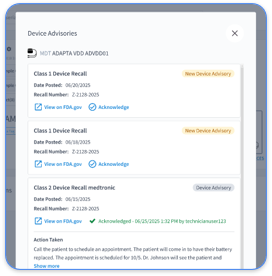
Alert fatigue in legacy cardiac data environments stems from high volumes of non-actionable notifications generated by systems that lack intelligent triage. Modern platforms apply AI-driven filtering to separate clinically significant events such as new-onset atrial fibrillation, ventricular tachycardia, lead malfunction, ERI/RRT indicators, and significant weight gain in heart failure patients from routine or non-actionable transmissions. Rhythm360's alert triage system delivers the 80% response-time improvement mentioned earlier and shifts clinical teams from reactive to proactive patient management. Optional CCT oversight provides an additional human review layer for high-acuity populations.
The Paceart Optima v1.12 patch removes one documented attack vector but leaves clinics exposed to aging operating system and database infrastructure, hidden support costs, fragmented OEM workflows, and revenue leakage that no security patch addresses. The combination of Windows Server end-of-support timelines, SQL Server lifecycle costs, and the structural limitations of on-premises cardiac data management makes 2026 the inflection point for migration decisions. A modern, vendor-neutral, cloud-based platform resolves every dimension of that risk at once, including security, interoperability, billing automation, and alert response, while delivering measurable clinical and financial outcomes. Schedule a demo with Rhythm360 to see how your clinic can close the gap between legacy risk and modern performance.