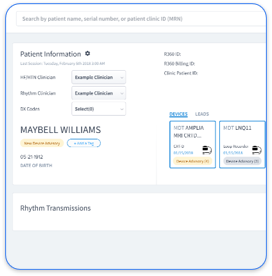
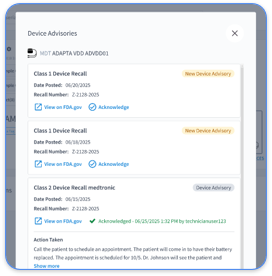
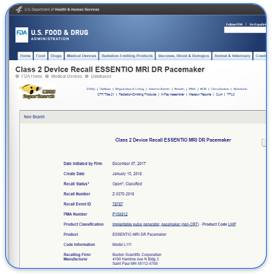
Remote pacemaker monitoring replaces routine, time-consuming in-person checks with wireless transmissions and intelligent alerts. AI algorithms analyze sensor data to identify abnormal patterns indicative of cardiovascular stress or disease, such as atrial fibrillation and cardiac arrest, facilitating early detection and timely clinician response.
This shift moves practices from reactive to proactive patient management. RPM systems use alerting mechanisms and automated follow-ups for readings deviating from expected patterns, replacing routine office visits with targeted interventions for stable chronic-care patients. Critical events trigger immediate notifications. Stable patients need minimal clinical intervention, which improves resource allocation.
Clinical benefits extend far beyond efficiency. Remote monitoring enables early detection of arrhythmias and device issues, preventing heart failure hospitalizations and saving costs. Weekend and after-hours monitoring maintain continuous surveillance without extra staffing or extended clinic hours.
Schedule a Rhythm360 demo and upgrade your practice’s monitoring capabilities.
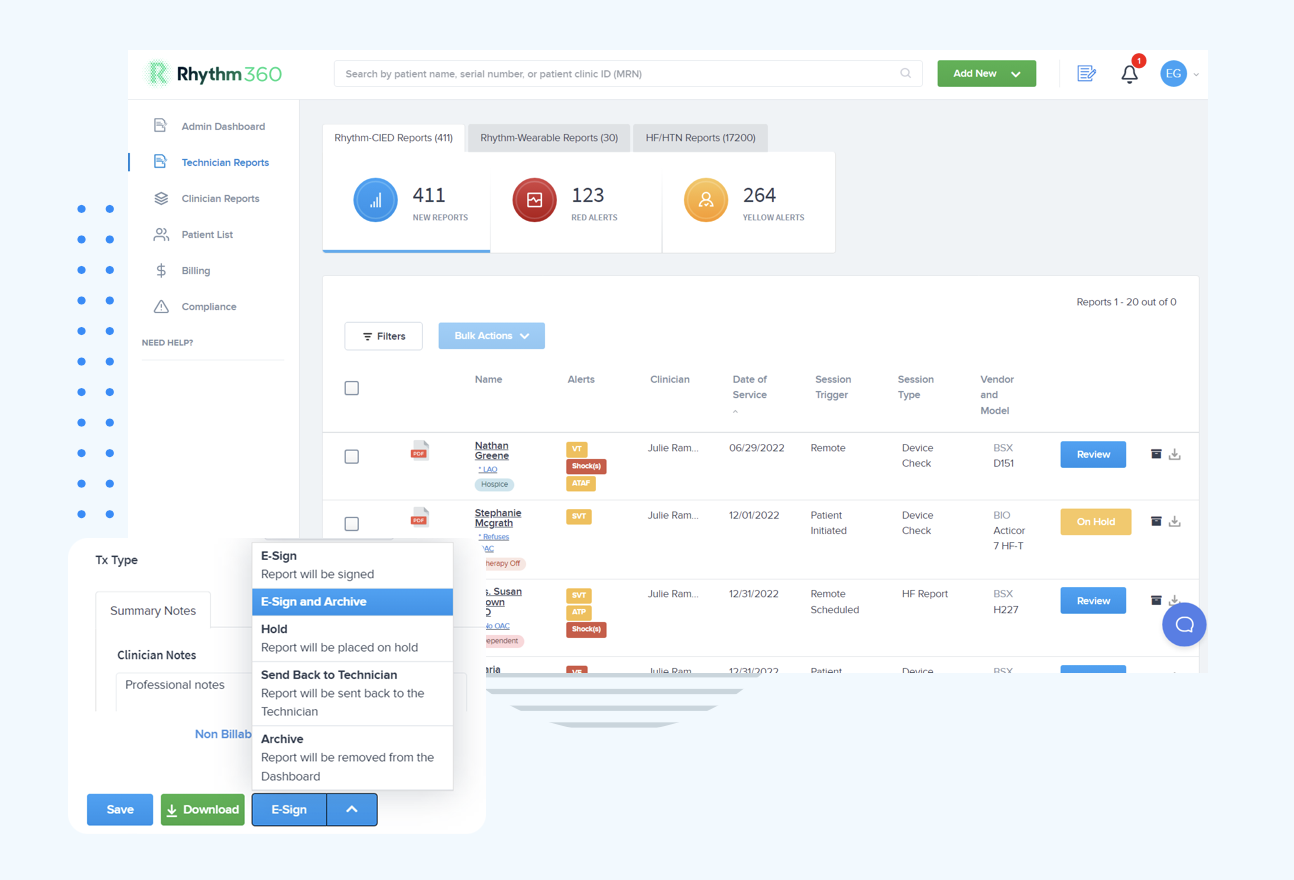
Rhythm360 solves the core challenges of multi-vendor CIED monitoring with comprehensive data integration and workflow automation. Third-party vendor-neutral platforms improve clinical and organizational impacts and interoperability, removing the chaos of separate manufacturer portals.
The platform’s key capabilities include:
Rhythm360’s vendor-neutral design removes data silos and workflow friction that slow traditional monitoring systems. Heterogeneity in data formats across manufacturers hampers interoperability, data-pooling, and AI model development for CIED remote monitoring. Rhythm360 standardizes and normalizes these data streams so practices can scale monitoring without adding equivalent administrative work.
Metric | In-Person Monitoring | RPM with Rhythm360 | Improvement |
Time per Patient | 37.8-51 minutes | <5 minutes automated | 90%+ time savings |
Visit Reduction | 0% | Significant capacity increase | Through proactive monitoring |
Revenue Capture | Missed CPT opportunities | Up to 300% revenue boost | Automated billing compliance |
Alert Response | Days to weeks | 80% faster (hours) | Improved patient safety |
Remote monitoring delivers continuous surveillance and supports early intervention. Robust AI-driven alerts are crucial to avoid false positives and alert fatigue, supporting reliable replacement of routine checks with targeted, event-driven care. When critical arrhythmias such as ventricular tachycardia or new-onset atrial fibrillation occur, Rhythm360 alerts clinicians immediately so they can start anticoagulation or adjust device settings quickly.
Consider a typical scenario. A patient’s device detects sustained atrial fibrillation on Saturday morning. Traditional monitoring might not catch this until a clinic visit weeks later. With Rhythm360, the alert reaches the care team within hours. Clinicians can begin stroke prevention protocols the same day and reduce the risk of severe complications.
High rates of false-positive alerts impose significant workload burdens and unnecessary clinic visits. Rhythm360’s AI triage filters non-actionable notifications and highlights clinically important events. Device technicians report up to 80% less time spent reviewing routine transmissions, which frees them to focus on high-risk patients.
The unified dashboard removes extra logins and manual data reconciliation. Legacy systems cause inefficient, costly operations with fragmented in-clinic and remote processes, repetitive tasks, and data processing delays. Rhythm360 streamlines workflows, cuts administrative overhead, and supports faster, more accurate clinical decisions.
Remote monitoring creates a strong revenue stream for cardiology practices. CMS finalized policies supporting remote monitoring as part of broader cardiology updates in the 2026 Medicare Physician Fee Schedule Final Rule. Rhythm360’s automated documentation and billing tools help practices capture revenue that manual workflows often miss.
The platform generates compliant documentation for CPT 93298 (initial setup), 93299 (monitoring), and 99454 (device supply). It also tracks the 16-day minimum data collection requirement for full reimbursement. The CY 2026 Medicare Physician Fee Schedule addresses payment policies for remote monitoring of pacemakers and ICDs, giving practices clear reimbursement pathways for structured monitoring programs.
Rhythm360 typically goes live within days to weeks, which keeps disruption low. Bi-directional EHR integration supports smooth data flow with Epic, Cerner, and other major systems. Secure, accurate migration from legacy systems includes data cleaning, structuring, and validation to ensure clinical accuracy and continuity.
Practices can extend monitoring beyond CIEDs to heart failure and hypertension programs. This expansion creates new revenue streams and supports comprehensive cardiovascular care. The platform’s scalable architecture supports growth without large infrastructure or staffing increases.
Schedule a demo to reduce pacemaker monitoring clinic visits and see how Rhythm360 reshapes daily operations.
Remote pacemaker monitoring reduces clinic visits by replacing routine in-person checks with continuous wireless surveillance and alert-driven care. Instead of bringing patients into the clinic every 3 to 6 months for device interrogation, remote systems transmit data automatically to clinicians.
Teams then reserve in-person visits for patients who need urgent intervention or device adjustments. Stable patients stay at home while still receiving continuous oversight through ongoing data collection and intelligent alerts.
Medicare supports remote pacemaker monitoring through several CPT codes. CPT 93298 covers initial device setup and patient education. CPT 93299 reimburses ongoing monitoring services. CPT 99454 covers device supply costs, and CPT 99453 provides $22.00 for remote physiological monitoring that includes 16 days of data collection within a 30-day period.
The 2026 Medicare Physician Fee Schedule maintains support for these services and recognizes remote monitoring as core cardiovascular care. Practices using automated systems like Rhythm360 capture these payments more consistently than manual workflows.
RPM matches the safety of in-person follow-up while improving convenience and efficiency. In-person visits take 37.8 to 51 minutes per patient and require scheduling and travel. RPM supports automated review in under 5 minutes for stable patients.
Continuous monitoring between visits allows early detection of arrhythmias, device malfunctions, or clinical decline that quarterly checks might miss. Clinical studies show that RPM-only strategies maintain safety, reduce resource use, and improve patient satisfaction through home-based monitoring.
Pacemaker telemonitoring offers continuous surveillance, early event detection, fewer clinic visits, better patient convenience, and stronger revenue capture through automated billing. The technology supports 80% faster responses to critical alerts and gives clinicians detailed data for decisions.
Challenges include data integration across multiple manufacturers, initial setup work, and the need for reliable internet access. Vendor-neutral platforms like Rhythm360 address most integration issues by unifying data from all major manufacturers in one interface, which minimizes drawbacks and amplifies clinical and operational gains.
Remote monitoring platforms support devices from all major manufacturers, including Medtronic, Abbott, Boston Scientific, and Biotronik. Vendor-neutral systems like Rhythm360 achieve more than 99.9% transmissibility across device types through API connections, HL7 messaging, and AI-powered data extraction from manufacturer portals. This broad compatibility removes the need to manage separate systems for each vendor. The platform normalizes data formats and delivers unified reports, so clinicians see consistent information across all devices.
Remote pacemaker monitoring improves outcomes compared with traditional scheduled follow-up. Continuous data streams reveal arrhythmias, device problems, and clinical deterioration that might stay hidden between quarterly visits. Studies report fewer hospitalizations, faster interventions for critical events, and higher patient satisfaction with home-based monitoring.
Continuous surveillance lets clinicians act within hours instead of weeks, which can prevent strokes from undetected atrial fibrillation or syncope from device malfunction. AI-powered alerts keep the focus on clinically important events while filtering noise.
RPM and telehealth play different roles in cardiac device care. RPM collects data automatically from implanted devices and sends it to clinicians without patient action. This supports continuous surveillance and early event detection between appointments.
Telehealth uses scheduled video or phone visits for direct patient interaction, education, and assessment. RPM runs in the background every day. Telehealth occurs at set times. The strongest programs combine RPM for continuous monitoring with telehealth for education and shared decision-making.
Remote pacemaker monitoring now defines modern cardiovascular device management. Platforms like Rhythm360 improve outcomes through continuous surveillance and help practices capture revenue that often goes unbilled with manual processes.
The shift from reactive, schedule-based care to proactive, alert-driven monitoring improves resource use and patient outcomes. RPM improves clinical outcomes for cardiac disorders, detects more atrial fibrillation events with higher accuracy than routine care, and reduces healthcare resource utilization. Vendor-neutral platforms remove data silos and workflow barriers that previously slowed adoption.
For administrators focused on efficiency and revenue and for clinicians focused on safety and streamlined workflows, Rhythm360 offers a complete remote monitoring solution. AI intelligence, automated billing compliance, and seamless EHR integration position practices for sustainable growth in a value-based environment.
Schedule a Rhythm360 demo to reduce clinic visits today and see how vendor-neutral remote monitoring can reshape cardiovascular care delivery.