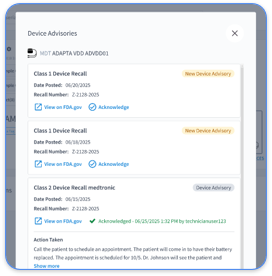
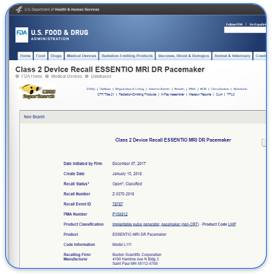
PaceMate and other OEM-specific portals lock clinics into a fragmented workflow nightmare. Device technicians must log into separate systems for Medtronic, Boston Scientific, Abbott, and Biotronik devices. They then manually reconcile data across platforms that do not communicate with each other. Each manufacturer uses different alert thresholds, reporting formats, and notification systems, which creates an administrative burden that grows rapidly as device diversity increases.
The core issue centers on how these systems generate alerts. Dr. Jodie Hurwitz from North Texas Heart Center identifies the biggest harm as “artifact, false alarms, alarm fatigue, and data overload” from monitoring systems that lack intelligent filtering. High dismissal rates in CIED monitoring are structural features of safety-first remote monitoring, with most OEM-generated alerts being nonactionable across tens of thousands of reports.
Weekend and off-hours coverage magnifies these problems. Most clinics rely on skeleton staffing or on-call arrangements that lack the specialized training needed to triage cardiac device alerts. Critical AFib episodes detected Friday evening may not receive attention until Monday morning. These delays create dangerous gaps in care coordination.
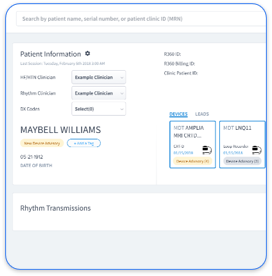
Rhythm360 removes fragmentation by serving as a vendor-neutral platform that ingests data from all major CIED manufacturers through redundant feeds and computer vision technology. Instead of managing multiple OEM portals, clinics use a single dashboard that consolidates pacemaker, ICD, CRT, and implantable loop recorder data into one unified view.
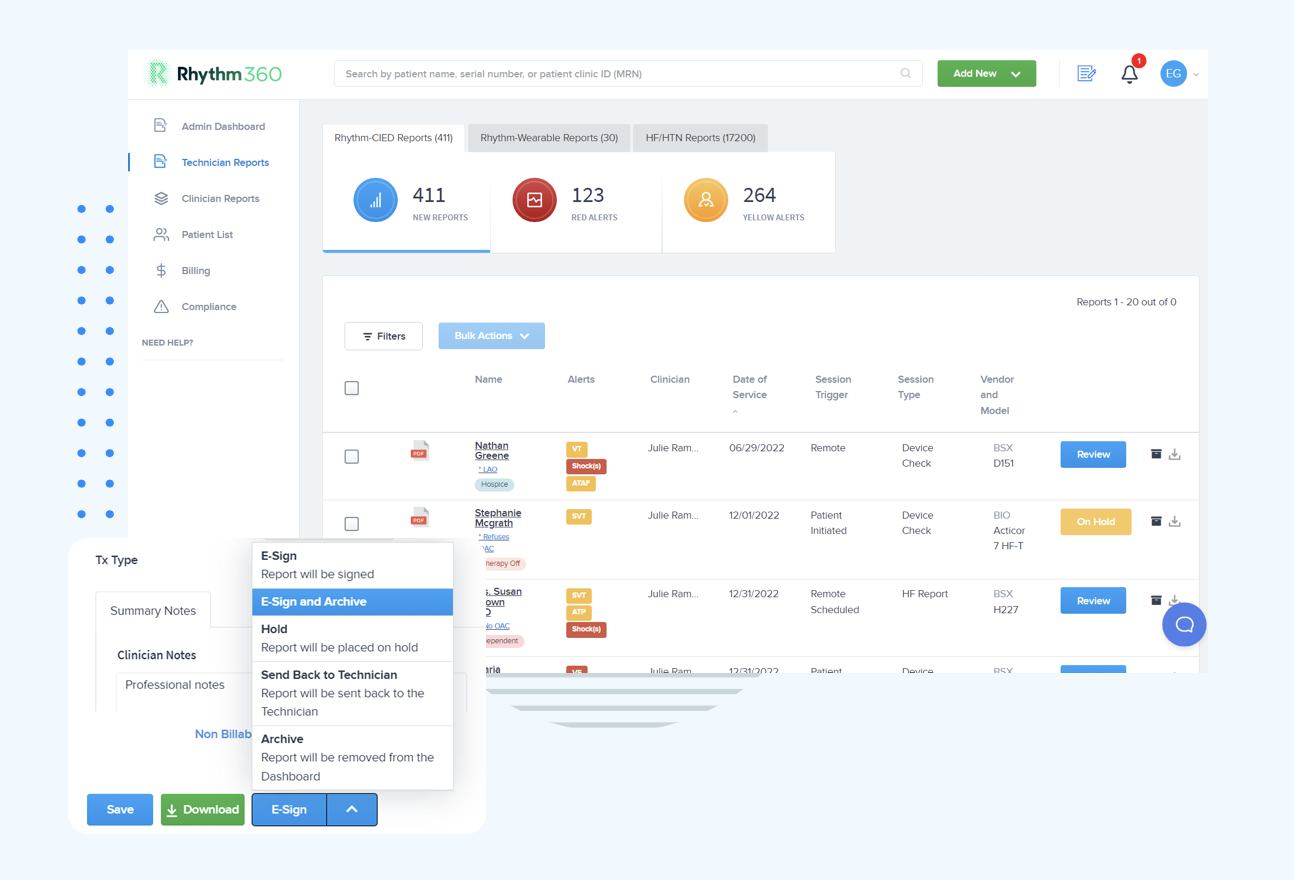
The platform’s AI-powered triage system automatically prioritizes clinically significant events and filters out non-actionable noise. This intelligent filtering reduces critical response times by up to 80%. Redundant data feeds ensure no critical information is lost because of technical failures or connectivity issues.
Automated CPT code capture for 93298, 99454, and related billing codes helps practices recover previously lost revenue, with some clients seeing up to 300% increases in profitability. Bi-directional EHR integration removes manual data entry, while HIPAA-compliant mobile access lets clinicians review transmissions and coordinate care from anywhere. See how unified monitoring transforms your workflow.
PaceMate processes AFib alerts through a rules-engine system that relies on doctor-defined thresholds and manufacturer-specific algorithms. The typical workflow follows these steps:
This process creates bottlenecks because most alerts represent brief, asymptomatic episodes that do not require intervention. Clinicians face substantial review burdens from voluminous incoming data, including navigating multiple systems, extra clicks, repeated logins, weak integration, and manually reviewing long reports where most content has not changed.
Rhythm360’s automated prioritization offers a sharp contrast to this manual approach. The platform’s AI analyzes episode duration, frequency, patient history, and medication status to categorize alerts by clinical urgency. Optional 24/7 certified cardiac technician oversight provides an additional safety layer for practices that require immediate expert review and supports consistent coverage during off-hours.
Staffing challenges plague device clinics, with many medical centers struggling with technician turnover and timely weekend coverage. When critical AFib alerts arrive during off-hours, several failure modes appear.
Alert notifications may reach on-call staff who lack specialized device training to assess clinical significance. Non-urgent alerts mixed with critical episodes create decision paralysis. Teams either over-respond to benign events or delay action on serious arrhythmias. Communication gaps between weekend coverage and primary care teams cause incomplete handoffs and lost follow-up.
The consequences extend beyond immediate patient safety. Delayed responses to AFib episodes can miss optimal windows for anticoagulation initiation, which allows thrombus formation that increases stroke risk. Weekend delays also disrupt care coordination and push necessary interventions into busy Monday schedules that may already be overbooked.
Missed AFib alerts create cascading clinical and operational problems that reach far beyond the initial detection failure. From a patient safety perspective, atrial fibrillation increases stroke risk by five times. Rapid detection and intervention play a critical role in preventing devastating outcomes.
Operationally, alert fatigue drives staff turnover in specialized device clinics. Pre-implementation workflows were described as “a major challenge and incredibly difficult” by clinicians managing fragmented systems. This complexity fuels burnout among certified cardiac technicians and makes recruitment and retention more difficult.
Revenue leakage creates another serious consequence. Missed or delayed alert responses often fail to generate proper documentation for CPT codes 93298 and 99454, which results in rejected claims and lost reimbursement. Care coordination delays push urgent interventions into reactive rather than proactive management. These patterns reduce overall practice efficiency and patient satisfaction.
| Platform | Alert Handling | Avg. Critical Response Time | Data Reliability |
|---|---|---|---|
| PaceMate | Manual rules-engine triage | Varies | Single-source dependency |
| Murj | Workflow automation | Murj’s average support response time for questions is 17 seconds | API-dependent |
| Implicity | AI-powered filtering | Varies | Algorithm-based extrapolation |
| Rhythm360 | AI-assisted triage with consolidated multi-device data streams | up to 80% reduction | >99.9% transmissibility via redundant feeds |
This comparison highlights clear differences in approach and performance. PaceMate’s manual system creates the longest delays, while Rhythm360’s AI-powered approach delivers the fastest response times. Rhythm360 enables clinicians to review more transmissions daily and identify more abnormalities compared to legacy systems. Experience these performance differences firsthand.
Rhythm360’s technical architecture addresses the core limitations of single-vendor systems through several key innovations. The platform’s redundant data feeds create fail-safes when OEM servers experience downtime and maintain continuous monitoring during technical failures. Computer vision technology extracts data from PDF reports when API connections fail, maintaining the >99.9% transmissibility mentioned in the comparison above across all device types.
The AI triage system advances beyond simple threshold-based alerts. AI-assisted workflows consolidate information from multiple cardiac device data streams into a single view with flags or visual cues, which lets clinicians focus on exceptions and clinically relevant findings rather than routine parameters.
Automated billing integration captures CPT codes 93298, 99454, and related charges without manual intervention. Implementation improves billing and accountability for patients after integration and helps practices recover previously lost revenue streams.
Mobile access through HIPAA-compliant applications lets clinicians respond to critical alerts from any location. This mobility removes the geographic constraints that contribute to weekend coverage gaps and delayed responses in traditional systems.
The three most common pain points in legacy monitoring systems share architectural limitations that Rhythm360’s design directly addresses.
Missed transmissions typically result from single-point-of-failure architectures in OEM-specific systems. When Medtronic’s server experiences downtime, PaceMate users lose access to critical data until service returns. Rhythm360’s redundant feed architecture switches to backup data sources automatically and maintains continuous monitoring during outages.
Beyond technical reliability, weekend coverage failures stem from inadequate staffing and lack of specialized training among on-call personnel. Rhythm360 addresses this through optional 24/7 certified cardiac technician oversight, which ensures expert review is available regardless of timing. The platform’s mobile access also lets primary device technicians provide remote consultation during off-hours.
Even when data arrives reliably and staff are available, alert prioritization problems appear when non-actionable notifications overwhelm critical events. Rhythm360’s AI triage separates routine device checks from urgent arrhythmias and presents clinicians with pre-filtered, actionable information that reduces cognitive burden and speeds decision-making.
PaceMate is a cloud-based remote monitoring platform that processes cardiac device data through rules-engine algorithms. AFib alerts generate when detected episodes exceed doctor-defined duration thresholds, typically 6 minutes to 24 hours depending on clinical settings. The system queues alerts for manual review by device technicians, who must log into the PaceMate portal to assess clinical significance. Most alerts represent brief, asymptomatic episodes that get dismissed as non-actionable, which creates substantial review burden for clinical staff.
The majority of remote monitoring alerts from cardiac devices are non-actionable and represent routine device functions or brief arrhythmic episodes that do not require intervention. University of Chicago Medicine’s experience with over 73,000 annual reports shows high dismissal rates as a structural feature of safety-first monitoring approaches. This volume of non-actionable alerts contributes heavily to alert fatigue and workflow inefficiencies in traditional OEM-based systems.
Missed AFib alerts create substantial revenue leakage through several mechanisms. Failed detection of billable episodes results in lost CPT code capture for 93298 and 99454 charges. Delayed responses often lack proper documentation required for reimbursement approval. Additionally, reactive rather than proactive management increases overall care costs while reducing practice efficiency. Practices implementing unified monitoring platforms like Rhythm360 have reported substantial profitability gains through improved billing capture and workflow optimization, with the revenue improvements detailed earlier in this article.
Rhythm360 implementation typically takes a few days to a few weeks, depending on practice size and EHR integration complexity. The platform’s cloud-based architecture removes lengthy hardware installations, while pre-built integrations with major EHR systems streamline data connectivity. Staff training focuses on the unified dashboard rather than multiple OEM portals, which shortens the learning curve. Most practices begin seeing workflow improvements within the first week of deployment.
AI-powered triage significantly reduces alert fatigue by automatically filtering non-actionable notifications before they reach clinical staff. The technology analyzes episode characteristics, patient history, and clinical context to prioritize truly urgent events. This approach removes the cognitive burden of manually sorting through hundreds of routine alerts to identify critical episodes. Clinicians report improved job satisfaction and reduced burnout when using AI-assisted platforms compared to traditional manual review systems.
Fragmented PaceMate alerts and legacy OEM portals create dangerous gaps in cardiac care that put patients at risk and drain practice resources. The combination of alert fatigue, weekend coverage failures, and revenue leakage creates an unsustainable approach to remote monitoring in modern cardiology. Practices implementing unified platforms can address issues earlier, rather than waiting for 3-month visits, which turns reactive care into proactive management.
Rhythm360’s vendor-neutral, AI-powered platform removes these critical failures through intelligent automation, redundant data feeds, and unified workflow management. The dramatic reduction in critical response times, superior data transmissibility, and automated CPT capture deliver measurable improvements in patient outcomes and practice profitability. Do not let another critical AFib episode slip through the cracks of fragmented monitoring systems. Request your personalized demo today to see how Rhythm360 turns alert chaos into streamlined, life-saving care that protects both patients and practice revenue.