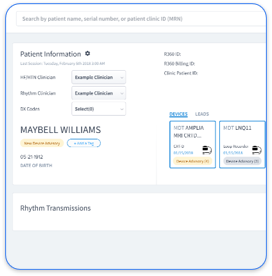
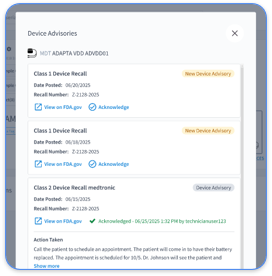
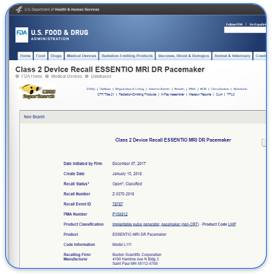
Can I monitor my pacemaker from my phone? Clinicians can review pacemaker transmission data on a smartphone through platforms that offer HIPAA-compliant mobile applications. Patient-facing monitoring remains more limited and depends on the specific device and platform in use.
Can you get an app for your pacemaker? No app communicates directly with an implanted pacemaker. A bedside communicator or wand sends device data to a manufacturer server, and a clinician then accesses that data through a web portal or mobile application.
What does the PaceMate patient portal do? The PaceMate portal aggregates CIED transmission data and presents it to clinical staff for review. It supports scheduling, alert notifications, and report generation within its supported device ecosystem.
Those capabilities cover basic remote monitoring needs for supported devices. Several structural constraints still limit how the PaceMate mobile app performs when practices manage devices from multiple manufacturers.
Four core limitations create friction for multi-OEM cardiology practices that rely on the PaceMate mobile app.
Single-vendor focus creates data silos. Many vendors expose different APIs and data structures, which forces apps to normalize and deduplicate data across platforms. Platforms built around a single OEM relationship do not solve this fragmentation. Practices that implant devices from Medtronic, Boston Scientific, Abbott, and Biotronik still log into separate portals for manufacturers outside PaceMate’s supported scope. This split creates data silos and redundant administrative work.
Lack of bi-directional EHR integration multiplies portal work. Interoperability limitations and EHR integration challenges are identified as a primary restraint on remote patient monitoring adoption, with many RPM solutions unable to integrate easily with popular EHR systems, leading to health information silos. Without bi-directional data flow, clinical staff must manually transcribe device findings into Epic, Cerner, or Athenahealth. This manual work introduces transcription errors and consumes billable staff time on low-value tasks.
Manual alert handling amplifies clinician burden. Rising clinician burden due to data overload and alert fatigue is identified as a challenge in the US remote patient monitoring market. Platforms that rely on manual triage workflows increase this burden. When every incoming transmission requires human review without AI-powered prioritization, staff spend more time in queues, and critical events such as new-onset atrial fibrillation or lead malfunction can be delayed or missed.
Limited data reliability during OEM server downtime exposes all prior gaps. Vendor-specific platforms depend on the upstream OEM server to deliver transmission data. If that server goes down, the mobile app has no redundant pathway to retrieve or reconstruct the missing data. These gaps appear in the patient record at the same time staff already face fragmented portals, manual transcription, and manual alert triage.
A vendor-neutral cardiac remote-monitoring platform ingests and normalizes data from all major device manufacturers through a single interface. The core capabilities that define this category include the following features.
PaceMate — Pros:
PaceMate — Cons:
Vendor-Neutral Platforms — Pros:
Vendor-Neutral Platforms — Cons:
The table below summarizes how each platform handles the four capabilities that most affect daily workflow efficiency and revenue capture: mobile access, cross-vendor data normalization, alert management, and billing automation. The gaps in PaceMate’s feature set align with the limitations described above.
| Capability | PaceMate Mobile App | Vendor-Neutral Category Standard | Rhythm360 |
|---|---|---|---|
| Mobile experience | Available, scope tied to supported OEM data | HIPAA-compliant smartphone review and sign-off across all OEMs | Secure, HIPAA-compliant mobile app with full transmission review and report sign-off from any device |
| Interoperability | Primarily Medtronic-lineage devices, cross-vendor normalization requires significant overhead | API, HL7, XML, and PDF ingestion across all major OEMs | Medtronic, Boston Scientific, Abbott, Biotronik, and others via API, HL7, XML, and computer vision PDF parsing |
| Alert management | Manual triage, alert fatigue is a documented challenge in single-vendor RPM workflows | AI-powered prioritization of clinically significant events | AI-driven alert triage with optional 24/7 CCT oversight, with up to 80% reduction in critical alert response time |
| Billing automation | Not documented as a core feature | Automated CPT code documentation required for CMS billing compliance | Automated CPT code capture and documentation for codes including 93298, 93299, and 99454, with up to 300% revenue uplift reported |
See these capabilities in action during a live workflow walkthrough.
Rhythm360 maps directly to each limitation identified in the PaceMate mobile app review and resolves them through a vendor-neutral architecture.
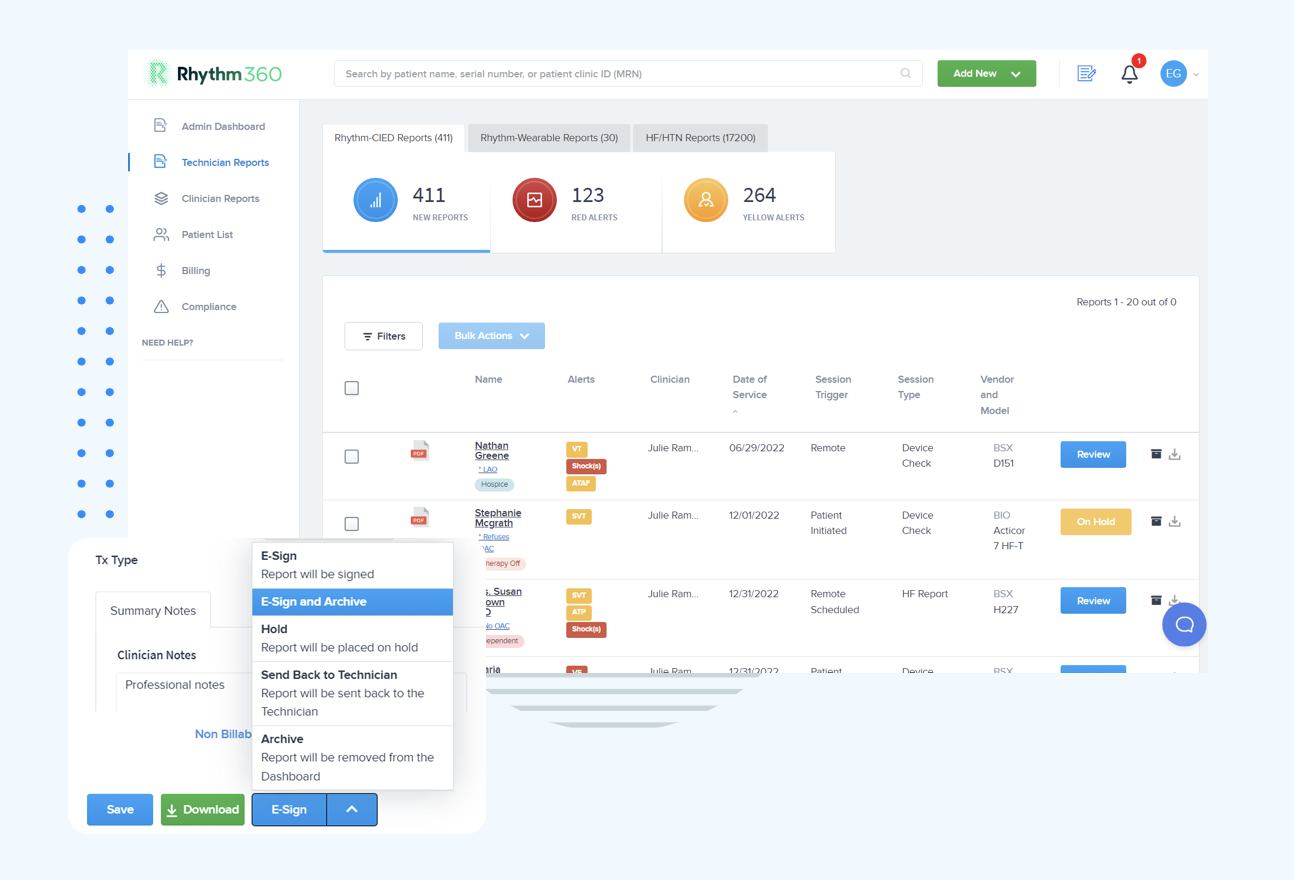
PaceMate’s single-vendor orientation forces multi-OEM practices into fragmented portal management. Rhythm360 removes that fragmentation by consolidating data from Medtronic, Boston Scientific, Abbott, Biotronik, and other manufacturers into a single dashboard. This unified view sets the foundation for consistent alert management.
Because all device data flows into one system, Rhythm360 can apply AI-powered triage across the entire patient population. The platform filters non-actionable transmissions and surfaces critical events faster than manual review, which supports the reported reductions in critical alert response times. This unified triage layer also supports continuity when individual OEM servers experience downtime.
Rhythm360’s redundant data feed architecture, combined with computer vision and AI-powered extrapolation, meets that transmissibility benchmark even during upstream outages. The same platform automates CPT code capture and documentation where PaceMate offers no documented billing automation. Practices can recover revenue that previously went unbilled.
The platform’s secure, HIPAA-compliant mobile application allows electrophysiologists and device technicians to review transmissions, sign reports, and coordinate care from their smartphones. This mobile access removes the dependency on a fixed workstation. Optional 24/7/365 oversight by certified cardiac technicians (CCTs) supervised by physicians adds another clinical safety layer.
See how Rhythm360 closes these workflow gaps in a live demonstration tailored to your practice’s device mix.
Rhythm360 is built to meet the full scope of HIPAA technical safeguards that apply to cardiac remote monitoring. Cardiology practices must implement access controls such as unique user IDs, role-based access, and multi-factor authentication for remote monitoring portals, and Rhythm360 enforces all three. Strong implementation expectations for HIPAA-compliant healthcare mobile apps include AES-256 encryption for data at rest and TLS 1.2+ for data in transit. Rhythm360 follows these encryption standards.
Rhythm360’s audit trail logs every authentication attempt, PHI access event, and administrative action. These logs support the documentation requirements for CPT codes 93298, 93299, and 99454 and satisfy CMS auditing standards. Covered entities must execute Business Associate Agreements with remote device monitoring platforms and run documented Security Risk Analyses that include pacemaker and ICD data backhauls. Rhythm360 supports both requirements.
Rhythm360’s onboarding process, including EHR integration setup, typically takes from a few days to a few weeks. The exact timing depends on practice size and existing infrastructure. Bi-directional integrations are available for Epic, Cerner, Athenahealth, eClinicalWorks, Greenway Health, and other systems via HL7.
Interoperability for cardiac remote monitoring apps is improved by using HL7 FHIR standards for structured data exchange with EHR systems, and Rhythm360 supports this standard. The SaaS-based pricing model scales with clinic size and platform usage and avoids the high setup fees associated with legacy on-premise systems.
Practices that have implemented Rhythm360 report an 80% reduction in response times for critical patient alerts and a 300% increase in revenue generation. These gains come from stronger CPT code capture, improved staff efficiency, and new RPM service lines for heart failure and hypertension management.
Fragmented reimbursement policies and complex billing requirements are listed as key operational challenges in the US RPM market. Rhythm360’s automated billing documentation addresses both challenges directly. Staff retention also improves when device technicians move away from managing multiple OEM portals and large manual alert queues.
Can clinicians access cardiac device data on a mobile phone? Yes. Rhythm360’s HIPAA-compliant mobile application allows electrophysiologists, cardiologists, nurse practitioners, and device technicians to review CIED transmissions, triage alerts, sign reports, and coordinate care from any smartphone. The app uses role-based access control, multi-factor authentication, and end-to-end encryption to protect patient data.
How does Rhythm360 keep cardiac device data secure? Rhythm360 enforces encryption for data at rest, TLS encryption for data in transit, role-based access control, multi-factor authentication, and audit logging. All communications and access events are tracked with a full audit trail. Rhythm360 executes Business Associate Agreements with covered entities and supports the Security Risk Analysis requirements that apply to pacemaker and ICD data backhauls.
How long does onboarding take? Implementation, including bi-directional EHR integration with systems such as Epic, Cerner, and Athenahealth, typically takes from a few days to a few weeks. Practice size and existing infrastructure influence the exact timeline.
Does Rhythm360 support devices from multiple manufacturers? Yes. Rhythm360 is vendor-neutral and ingests data from Medtronic, Boston Scientific, Abbott, Biotronik, and other major OEMs through a combination of APIs, HL7 feeds, XML, and computer vision PDF parsing. The platform normalizes all data into a single dashboard and removes the need to log into separate manufacturer portals.
How does Rhythm360 handle CPT billing compliance? Rhythm360 automates CPT code capture and generates the documentation required for codes including 93298, 93299, 99454, and related RPM codes. The platform tracks billable events in real time, supports CMS auditing requirements, and provides an administrative dashboard that displays captured and potential revenue based on CPT code thresholds. Practices have reported up to a 300% increase in revenue following implementation.
The PaceMate mobile app provides a cloud-based entry point for CIED remote monitoring. Its single-vendor orientation, manual alert workflows, lack of redundant data feeds, and limited EHR integration still create friction for practices that manage multi-OEM device populations.
Vendor-neutral platforms resolve these constraints by unifying data across all manufacturers, applying AI-powered triage to reduce alert fatigue, maintaining transmissibility through redundant pathways, and automating the billing documentation that drives practice revenue. Rhythm360 delivers these capabilities in a single HIPAA-compliant platform with a mobile experience designed for modern cardiology practice.
Explore how Rhythm360 can replace fragmented portals and recover lost revenue while reducing critical alert response times for your practice.