

Medtronic transferred its Paceart Optima system to PaceMate through an asset sale. PaceMate obtained the software, associated intellectual property, and data infrastructure, while Medtronic retained its broader organizational obligations.
Financial terms were not publicly disclosed. After the deal, PaceMate framed the acquisition as an expansion of its remote monitoring data platform and signaled an intent to move the Paceart Optima installed base onto its cloud-native PaceMateLIVE environment. Through 2025 and into May 2026, no independent third-party audit of migration completion rates or clinic satisfaction has been publicly released. This lack of transparency matters because clinics must evaluate migration performance before committing their historical data and workflows to a new platform.
PaceMate has presented itself as the only party that can migrate historical Paceart Optima data into a new platform environment. This claim creates a structural dependency. Clinics that want to preserve years of longitudinal patient records, including device interrogation histories, alert logs, and transmission archives, must work through PaceMate to move that data.
This dynamic introduces meaningful vendor lock-in risk. Medicare’s RPM framework requires uninterrupted data continuity across three core components: patient education and device setup, device supply with at least two readings every 30 days, and ongoing treatment management. Any gap in historical records directly threatens reimbursement eligibility. Practices that cannot demonstrate continuous monitoring documentation risk claim denials for CPT codes including 93298, 93299, and 99454.
The acquisition aggregated nearly 1,000 monitoring hubs, each representing a cardiology practice or health system with an established Paceart Optima workflow. For these sites, the operational disruption touches both clinical and administrative teams.
Staff trained on Paceart Optima’s on-premise interface must learn a new cloud environment, which means device technicians who spent years mastering specific alert thresholds and report formats now face a complete retraining cycle. This learning curve is compounded by the simultaneous need to reconcile patient records across the transition. Any data mapping errors during migration can create gaps that affect clinical decision-making and billing documentation at the same time.
The persistent workforce shortages driving providers toward RPM adoption leave practices with limited staff capacity to absorb a disruptive platform transition. As a result, even modest migration friction can translate into slower workflows, longer backlogs, and delayed revenue capture.
PaceMate has stated that it will continue supporting on-premise Paceart Optima installations for a defined period after the acquisition. In daily operations, the company’s commercial and development resources concentrate on PaceMateLIVE, its cloud-based offering. This creates a gap between formal support commitments and the real direction of product investment.
More than 80% of healthcare providers integrated telehealth after the pandemic, and the broader shift from rigid legacy systems to flexible cloud deployment is well established. A vendor-driven migration, however, differs from a practice-led modernization decision. Clinics that remain on Paceart Optima should anticipate slower support responses and stronger commercial pressure to move to PaceMateLIVE as the acquisition matures.
JR Finkelmeier now leads PaceMate, and this leadership transition affects clinic-facing relationships, account management continuity, and strategic priorities. Leadership changes at the vendor level often bring shifts in customer success staffing, pricing structures, and product roadmap focus. Cardiology practice administrators must factor these shifts into any long-term platform decision.
Practices that built institutional relationships with Medtronic’s Paceart support teams will find those contacts no longer relevant. The new PaceMate organization is still building its own support infrastructure. The maturity of that infrastructure, compared with the demands of nearly 1,000 clinic accounts, remains uncertain through mid-2026.
The move from Paceart Optima to any new platform creates alert fatigue risk during the adjustment period. When teams reconfigure alert thresholds, notification routing, and escalation protocols, clinically significant events such as new-onset atrial fibrillation, ventricular tachycardia, or lead malfunction can be delayed or missed.
Medicare has covered remote patient monitoring since 2018, and the reimbursement framework rewards consistent, documented monitoring activity. The framework described earlier means that any disruption to transmission reliability or documentation completeness during migration can translate directly into lost CPT revenue.
Practices that manage devices from multiple OEMs, including Medtronic, Boston Scientific, Abbott, and Biotronik, face added risk if PaceMateLIVE’s multi-vendor support is incomplete or requires separate portal access for non-Medtronic devices. Billing documentation gaps during migration periods remain one of the most common sources of revenue leakage in cardiac remote monitoring programs.
See how automated CPT documentation and AI-driven alert triage protect revenue and reduce fatigue during transitions with Rhythm360.
The PaceMate Paceart acquisition has renewed interest in vendor-neutral platforms that aggregate data from all major device manufacturers without commercial alignment to a single OEM. The cloud and SaaS segment of the global eHealth market continues to grow, reflecting provider demand for scalable, interoperable infrastructure.
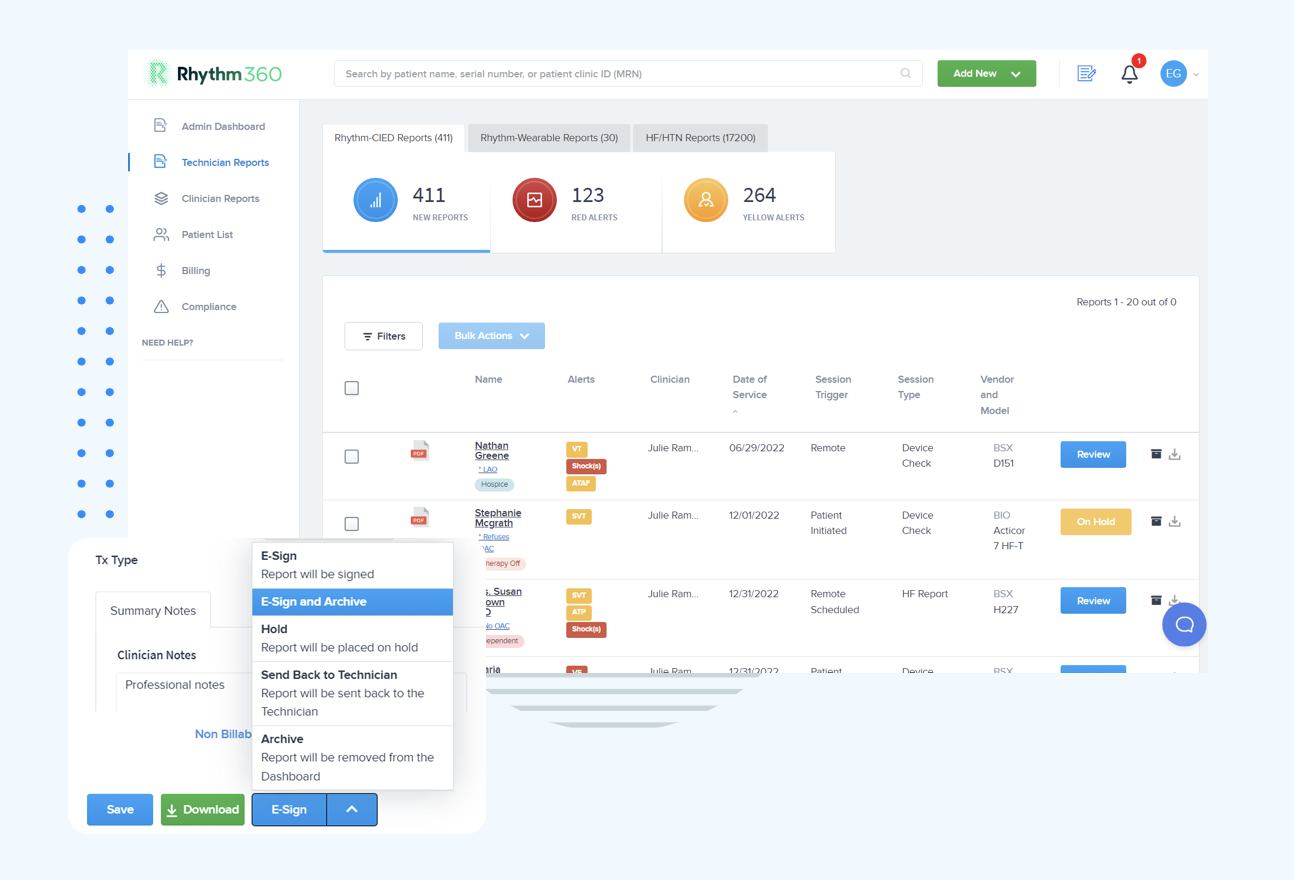
Rhythm360, developed by RhythmScience, is a vendor-neutral, HIPAA-compliant platform that consolidates CIED and RPM data from all major OEMs into a single AI-powered dashboard. The platform maintains greater than 99.9% transmissibility through redundant data feeds, computer vision, and AI-powered extrapolation. Critical alert response times can drop by up to 80%, and practices have captured up to 300% more revenue through automated CPT code documentation. Bi-directional EHR integration with Epic, Cerner, Athenahealth, and others is included, along with a HIPAA-compliant mobile application and optional 24/7 oversight by certified cardiac technicians (CCTs).
| Capability | Paceart Optima (Legacy) | PaceMateLIVE | Rhythm360 |
|---|---|---|---|
| Multi-OEM device support | Primarily Medtronic-centric on-premise database | Cloud-based, multi-OEM scope not independently verified post-acquisition | Vendor-neutral, supports Medtronic, Boston Scientific, Abbott, Biotronik, and others |
| Bi-directional EHR integration | Not a native feature of legacy on-premise system | Integration scope not publicly detailed as of May 2026 | Bi-directional with Epic, Cerner, Athenahealth, eClinicalWorks, Greenway Health via HL7 |
| Mobile access | Not available in legacy on-premise architecture | Not independently documented as of May 2026 | HIPAA-compliant mobile app for transmission review, report signing, and care coordination |
| 24/7 clinical oversight option | Not available | Not publicly documented as of May 2026 | Optional 24/7/365 CCT oversight supervised by physicians |
What is the migration timeline for clinics moving from Paceart Optima to PaceMateLIVE?
PaceMate has not published a universal mandatory migration deadline as of May 2026. The commercial direction of the acquisition, however, clearly points toward PaceMateLIVE, and legacy on-premise support will diminish over time. Clinics should treat the absence of a hard deadline as a chance to evaluate all available alternatives, including vendor-neutral platforms, instead of defaulting to PaceMateLIVE under time pressure. Rhythm360’s implementation process, including EHR integration, typically ranges from a few days to a few weeks, which supports practices with near-term transition needs.
Who owns the historical patient data stored in Paceart Optima?
The cardiology practice is the covered entity responsible for patient health information under HIPAA, so the practice retains legal ownership of its patient data regardless of which platform stores it. The practical challenge is that PaceMate controls the technical pathway for migrating that data out of the Paceart Optima format. Practices should request explicit data portability commitments in writing before signing any PaceMateLIVE agreement and should assess whether a vendor-neutral platform can ingest their existing data through alternative normalization methods.
How does a platform transition affect CPT code billing for remote monitoring?
Medicare’s RPM reimbursement framework requires documented continuity across patient enrollment, device data transmission, and clinical management. Any gap in transmission records or documentation during a platform migration can result in claim denials for CPT codes such as 93298, 93299, 99454, 99457, and related codes. Rhythm360 automates CPT code capture and generates compliant billing documentation continuously, which reduces the risk of revenue leakage during and after a transition. Practices that have migrated to Rhythm360 have reported up to 300% increases in revenue capture through more complete billing workflows.
What happens to alert management during a platform migration?
Alert thresholds, escalation routing, and notification protocols must be reconfigured when teams move between platforms. During this reconfiguration period, clinically significant events, including new-onset AFib, ventricular tachycardia, and device malfunctions, carry an elevated risk of delayed response. Rhythm360’s AI-powered alert triage system filters non-actionable notifications and prioritizes clinically significant events, which can reduce critical alert response times by up to 80%. The optional 24/7 CCT oversight layer adds another safety net during transition periods.
Can Rhythm360 support devices from manufacturers other than Medtronic?
Yes. Rhythm360 is fully vendor-neutral and supports devices from Medtronic, Boston Scientific, Abbott, Biotronik, and other major OEMs. The platform consolidates all device data into a single dashboard, so staff no longer need to log into separate manufacturer portals. This consolidation is especially valuable for practices that implant devices from multiple manufacturers, where fragmented portal access often drives administrative burden and data silos.
The PaceMate Paceart acquisition reshapes the operational landscape for nearly 1,000 cardiology clinics that built their remote monitoring workflows around Paceart Optima. Exclusive migration control, leadership transition, diminishing legacy support, and a clear commercial push toward PaceMateLIVE create compounding risk for practices that delay evaluation of their options.
The risks are concrete. Data continuity gaps can threaten reimbursement, alert management can become unstable during platform transitions, and single-vendor dependency can weaken long-term negotiating leverage. AI-enabled clinical and administrative automation now drives many IT upgrade decisions across healthcare, and the acquisition creates a natural decision point. Each practice must decide whether PaceMateLIVE or a vendor-neutral alternative better supports its clinical and financial goals.
Rhythm360 offers a low-risk migration path with vendor-neutral multi-OEM support, bi-directional EHR integration, greater than 99.9% transmissibility, AI-powered alert triage, and automated CPT code documentation, all deployable within days to weeks. Practices that act before legacy Paceart Optima support degrades further retain the most control over their data, workflows, and revenue.
Get a personalized migration assessment that maps your data preservation, workflow, and revenue protection needs with Rhythm360.





