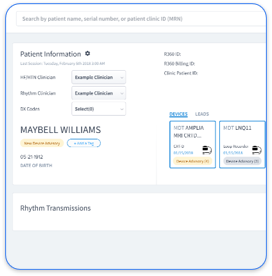
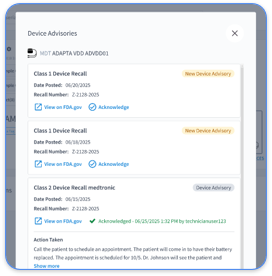
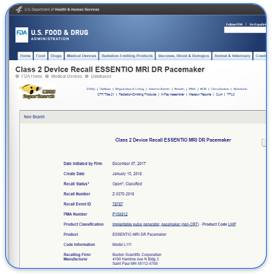
PaceMate is a cloud-based platform, built in part on technology acquired from Medtronic's PaceArt product. It collects remote transmission data from CIEDs including pacemakers, implantable cardioverter-defibrillators (ICDs), and cardiac resynchronization therapy (CRT) devices. The PaceMateLIVE dashboard presents incoming transmissions and supports EHR connectivity for documentation. The platform reduces reliance on paper-based workflows and centralizes device reports within a single interface. Its data aggregation scope and AI capabilities remain constrained compared with purpose-built, vendor-neutral platforms.
Data fragmentation is the primary operational challenge for any multi-OEM cardiology practice. When a practice implants devices from Medtronic, Boston Scientific, Abbott, and Biotronik, staff must log into four separate, non-interoperable manufacturer portals to retrieve patient data. Each portal uses different terminology, report formats, and alert thresholds. These differences create data silos that slow clinical response and introduce transcription errors when staff manually enter data into the EHR.
Manual retrieval workflows also create coverage gaps. If a transmission arrives on a weekend and the responsible technician is not monitoring a specific portal, the event may go unreviewed until the next business day. University of Chicago Medicine's implementation of Rhythm360 addressed exactly this problem. Clinicians reviewed more transmissions daily and identified more abnormalities than their prior fragmented workflow allowed.
Fragmented workflows affect not only clinical operations but also revenue capture. CMS covers remote patient monitoring for the collection of physiologic data using internet-connected devices for both chronic and acute conditions. To qualify, a patient must have a chronic or acute condition requiring monitoring and use a device that meets the FDA definition of a medical device, digitally uploads data, and collects and transmits health data on multiple days within each 30-day period.
Medicare pays separately for three main RPM components: education and setup, device supply including data collection and transmission, and treatment and management. Relevant CPT codes include 93298 and 93299 for CIED remote monitoring, and 99453, 99454, and 99457 for physiological RPM. Without automated tracking and documentation, practices routinely miss billable events or submit incomplete documentation. These gaps result in claim denials and measurable revenue leakage.
Growing CIED capabilities have increased the volume of remote transmission data. This growth often creates high volumes of non-actionable alerts and alert fatigue among clinical staff. When clinicians receive many low-priority notifications alongside genuinely critical events, the signal-to-noise ratio drops and response times for actionable alerts rise.
A 2021 JACC: Clinical Electrophysiology study analyzed remote monitoring alert burden across more than 26,000 patients with cardiac implantable devices. The study documented the scale of the problem across real-world clinical populations. Platforms that lack AI-driven triage present all alerts at the same priority level. Clinicians must manually sort through transmissions to identify events requiring immediate action. This manual burden contributes directly to clinician burnout and staff turnover.
Login burden creates a measurable productivity drain. A device technician managing four OEM portals plus a separate EHR may execute ten or more distinct logins per shift. Each portal session requires separate authentication. Staff then manually transcribe or copy-paste data into the patient record, which introduces transcription errors and consumes time that could support clinical review.
On-call access compounds this problem. Clinicians away from the office may lack VPN access to on-premise systems or may not have credentials for every OEM portal on a personal device. A critical arrhythmia alert arriving on a Saturday morning can go unaddressed until Monday if the workflow depends on workstation-bound access. Bi-directional EHR integration with mobile access removes this constraint and supports timely review.
Multi-OEM device populations make vendor-neutral platforms a practical necessity. A practice with 500 CIED patients implanted across four manufacturers cannot achieve true efficiency through any single OEM portal. Vendor-neutral platforms ingest data from Medtronic, Boston Scientific, Abbott, Biotronik, and others through APIs, HL7 feeds, XML, and AI-powered PDF parsing via computer vision. The platform then normalizes disparate data formats into a single source of truth.
Andrew Beaser, MD, Associate Professor of Medicine at University of Chicago Medicine, stated: "We are able to address these issues earlier; rather than waiting for a 3-month visit, we can call patients in for evaluation." That shift from reactive to proactive care becomes possible only when all device data is visible in one place.

A purpose-built cardiac RPM platform delivers four core capabilities that legacy and single-vendor tools cannot match. First, AI-powered alert triage filters non-actionable transmissions and surfaces clinically significant events with prioritized notifications. This approach reduces the cognitive load on clinical staff. Second, redundant data feeds ensure that if an OEM server experiences downtime, transmissions are captured through an alternate pathway and reach the reliability threshold described earlier.
Third, bi-directional EHR integration with Epic, Cerner, Athenahealth, eClinicalWorks, and others removes manual transcription and creates an auditable documentation trail for every billable event. Fourth, a HIPAA-compliant mobile application allows clinicians to review transmissions, sign reports, and coordinate care from any location. These capabilities together support consistent coverage, accurate billing, and faster interventions.
Andrew Beaser, MD, noted: "Decision support, including AI-assisted decision support, will become increasingly important as data volumes grow." University of Chicago Medicine processed more than 73,000 reports annually through Rhythm360 in 2025, averaging more than 18,000 reports per quarter. At that scale, AI-assisted triage becomes operationally necessary rather than optional.
| Metric | PaceMate / Single-Vendor Approach | Rhythm360 (Vendor-Neutral AI Platform) |
|---|---|---|
| Login burden | Multiple OEM portals required for multi-manufacturer populations | Single unified dashboard for all OEMs |
| Data reliability | Dependent on individual OEM server uptime | >99.9% transmissibility via redundant data feeds |
| Alert prioritization | Manual review of all incoming transmissions | AI triage filters non-actionable alerts, critical events surfaced first |
| CPT code capture | Manual tracking, documentation gaps lead to claim denials | Automated CPT capture with documented revenue growth |
| Critical alert response | Dependent on staff availability and portal monitoring schedules | Significantly faster response time for critical alerts |
Rhythm360 clients have documented the improvements outlined earlier. They report dramatically faster response times for critical alerts, the high data reliability threshold mentioned above, and substantial revenue growth through improved CPT code capture and new RPM service lines.
Compare these documented outcomes against your current platform's performance in a live demo.
Effective evaluation focuses on how a platform solves the specific problems described above. Practices should assess vendor neutrality first, since the platform must ingest data from all OEMs in the current device population to eliminate the multi-portal problem. Next, they should verify data transmissibility guarantees and the technical mechanisms behind them, because missed transmissions create coverage gaps that delay critical interventions.
AI triage methodology matters because it determines whether the platform reduces or perpetuates alert fatigue. Bi-directional EHR integration removes the manual transcription burden that consumes technician time and introduces errors. Automated CPT code tracking and documentation audit trails protect against the revenue leakage discussed in the billing section. Mobile access with HIPAA-compliant authentication supports on-call coverage without workstation dependence.
Finally, practices should confirm the onboarding timeline. For Rhythm360, onboarding typically ranges from a few days to a few weeks, including EHR integration setup. This timeline allows clinics to transition without major disruption to ongoing operations.
Practices should also request documented outcome data from the vendor, including alert response time benchmarks and revenue capture improvements from comparable clinic profiles. A structured demo offers a direct way to see whether a platform's workflow matches the practice's operational reality.
PaceMate is a cloud-based platform used by cardiology practices to collect and review remote transmission data from cardiac implantable electronic devices including pacemakers, ICDs, and CRT devices. It provides a dashboard interface for reviewing device reports and supports EHR connectivity. Practices with multi-manufacturer device populations typically find that PaceMate alone does not remove the need to access separate OEM portals for devices outside its integration scope.
Medicare reimburses remote CIED monitoring primarily through CPT codes 93298 and 93299, which cover remote monitoring of implantable cardiovascular devices with or without a physician or qualified healthcare professional analysis. Remote physiological monitoring for chronic conditions such as heart failure uses codes 99453 for initial setup, 99454 for device supply and data transmission, and 99457 for treatment management services. Each component is billed separately, and documentation must demonstrate that transmission data was collected across multiple days within each 30-day period to satisfy coverage criteria.
AI-powered triage systems analyze incoming transmissions against clinical thresholds and historical patient data to classify alerts by clinical urgency. Non-actionable transmissions, such as routine scheduled checks with no abnormal findings, are filtered or deprioritized. Events such as new-onset atrial fibrillation, ventricular tachycardia, lead impedance changes, or battery depletion indicators are escalated immediately. This approach reduces the total volume of notifications requiring manual review and ensures that clinicians focus first on events with genuine clinical significance.
A vendor-neutral cardiac monitoring platform ingests and normalizes data from devices manufactured by multiple OEMs, including Medtronic, Boston Scientific, Abbott, and Biotronik, without requiring separate logins to each manufacturer's proprietary portal. Data is aggregated through APIs, HL7 feeds, XML, and AI-assisted PDF parsing, then presented in a unified dashboard. This model removes the administrative burden of multi-portal management and ensures that all device data is visible in a single source of truth regardless of which manufacturer implanted the device.
Implementation timelines vary by platform and practice complexity. For Rhythm360, the onboarding process including EHR integration typically takes from a few days to a few weeks. The process includes connecting to OEM data feeds, configuring bi-directional EHR integration with systems such as Epic, Cerner, or Athenahealth, migrating existing patient records, and training clinical and administrative staff. Practices with larger device populations or more complex EHR environments may require additional configuration time, but the platform is designed to limit disruption to ongoing clinical operations during the transition.
PaceMate remote monitoring addresses several limitations of legacy on-premise systems, yet practices managing multi-manufacturer CIED populations still face fragmented portals, manual triage workflows, and preventable billing leakage. Vendor-neutral, AI-powered platforms resolve these problems at the infrastructure level by unifying all OEM data, automating CPT documentation, and prioritizing clinically significant alerts before they become missed events. The documented outcomes referenced earlier capture the operational and financial case for platform consolidation. Schedule a demo with Rhythm360 to see how a unified platform can transform cardiac RPM workflows at your practice.