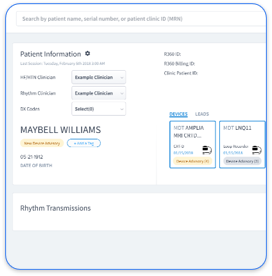
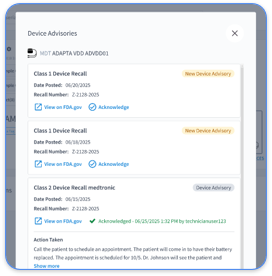
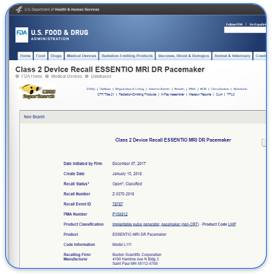
Vendor-neutral remote monitoring platforms solve fragmentation by pulling data from all major OEM device networks into a single normalized workspace. Staff no longer log into separate portals for each device type. Instead, a unified platform aggregates transmissions, applies AI-driven triage to separate actionable alerts from noise, generates compliant documentation automatically, and writes billing data back to the EHR. Clinics see fewer administrative hours, faster responses to critical events, and fewer missed CPT billing opportunities.
The 2026 Medicare Physician Fee Schedule update shows why automated CPT capture now matters even more. New rules effective January 1, 2026 introduced CPT 99445 ($52.11 national average) for patients transmitting data on as few as 2 days in a 30-day period, replacing the prior 16-day minimum for device supply codes. For practices with inconsistent transmitters, recovering just 10% of previously missed monthly billings via CPT 99445 across a 400-patient RPM population generates more than $22,000 in additional annual device reimbursement, revenue that manual workflows routinely leave uncaptured. Given these stakes, evaluating specific platforms against measurable performance criteria becomes essential.
PaceMate is a legitimate, cloud-based cardiac device management company. It acquired PaceArt from Medtronic and operates as a recognized platform in the CIED monitoring space. Clinic leaders evaluating it focus on how well it reduces alert fatigue, how quickly it onboards, how deeply it integrates with Epic and Cerner, and how reliably it captures CPT revenue.
PaceMate offers workflow automation and reporting features, and its acquisition of PaceArt expanded its device database. However, buyer-focused clinical outcome data, including published response-time benchmarks, documented alert fatigue reduction rates, and verified CPT capture improvements, is not publicly available from PaceMate as of mid-2026. Clinic administrators evaluating the platform rely primarily on vendor-provided materials rather than independent clinical validation. Onboarding timelines and EHR integration depth also vary by implementation, and the platform’s performance against the 2026 CPT billing rule changes has not been independently benchmarked. Beyond these measurement gaps, the platform’s architecture itself raises concerns for multi-OEM environments.
For clinics managing patients across multiple OEMs, a single-vendor-oriented platform introduces structural risk. If the platform’s data normalization or alert logic is tuned for one device ecosystem, multi-OEM environments may still require supplemental manual review. That scenario recreates the fragmentation problem the platform is meant to solve.
| Criteria | PaceMate | Rhythm360 | Impact |
|---|---|---|---|
| EHR Integration Speed | Not independently benchmarked | Days to a few weeks; industry-standard bi-directional EHR integrations often take 6–18 months | Faster time-to-value, less workflow disruption |
| Alert Triage | Workflow automation; no published fatigue-reduction benchmark | AI-powered triage; 80% reduction in critical alert response times | Fewer missed critical events, reduced clinician burnout |
| Data Transmissibility | No published data | >99.9% via redundant feeds, computer vision, and AI extrapolation | Near-zero data gaps, more confident clinical decision-making |
| CPT Revenue Capture | No published outcome data | Up to 300% revenue increase; automated documentation for 2026 CPT codes | Directly addresses the OIG-documented incomplete-billing gap |
| Mobile Access | Not independently verified | HIPAA-compliant mobile app for transmission review, report signing, and care coordination | Reliable on-call coverage without workstation dependency |
| Real-World Scale | No published high-volume benchmark | 73,000+ reports annually at University of Chicago Medicine in 2025 | Proven performance in high-volume academic environments |
See how Rhythm360 performs against your current platform across these criteria.
Rhythm360 addresses the core pain points, including alert fatigue, slow onboarding, incomplete CPT capture, and limited mobile access, through four integrated capabilities that streamline device monitoring workflows.
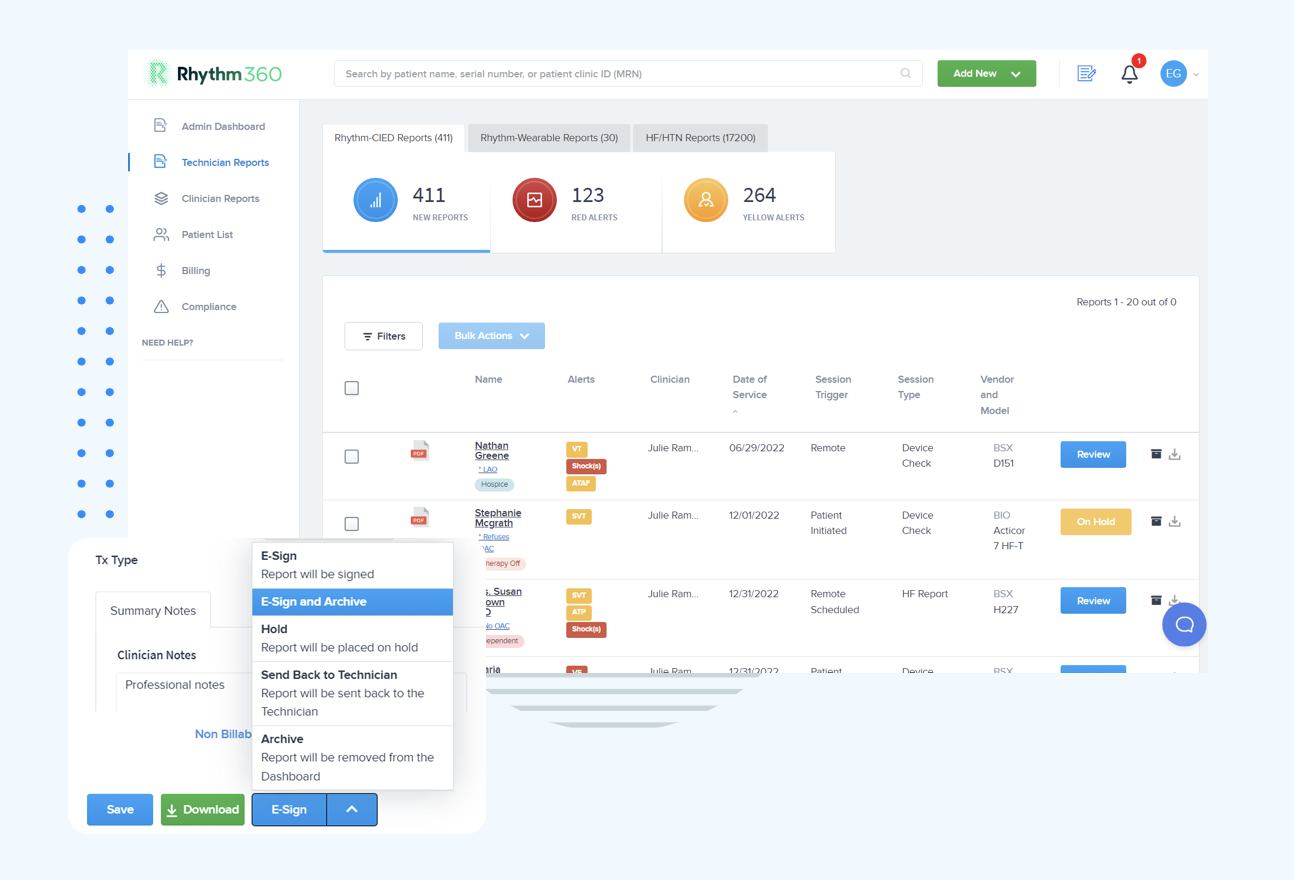
AI-powered alert triage. The platform filters non-actionable transmissions and surfaces clinically significant events, such as new-onset AFib, ventricular tachycardia, lead malfunction, and ERI/RRT indicators, with prioritized notifications. As Andrew Beaser, MD, Associate Professor of Medicine at University of Chicago Medicine, noted, “Decision support, including AI-assisted decision support, will become increasingly important as data volumes grow.” UCM’s implementation processed more than 73,000 reports annually with stable dismissal rates. That performance shows that AI triage can scale without degrading accuracy.
Bi-directional EHR integration. Rhythm360 connects with Epic, Cerner, Athenahealth, eClinicalWorks, and other systems via HL7. It pulls inbound demographics, diagnoses, and orders, then writes back e-signed reports, encounter data, and billing information. These integrations complete in days to a few weeks, far faster than the 6–18 month industry standard, and clinics avoid downtime during cutover.
Automated CPT capture aligned to 2026 rules. Rhythm360’s billing documentation engine aligns with the updated 2026 Medicare fee schedule. A 100-patient RPM panel can generate substantial gross annual revenue under 2026 rates, but capturing that revenue requires correct documentation of setup (99453), device supply (99445/99454), and management time (99457/99458) every month. Manual workflows often miss one or more of these components, which leaves money on the table. Rhythm360 closes that gap by automating the entire documentation chain. Dr. Upadhyay at UCM confirmed the outcome directly: “We have improved billing and accountability for our patients after the integration.”
Optional 24/7 CCT oversight and mobile access. Practices that need extended coverage can activate Rhythm360’s certified cardiac technician (CCT) oversight layer, supervised by physicians, for continuous triage. The HIPAA-compliant mobile app lets clinicians review transmissions, sign reports, and coordinate care from any location. This flexibility removes the on-call workstation dependency that contributes to technician burnout.
Get a revenue impact estimate for your practice based on your current patient panel size and CPT capture rate.
PaceMate is a legitimate cloud-based cardiac device management company operating in the CIED remote monitoring space. It acquired PaceArt from Medtronic and serves cardiology practices across the United States. The key issue for clinic administrators is whether PaceMate’s feature set, integration depth, and documented clinical outcomes match the operational and financial requirements of a multi-OEM device clinic in 2026. Independent, buyer-focused benchmarks on alert fatigue reduction, CPT capture rates, and EHR integration timelines are not publicly available from PaceMate, which limits direct comparison.
PaceMate does not publish standardized onboarding timelines. Implementation duration varies based on clinic size, EHR environment, and integration complexity. For context, bi-directional EHR integrations typically take 6–18 months from kickoff to production. Rhythm360’s onboarding, including EHR integration, typically completes within a few days to a few weeks, depending on the same variables.
PaceMate includes workflow automation features intended to streamline alert management, but no independently published data quantifies its alert fatigue reduction rate. Alert fatigue in CIED monitoring stems from the volume of non-actionable transmissions generated across multi-OEM device populations. Platforms that apply AI-driven triage, filtering transmissions before they reach clinical staff and prioritizing only actionable events, produce measurable reductions in response time and cognitive load. Rhythm360 documents an 80% reduction in critical alert response times through its AI triage layer, a benchmark supported by real-world deployment at University of Chicago Medicine.
Revenue leakage in multi-OEM environments is substantial and well-documented. A September 2024 Office of Inspector General report found that 43% of Medicare enrollees receiving RPM services did not receive all three required billing components, a failure directly linked to fragmented, manual workflows. That 43% represents real revenue left uncaptured. As noted earlier, capturing the full revenue potential of an RPM panel requires documenting all three billing components every month, a task where manual workflows routinely fail, especially for patients with inconsistent transmission patterns.
PaceMate is a recognized platform in the CIED monitoring market, but the absence of independently published benchmarks on alert fatigue reduction, CPT capture rates, and EHR integration outcomes leaves clinic administrators without the data needed for a confident buying decision. The operational and financial stakes in 2026, including a $16.09 billion RPM market, updated CPT billing rules, and OIG findings on revenue leakage, call for a platform with verified, quantified results.
Rhythm360 provides that verification. The high-volume deployment at University of Chicago Medicine described earlier, an 80% reduction in critical alert response times, up to 300% revenue improvement through automated CPT capture, and bi-directional EHR integration with Epic, Cerner, and others within days to weeks represent documented outcomes, not projections. For device clinic managers, practice administrators, and EP lab directors managing multi-OEM populations, Rhythm360 offers a vendor-neutral platform built to eliminate fragmentation, alert fatigue, and revenue leakage that legacy and single-vendor systems leave unresolved.
Evaluate Rhythm360 in your specific clinical environment and see how it performs in your clinical and billing workflows.