
7 Evidence-Based Strategies to Reduce Hospital Readmissions
Reduce cardiology readmissions with 7 evidence-based remote monitoring strategies. Rhythm360 unifies device data, cuts alert fatigue & drives results.

Last updated: June 25, 2026
Key Takeaways for Cardiology Teams
- Fragmented OEM portals and disconnected workflows drive many preventable 30-day cardiology readmissions.
- Centralizing all CIED and heart failure device data into one vendor-neutral dashboard removes data silos and missed transmissions.
- AI-powered alert triage cuts alert fatigue and can reduce critical-alert response times by up to 80%.
- Automated transmission follow-up, transitional care, EHR integration, and CPT billing capture improve compliance, documentation, and revenue.
- Contact Rhythm360 to apply these seven evidence-based strategies in your cardiology practice.
7 Evidence-Based Strategies to Reduce Hospital Readmissions in Cardiology Using Remote Monitoring
1. Centralize All Device Data Into a Single Vendor-Neutral Dashboard
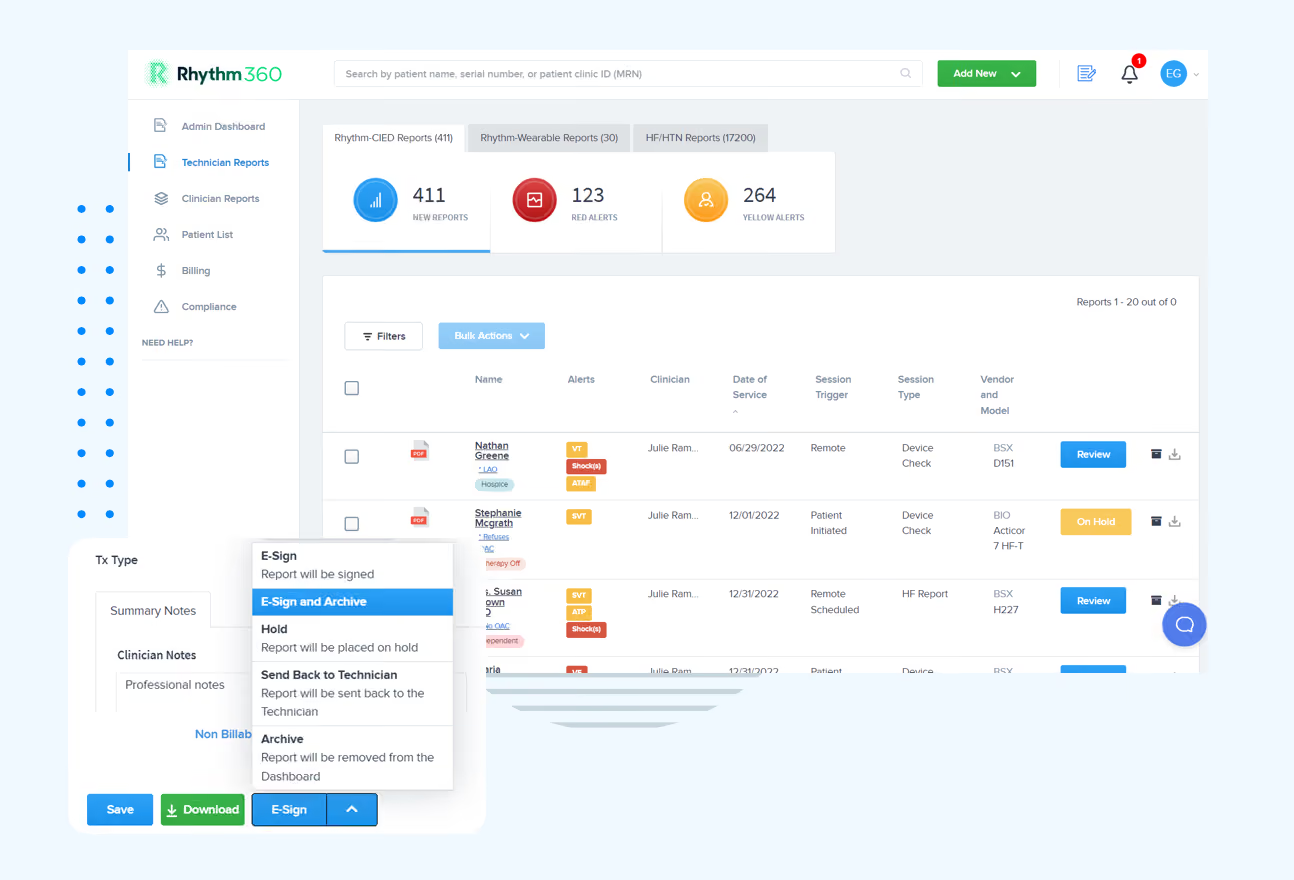
Centralizing device data into one workspace eliminates silos created by multiple OEM portals. Practices ingest and normalize transmissions from all implanted device manufacturers into a unified dashboard using API, HL7, XML, and AI-assisted PDF parsing. Any scheduled or unscheduled device transmission across manufacturers flows into this single environment. Success appears as staff hours recaptured from redundant logins and a measurable drop in missed transmissions. University of Chicago Medicine (UCM) reviewed more than 73,000 reports annually through a centralized remote monitoring platform in calendar year 2025, averaging more than 18,000 reports per quarter, a volume that becomes unmanageable when spread across fragmented OEM portals.
2. Implement AI-Powered Alert Triage to Eliminate Alert Fatigue
AI-powered triage keeps clinicians focused on clinically significant events instead of low-value notifications. Practices apply AI-driven filtering rules that stratify alerts by clinical urgency, separating ventricular tachycardia and new-onset atrial fibrillation from routine battery status checks. Arrhythmia detections, lead impedance anomalies, and device therapy deliveries trigger this triage process. The result is up to an 80% reduction in critical-alert response times. Andrew Beaser, MD, Associate Professor of Medicine at UCM, noted, “Decision support, including AI-assisted decision support, will become increasingly important as data volumes grow.”
Workflow callout, alert fatigue: Legacy OEM portals generate high volumes of low-priority notifications. Without intelligent triage, clinical staff become accustomed to dismissing alerts, which raises the risk that a critical event is overlooked. AI stratification converts raw alert volume from a liability into a manageable, prioritized worklist.
3. Automate Scheduled and Unscheduled Transmission Follow-Up
Once alerts are properly triaged, the next operational gap involves ensuring transmissions arrive reliably. Practices aim for near-zero missed transmission rates across the monitored device population. Automated workflows trigger integrated patient messaging when a scheduled transmission does not arrive within a defined window, and every outreach is logged with a full audit trail. Missed transmission flags and disconnected home monitoring equipment initiate these follow-up actions. The outcome is higher device compliance and clear documentation that supports payer audits.
Workflow callout, missed transmissions: A patient with a disconnected home monitor produces no alert in a fragmented system. Automated follow-up workflows close this blind spot before it turns into a missed clinical event.
4. Use Structured Transitional Care Protocols After Discharge
Structured transitional care protocols target deterioration in the high-risk 30-day post-discharge window. At discharge, teams enroll heart failure patients in remote physiological monitoring that captures daily weight, blood pressure, and symptom data. Threshold breaches route to the care team within hours instead of days, which supports earlier intervention. Triggers include weight gain above defined thresholds, such as at least 2 pounds in 24 hours or at least 5 pounds in 7 days, along with elevated blood pressure readings. Outcomes include earlier clinical action and lower CMS Hospital Readmissions Reduction Program (HRRP) excess readmission ratios for heart failure. Andrew Beaser, MD, at UCM, explained, “We are able to address these issues earlier; rather than waiting for a 3-month visit, we can call patients in for evaluation.”
5. Integrate Bi-Directional EHR Documentation to Close the Loop
Bi-directional EHR integration removes manual transcription errors and keeps every clinical action in the legal medical record. Finalized device reports, alert acknowledgments, and care-coordination notes flow directly into Epic, Cerner, or other EHR systems via HL7. Existing patient demographics and problem lists pull into the monitoring platform to give context to incoming device data. Signed remote monitoring reports and documented clinical decisions trigger this exchange. The result is fewer transcription errors and a complete audit trail that supports quality reporting and HRRP documentation requirements.
Workflow callout, billing gaps: Manual documentation often misses billable remote monitoring events. Bi-directional EHR integration creates the timestamped, compliant record required for CPT codes 93298, 93299, 99454, and 99457, which turns clinical activity into captured revenue.
6. Automate CPT Code Capture and Billing Documentation
Automated CPT capture recovers revenue that incomplete or late documentation leaves behind. The platform tracks qualifying remote monitoring events against CPT billing thresholds and generates compliant documentation packages when those thresholds are met. It also flags incomplete billing cycles before the claim window closes. Completed transmission reviews and time-based RPM thresholds, such as 20 minutes of clinical staff time for 99457, trigger this process. Practices see up to a 300% increase in captured revenue and fewer rejected claims. Gaurav A. Upadhyay, MD, at UCM, observed, “We have improved billing and accountability for our patients after the integration.”
7. Deploy 24/7 Oversight With Mobile Clinical Access via Rhythm360
Continuous oversight ensures that no critical alert goes unaddressed outside business hours, when many preventable readmissions begin. Practices can enable optional 24/7/365 oversight by certified cardiac technicians supervised by physicians. The care team uses a HIPAA-compliant mobile application to review transmissions, sign reports, and coordinate care from any location. After-hours critical arrhythmia detections and weekend device therapy deliveries trigger this coverage. Continuous monitoring closes the after-hours gap, and mobile access supports same-day intervention. Rhythm360’s redundant data feed infrastructure maintains greater than 99.9% data transmissibility, keeping the platform operational even when an OEM server experiences downtime.
Measuring Success With Remote Monitoring KPIs
Cardiology practices should track specific KPIs to quantify the impact of these strategies on readmissions and operations.
- 30-day readmission rate for heart failure discharges, benchmarked against the CMS HRRP excess readmission ratio (READM-30-HF-HRRP).
- Critical-alert response time from transmission receipt to clinician acknowledgment, with a target of up to 80% reduction from baseline.
- CPT capture percentage, defined as the proportion of qualifying remote monitoring events that generate a submitted claim.
- Staff hours saved each week on data retrieval, manual entry, and billing documentation.
- Device transmission compliance rate, measured as the percentage of scheduled transmissions received within the defined window.
Schedule a demo to review your current KPI baseline and model projected improvements with Rhythm360.
Implementation Timeline and Practice Requirements
Rhythm360 supports rapid deployment for cardiology practices. Full onboarding, including EHR integration with Epic, Cerner, Athenahealth, or eClinicalWorks via HL7 and connectivity to all major device manufacturers, typically takes from a few days to a few weeks. Practices designate a clinical lead, confirm EHR API or HL7 access credentials, and enroll the existing device population. A SaaS-based pricing model scales with clinic size and platform usage, which removes high upfront setup fees.
Advanced Optimization Across HF and Hypertension Populations
After stabilizing the core CIED monitoring workflow, practices can extend the same infrastructure to heart failure and hypertension RPM service lines using Rhythm360’s Rhythm-HF/HTN module. This expansion adds recurring, billable RPM revenue while broadening continuous monitoring to patients at highest risk for preventable readmissions. As patient volume grows, teams refine AI triage rules using historical alert disposition data, which progressively reduces non-actionable notifications and decreases clinician burden. These refinements support high-volume monitoring without proportional staffing increases, as demonstrated by UCM’s centralized platform results described earlier.
Frequently Asked Questions
HRRP Penalties and the Role of Remote Monitoring
The Hospital Readmissions Reduction Program (HRRP) is a Medicare value-based purchasing initiative that reduces payments to hospitals with excess 30-day readmission rates for specified conditions, including heart failure. Hospitals with readmission ratios above the national expected rate receive a payment reduction of up to 3% on all Medicare fee-for-service discharges, not just readmissions. Remote monitoring lowers this exposure by supporting earlier post-discharge intervention, structured transitional care follow-up, and continuous physiological surveillance that detects deterioration before rehospitalization becomes necessary. Documented monitoring activity also creates compliant records that support quality reporting submissions.
How Rhythm360 Maintains HIPAA Compliance and Data Security
Rhythm360 is a HIPAA-compliant, cloud-based platform with security controls appropriate for protected health information. All data transmissions between device manufacturers, the platform, and integrated EHR systems use encryption. The integrated communication hub, powered by a Twilio framework, logs all patient interactions with a full audit trail in the patient record. Clinicians access data through a secure, HIPAA-compliant mobile application, which prevents new compliance gaps when reviewing transmissions or signing reports remotely. The platform architecture supports payer audits and quality reporting with complete, timestamped documentation.
Staffing Impact of Implementing Remote Monitoring
Rhythm360 reduces staffing burden instead of increasing it. Consolidation of OEM portal data into a single dashboard, removal of manual transcription, automated billing documentation, and AI-based filtering of non-actionable alerts allow existing staff to manage larger patient populations without proportional headcount growth. For practices that need additional coverage, especially after hours, Rhythm360 offers optional 24/7/365 oversight by certified cardiac technicians supervised by physicians, functioning as an extension of the in-house team.
EHR Integration Timelines and Supported Systems
The full onboarding and EHR integration process usually takes from a few days to a few weeks. Rhythm360 supports bi-directional integration with Epic, Cerner, Athenahealth, eClinicalWorks, Greenway Health, and additional systems via HL7. Connectivity covers all major device manufacturers, including Medtronic, Boston Scientific, Abbott, and Biotronik. The implementation team collaborates with practice IT and EHR administrators to configure data flows, map patient records, and validate transmission ingestion before go-live.
Expected Timeline for Revenue Improvement
Revenue improvement typically begins within the first billing cycle after go-live because automated CPT tracking and documentation immediately capture events that previously went unbilled. Practices that add HF and hypertension RPM service lines alongside CIED monitoring create new recurring revenue streams starting in the first month of patient enrollment. The combination of recovered billing leakage and new RPM revenue produces the revenue improvements detailed in Strategy 6 for Rhythm360 clients. The exact timeline depends on the practice’s baseline, especially the gap between qualifying remote monitoring events performed and claims currently submitted.
Conclusion: Turning Remote Monitoring Into Fewer Readmissions
Preventable 30-day readmissions in cardiology usually reflect operational gaps rather than purely clinical failures. Fragmented OEM portals, manual alert workflows, and disconnected billing processes create conditions where critical events are missed and HRRP penalties accumulate. The seven strategies above define an evidence-based operational layer that closes these gaps through centralized data, AI triage, automated follow-up, structured transitional care, bi-directional EHR integration, compliant CPT capture, and continuous 24/7 oversight. Rhythm360 is built to execute all seven within a single, vendor-neutral, EHR-integrated environment, delivering the alert response and revenue improvements documented throughout these strategies.
Schedule a demo to build your cardiology practice’s readmission reduction program on Rhythm360.
.avif)