

1. CardioMEMS HF System
The CardioMEMS HF System remains the gold standard for invasive heart failure monitoring through its implantable pulmonary artery pressure sensor. The CHAMPION trial demonstrated significant reductions in heart failure hospitalizations, which established CardioMEMS as a proven solution for NYHA Class III patients. The wireless sensor sends daily pressure readings that reveal fluid accumulation before symptoms appear. Clinicians can then adjust medications proactively.
Pros: Proven clinical outcomes, early detection capabilities, Medicare coverage
Cons: Invasive implantation required, higher upfront costs, limited to specific patient populations
2. Cordella HF System
The Cordella HF System offers a less invasive approach through its implantable sensor placed in the pulmonary artery during a right heart catheterization. This FDA-approved device provides continuous hemodynamic monitoring with smartphone-based data transmission. Tech-comfortable patients can review trends while clinicians receive consistent data.
Pros: Less invasive than CardioMEMS, smartphone integration, continuous monitoring
Cons: Still requires catheterization, newer technology with limited long-term data
3. Apple Watch Series 11
Apple Watch Series 11 remains a top performer for cardiac monitoring in 2026, featuring ECG, irregular rhythm alerts, blood oxygen measurement, fall detection, and sleep tracking with AI-processed data for trend insights. The device performs especially well for atrial fibrillation detection and supports broad activity monitoring for heart failure patients.
Pros: Non-invasive, excellent patient adoption, comprehensive health tracking
Cons: Limited to Apple ecosystem, requires patient tech proficiency, not clinical-grade
4. BioIntelliSense BioSticker
BioIntelliSense's FDA-cleared BioSticker provides continuous non-invasive monitoring of up to 20 physiological metrics including heart rate and respiratory rate for 30 days with real-time clinician alerts. This capability makes it well suited for post-acute heart failure monitoring and hospital-at-home programs.
Pros: 30-day continuous monitoring, multiple vital signs, real-time alerts
Cons: Disposable device increases ongoing costs, skin irritation potential
5. Medtronic CareLink System
Medtronic's CareLink™ system enables continuous transmission of heart and device data from implantable and wearable monitors focused on cardiac care, improving outcomes for high-risk patients. The platform connects with existing Medtronic devices and delivers broad cardiac monitoring capabilities.
Pros: Established platform, device integration, proven reliability
Cons: Limited to Medtronic ecosystem, requires multiple portals for multi-vendor practices
The comparison table below summarizes how these five devices differ in invasiveness, monitored metrics, and strength of supporting evidence. Use it to align device selection with each patient’s risk level and tolerance for invasive procedures.
Device | Invasiveness | Key Metrics | Evidence Level |
CardioMEMS | Implantable | PA pressure | CHAMPION trial |
Cordella | Implantable | Hemodynamics | FDA approved |
Apple Watch | Non-invasive | ECG, HR, SpO2 | Consumer validation |
BioSticker | Non-invasive | 20+ vitals | FDA cleared |
Modern heart failure monitoring programs depend on a few core capabilities that protect outcomes and keep operations manageable. Cellular connectivity reduces missed data by removing the need for patient-initiated uploads. AI-powered triage systems separate urgent alerts from routine readings so clinicians can focus on high-risk changes. EHR integration with platforms such as Epic and Cerner streamlines documentation and supports compliance. CPT code tracking capabilities help teams capture every eligible reimbursement in a shifting Medicare environment.
Given these complex requirements, practices benefit from a single platform that delivers all four capabilities without forcing tradeoffs. Rhythm360 addresses these needs by ingesting data from all major device manufacturers through API connections, HL7 interfaces, and advanced OCR technology for legacy systems. The platform’s vendor-neutral design lets practices choose the right device for each patient while avoiding data silos and workflow disruption.
The table below shows how Rhythm360’s integrated approach improves performance across the critical features that determine RPM program success.
Feature | Clinical Benefit | Rhythm360 Integration |
AI Triage | Reduces alert fatigue | 80% faster response times |
EHR Integration | Streamlined documentation | Bi-directional Epic/Cerner |
Multi-device Support | Right device for each patient | Vendor-neutral platform |
Mobile Access | 24/7 monitoring capability | HIPAA-compliant app |
Medicare offers meaningful reimbursement for remote patient monitoring services when practices document and bill correctly. RPM is reimbursable under Medicare's 2026 Physician Fee Schedule for Medicare Part B beneficiaries using FDA-designated medical devices, with Medicare covering 80% of costs after a small co-pay. Heart failure monitoring qualifies when devices capture at least 16 daily readings within a 30-day period.
CMS's 2026 Medicare Physician Fee Schedule introduces improvements for RPM, including new flexible code options such as 99445 for device supply over 2–15 days and 99470 for 10-minute clinical management. These updates acknowledge that meaningful interventions can occur over shorter monitoring windows and open additional billing pathways for cardiology practices.
The table below outlines how the core RPM CPT codes work together across setup, device supply, and clinical management. Practices can combine these codes to create predictable monthly revenue per enrolled heart failure patient.
CPT Code | Description | 2026 Reimbursement | Requirements |
99453 | Device setup | $21.71 | One-time per device |
99454 | 16+ days monitoring | $52.11 | Monthly billing |
99457 | 20 min management | $51.77 | Clinical time tracking |
99458 | Additional 20 min | $41.42 | Extended management |
Device-specific monitoring portals create operational chaos for cardiology practices that work with several manufacturers. Each vendor uses separate logins, different data formats, and unique alert rules, which increases the risk of missed critical events and staff burnout. A 2025 meta-analysis of randomized trials reported that remote patient monitoring for heart failure significantly reduced heart failure–related hospitalizations with an RR≈0.80. Practices only realize that benefit when data flows cleanly across systems.
Rhythm360 addresses this fragmentation by providing a unified dashboard that consolidates data from CardioMEMS, Cordella, Apple Watch, BioSticker, and other major device manufacturers. The AI-powered alert system delivers the 80% response time improvement mentioned earlier and also generates automated billing documentation so teams can capture more RPM revenue. Advanced capabilities include mobile app access for on-call coverage, Twilio-integrated patient communication, and complete audit trails for compliance.
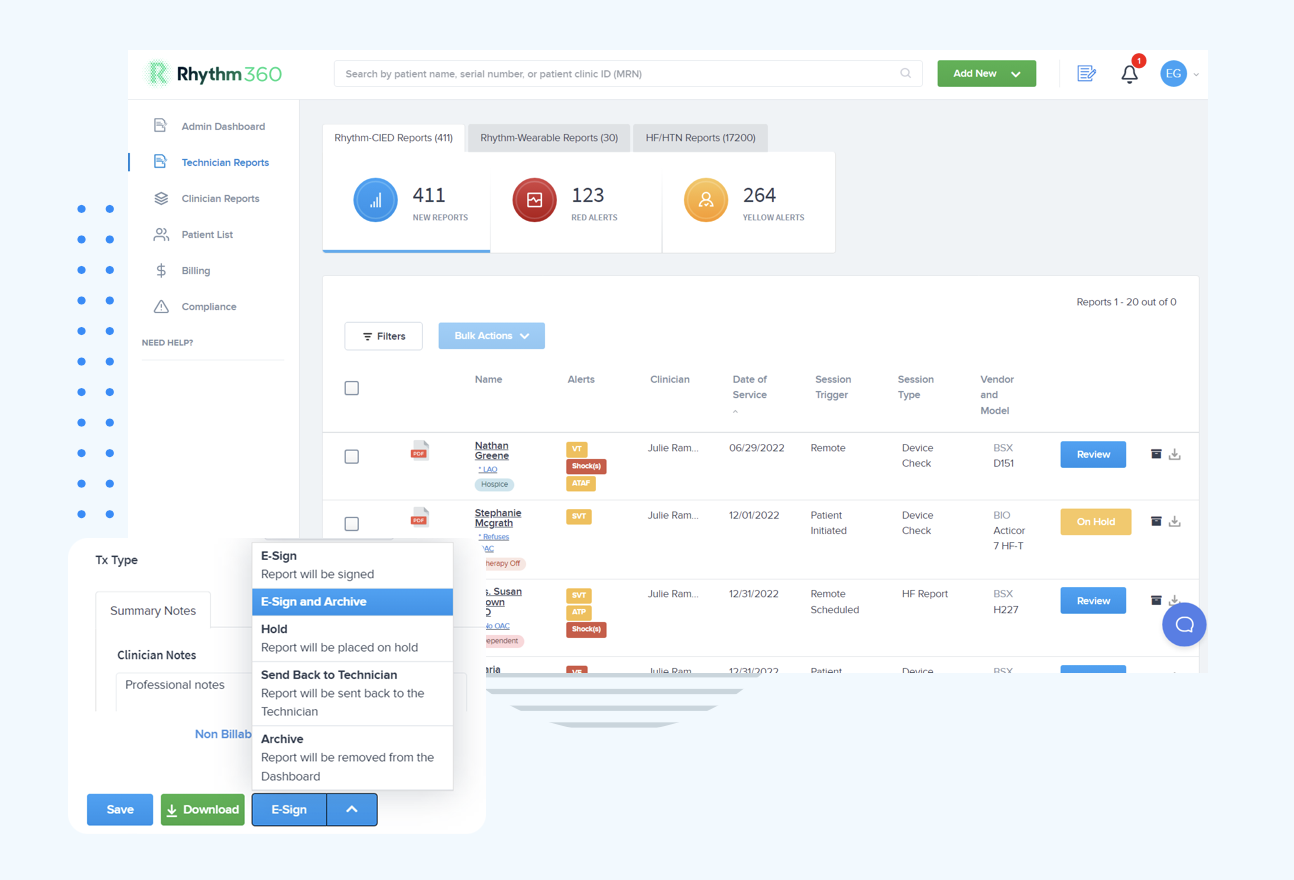
Practice testimonials show the clinical impact. One cardiology group reported, “A Saturday morning AFib alert through Rhythm360 allowed us to start anticoagulation immediately, preventing what could have been a devastating stroke.” That level of responsiveness rarely occurs when staff juggle multiple vendor portals and manual workflows.
Rhythm360 also provides true vendor neutrality with more than 99.9% data transmissibility through redundant feeds and AI-powered gap filling. Schedule a demo to see how unified monitoring can improve both practice efficiency and patient outcomes.
Successful RPM implementation follows a clear sequence that connects patient selection, integration, and training. Start by identifying appropriate heart failure patients based on NYHA class, recent hospitalizations, and device compatibility. This patient list clarifies which devices you need to connect.
Once you know the device mix, API onboarding with Rhythm360 usually takes days instead of weeks, and EHR integration uses established HL7 protocols so data flows into existing workflows.
After the technical setup, staff training can focus on a single dashboard rather than several vendor systems, which reduces complexity and improves adoption.
Financial modeling shows strong ROI for well-run programs. A 100-patient heart failure panel can generate about $15,000 in monthly RPM revenue when managed consistently, while fewer readmissions add further savings. These revenue gains combine with administrative efficiencies from unified monitoring, which allow practices to expand patient panels without matching staff growth.
The table below compares traditional multi-portal workflows with a Rhythm360 deployment and highlights the associated ROI impact.
Challenge | Traditional Approach | With Rhythm360 | ROI Impact |
Data Silos | Multiple portals | Unified dashboard | 80% time savings |
Alert Fatigue | Manual triage | AI prioritization | Supports up to 300% revenue increase |
Documentation | Manual entry | Auto-generation | Compliance assurance |
On-call Coverage | Office-bound | Mobile access | 24/7 monitoring |
Medicare provides comprehensive coverage for remote patient monitoring devices used in heart failure management. Medicare Part B covers 80% of approved RPM services after patients meet their deductible.
Eligible devices include FDA-cleared monitors for weight, blood pressure, heart rate, and other physiological parameters. Practices can bill monthly for device supply, setup, and clinical management services using established CPT codes, with national average reimbursements ranging from $21.71 for device setup to $52.11 for monthly monitoring services.
The CardioMEMS HF System represents the gold standard for heart failure monitoring because of its proven clinical outcomes and ability to detect fluid accumulation before symptoms appear. The optimal choice still depends on patient factors such as NYHA class, comfort with technology, and tolerance for invasive procedures.
Non-invasive options like Apple Watch Series 11 or BioSticker work well for lower-risk patients, while implantable systems such as CardioMEMS or Cordella provide richer data for high-risk cases. A vendor-neutral platform like Rhythm360 then combines data from any device mix to give clinicians complete oversight.
Common disadvantages include alert fatigue from excessive notifications, fragmented data across several vendor portals, patient adherence challenges with device use, and administrative burden from manual review. Technical issues such as poor connectivity or device malfunction can also create monitoring gaps.
Modern platforms like Rhythm360 reduce these problems through AI-powered alert triage, unified dashboards, automated patient engagement, and redundant data feeds that maintain continuity even when individual devices fail.
Modern remote monitoring platforms connect with EHR systems through standardized HL7 interfaces and API connections that support bi-directional data flow. This setup allows monitoring data to populate patient records automatically while pulling relevant clinical information to guide alert prioritization.
Rhythm360 offers deep integration with Epic, Cerner, Athenahealth, and other major EHR platforms so remote monitoring data becomes part of the complete patient record instead of remaining in isolated portals.
Training requirements depend heavily on the complexity of the monitoring platform. Traditional multi-vendor approaches require separate training on each manufacturer’s portal, alert rules, and reporting workflows. Vendor-neutral platforms such as Rhythm360 simplify onboarding by providing a single interface for all devices and automated workflows for common tasks.
Most practices can train clinical staff on unified monitoring platforms within days, focusing on alert triage, patient communication, and billing documentation rather than learning several systems.
Remote heart failure monitoring devices can improve outcomes and practice profitability when paired with the right integration strategy. Rhythm360’s vendor-neutral platform unifies leading monitoring devices into one AI-powered dashboard that reduces alert fatigue, speeds clinical response, and strengthens RPM revenue capture.
Schedule a demo to see how integrated remote monitoring can elevate your heart failure program within weeks.





