Last updated: October 2, 2026
See How Rhythm360 Fits Your Device Clinic
A pacemaker can transmit a clinically significant event such as new-onset atrial fibrillation, ventricular tachycardia, lead malfunction, or battery depletion, and that alert can sit unseen in a manufacturer portal while a patient’s stroke risk climbs. This scenario reflects daily reality for practices that manage devices from more than one original equipment manufacturer.
Medtronic, Boston Scientific, Abbott, Biotronik, and others each maintain proprietary portals with different interfaces, alert formats, and data structures. Staff must log into each system separately, reconcile findings by hand, and then transcribe data into the EHR. Data held in a separate platform requiring a separate login are systematically underused, and a critical event that sits in an unmonitored portal creates liability without benefit.
Alert fatigue compounds this risk. Alert fatigue is the number-one killer of remote monitoring programs. Untuned population-default thresholds generate hundreds of alerts per day. Staff adapt by batch-dismissing, and within a quarter the program has trained its own clinicians to ignore the queue. The deterioration event that eventually gets missed was detected, but it arrived as alert number 340 of 400 that day.
Clinics need a single source of truth that shortens the time from device-detected event to clinical decision. That outcome requires both unified data and intelligent triage. For a deeper look at how fragmented workflows affect pacemaker monitoring specifically, see Pacemaker Monitoring Problems: A Troubleshooting Guide.
Pacemaker remote monitoring follows a clear causal chain, and each link must hold for cardiac outcomes to improve.
One example shows the impact. Remote monitoring has a sensitivity of approximately 95% for detecting true atrial fibrillation, and about 90% of AF episodes detected through remote monitoring are asymptomatic. When a pacemaker detects asymptomatic AF, the system transmits an alert. A clinician reviews it, confirms the finding, and starts anticoagulation, which can prevent a stroke the patient never sensed. Atrial fibrillation increases stroke risk fivefold, so every step in that chain carries weight.
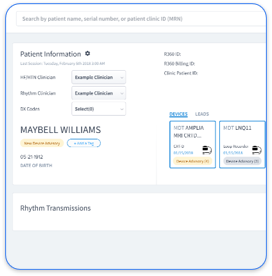
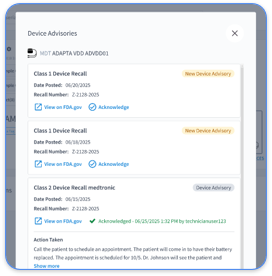
Rhythm360 consolidates this entire pathway into one dashboard. Vendor-neutral data ingestion via API, HL7, XML, and computer-vision PDF parsing lets a device technician see every manufacturer’s transmissions in a single view, without redundant logins or manual transcription. AI-powered alert triage filters non-actionable noise and surfaces the events that require a clinical decision. For a workflow-level view of how this operates in practice, see How to Streamline Remote Pacemaker Monitoring Workflow.
Walk Through A Unified Monitoring Workflow
The evidence base for pacemaker remote monitoring is substantial and nuanced. The strongest findings support earlier detection, reduced in-person visit burden, and faster time to clinical decisions. Evidence for hard endpoints such as mortality reduction varies by device type and study design.
The TRUST study was a multicenter randomized controlled trial of 1,339 ICD patients. It found that the median time from detection of arrhythmia events to medical intervention was 1 day in the remote monitoring group versus 35.5 days in the ambulatory treatment group (p < 0.001). For asymptomatic arrhythmia events, the median was 1 day versus 41.5 days (p < 0.001). Scheduled and unscheduled hospital visits fell by approximately 50% with no increase in adverse events including death, stroke, or surgical procedures.
The CONNECT study reduced the median time from onset of a clinical event to a clinical decision from 22 days in the outpatient group to 4.6 days in the remote monitoring group. The EVOLVO study reported a 35% lower rate of emergency visits in the remote monitoring group and a 21% reduction in the combined rate of visits for heart failure, arrhythmia, and ICD-related events.
For pacemaker-specific evidence, the At-Home study, a multicenter randomized controlled trial of 1,274 pacemaker patients, reported that remote monitoring safely reduced outpatient visit frequency to one-quarter that of conventional follow-up, with lower annual costs in the remote monitoring group. The PREFER study showed that frequent scheduled remote interrogation of pacemakers was superior to scheduled outpatient visits in detecting clinically important findings at an early stage, including ventricular arrhythmia, atrial fibrillation, device abnormalities, lead abnormalities, and battery depletion.
Mortality data tell a more complex story. A 2026 systematic review protocol from Newcastle University reports that effects of CIED remote monitoring on mortality and hospitalization remain inconsistent across randomized trials, while effects on reducing routine clinic visits and shortening time to clinical response are the most consistent findings. The IN-TIME study did find reduced all-cause and cardiovascular mortality with daily automatic remote monitoring in heart failure patients with ICDs or CRT-Ds, but that population and device type differ from standard pacemaker cohorts.
Remote monitoring carries a Class I, Level A recommendation as the standard of care for follow-up of patients with cardiac implantable electronic devices in the 2023 HRS/EHRA/APHRS/LAHRS expert consensus statement. Programs see the strongest benefits when alert programming, staffing, and EHR integration support timely action on what the device detects.
The evidence base described above is not uniform across devices. Remote monitoring outcomes vary by device type, and conflating pacemakers with ICDs or CRT devices overstates what the pacemaker-specific literature supports.
Pacemaker remote monitoring primarily supports rhythm surveillance, device integrity checks, and battery and lead management. The TRUST, CONNECT, EVOLVO, and ECOST trials, which produced many of the most cited outcome data, enrolled ICD and CRT-D patients rather than pacemaker-only cohorts. A 2026 real-world study at Helsinki University Hospital following 606 Biotronik pacemaker patients managed with remote-only monitoring for a mean of 2.8 years found no difference in hospitalization rates between remote-only and appointment-based monitoring (IRR 1, 95% CI 0.8–1.4, p = 0.8). These findings support the view that pacemaker remote monitoring delivers its greatest value through surveillance and workflow efficiency rather than consistently lowering hospitalization or mortality rates.
Implantable loop recorders and implantable cardiovascular physiologic monitors such as CardioMEMS serve different clinical purposes and follow different monitoring and billing cycles. Pacemakers and ICDs follow a 90-day remote monitoring cycle, billed under CPT 93294 (pacemaker professional), 93295 (ICD professional), and 93296 (pacemaker/ICD technical). Physiologic monitors and loop recorders follow a 30-day cycle. CPT 93297 applies to implantable cardiovascular physiologic monitors, and CPT 93298 applies to subcutaneous cardiac rhythm monitors and implantable loop recorders. Each code is device-specific and billable once per 30 days, and neither uses a professional and technical pair.
The 2026 JHRS consensus statement recommends device-specific alert programming rather than a one-size-fits-all approach. Pacemakers should emphasize device integrity and pacing parameters. ICDs require alerts for shock and ATP therapies. CRT devices need alerts for low biventricular pacing. For a detailed breakdown of monitoring schedules by device type, see Pacemaker Monitoring Schedule: Intervals & Guidelines.
Programs realize the outcome benefits of remote monitoring only when the operational infrastructure supports consistent follow-through. What determines whether remote monitoring improves outcomes is the clinical service around the data: who reviews it, how quickly, what thresholds trigger action, what action is taken, and whether the pathway has capacity to deliver it.
Four operational requirements form the core of a reliable program:
For a practical guide to building these workflows, see 10 Best Practices for Profitable Pacemaker Monitoring and Improve Pacemaker Monitoring Technician Efficiency Guide.
The operational requirements above are exactly where many practices stall. Rhythm360 was built to close that gap. It is a vendor-neutral, HIPAA-compliant, AI-powered platform that operationalizes pacemaker remote monitoring by shortening the distance between a device-detected event and a clinical decision. At the University of Chicago Medicine, implementation of Rhythm360 enabled clinicians to review more transmissions daily and identify more abnormalities, with UCM managing more than 73,000 reports annually in calendar year 2025, averaging more than 18,000 reports per quarter. As Andrew Beaser, MD, Associate Professor of Medicine at UCM, explained, “We are able to address these issues earlier; rather than waiting for a 3-month visit, we can call patients in for evaluation.”
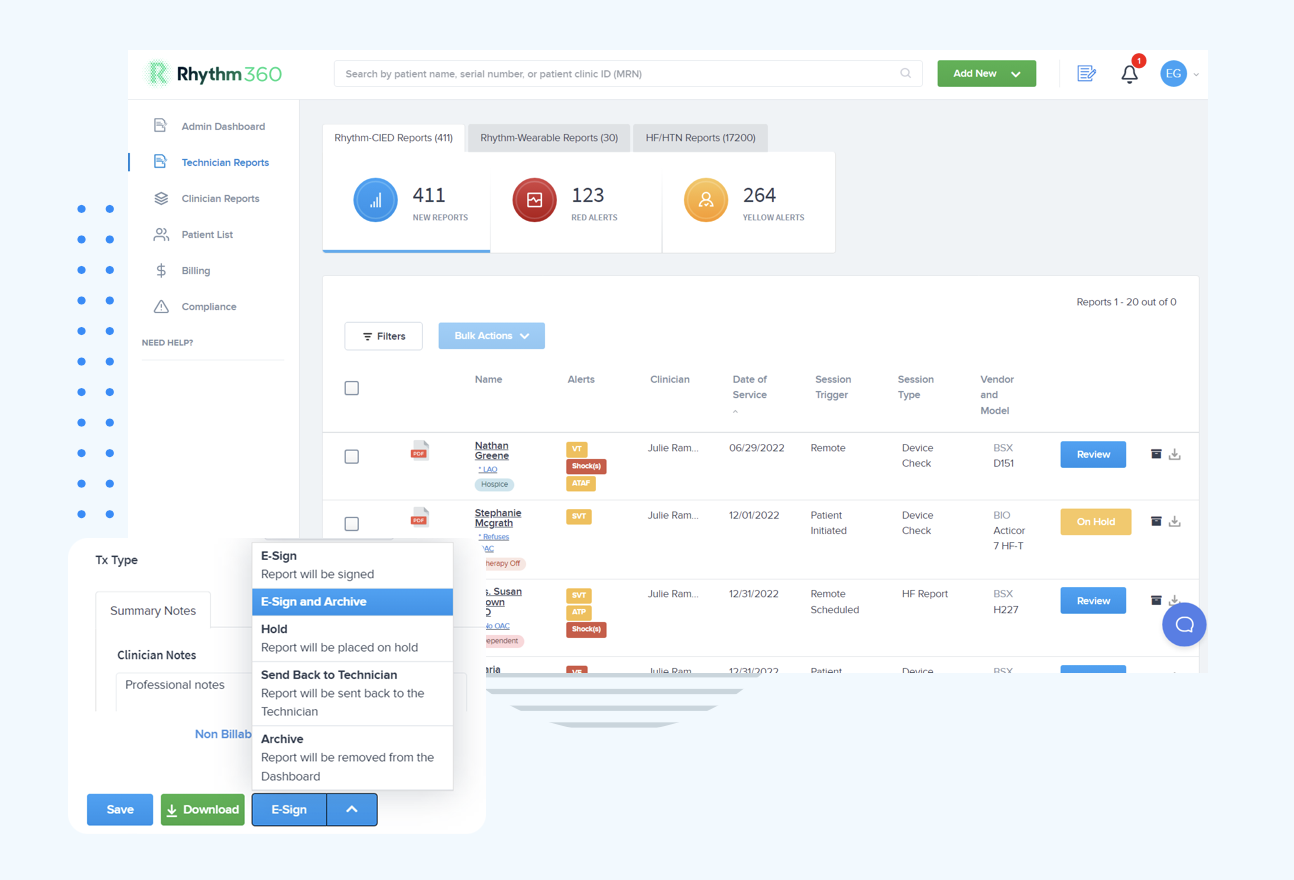
Key platform capabilities build a single, connected workflow:
Practices using Rhythm360 reduce response times for critical alerts by up to 80% and increase revenue capture and profitability by as much as 300%. As Dr. Beaser noted, “Decision support, including AI-assisted decision support, will become increasingly important as data volumes grow.”
Explore Rhythm360 In A Live Walkthrough
For patients and caregivers, pacemaker remote monitoring reduces the frequency of in-person device checks while preserving access to clinic visits when needed. In the TRUST study, 98% of patients chose to continue remote monitoring at the end of the study, indicating high patient acceptance and trust in the technology. Patients in the VIRTUES trials reported that remote monitoring gave them a sense of control because they liked to know directly how well their device was working.
Remote monitoring still works alongside in-person evaluations. Scheduled clinic visits remain part of comprehensive CIED care, and some device programming changes require in-person interrogation. In the Helsinki University Hospital pacemaker cohort, device programming changes were made in 25% of additional in-office interrogations, which confirms that in-person review retains clinical value even in remote-first programs.
Patients who worry about daily activities such as driving, sleeping, or exercise gain continuous oversight without major lifestyle changes. Monitoring devices operate passively, and the care team receives alerts without the patient needing to initiate a transmission for routine surveillance. See Pacemaker Monitoring: Reduce Clinic Visits by Up to 43.2% for data on how remote programs affect visit frequency.
Smartphone-based transmission now expands access to remote monitoring for patients who previously required dedicated home monitors. As transmission infrastructure matures, the bottleneck shifts from data collection to data interpretation, and AI-driven triage becomes central to program success.
Shifting alert weight from single-reading threshold alerts to trend-based signals routinely cuts alert volume severalfold while catching deterioration earlier. As data volumes from remote monitoring programs grow, the ability to distinguish a clinically significant signal from background noise determines whether the detection-to-intervention chain holds. Dr. Beaser’s observation that “decision support, including AI-assisted decision support, will become increasingly important as data volumes grow” reflects a consensus forming across high-volume programs.
Rhythm360’s AI-powered extrapolation and alert triage are designed for this environment. The platform maintains more than 99.9% data transmissibility and prioritizes the signals that warrant clinical action. For a broader view of how unified monitoring platforms support population-level outcomes, see Master Unified Cardiac Remote Monitoring for Better Outcomes.
A pacemaker continuously collects diagnostic data such as arrhythmia episodes, pacing thresholds, lead impedance, and battery status. That data transmits via a home monitor or smartphone app to the manufacturer’s server, then reaches the clinic through an OEM portal or a vendor-neutral platform like Rhythm360. The care team reviews and triages the transmission, and a clinical action follows, such as medication adjustment, anticoagulation initiation, device reprogramming, or scheduling an in-person visit. The full chain produces better outcomes when transmission is reliable, review is timely, and the care pathway has capacity to act on what the device detects.
Key advantages include earlier detection of arrhythmias and device issues, faster time from event detection to clinical decision, and fewer in-person visits for both patients and practices. Remote monitoring detects approximately 90% of atrial fibrillation episodes before patients experience symptoms, which enables anticoagulation or rhythm management before complications occur. It also supports earlier identification of lead abnormalities and battery depletion that might otherwise go unnoticed until a scheduled in-person visit months later. For practices, remote monitoring supports billing for CPT codes tied to 90-day and 30-day monitoring cycles, which improves revenue capture when documentation is complete. Rhythm360 automates documentation and CPT code tracking, which reduces the administrative burden on device clinic staff.
Hospitalization outcomes depend on device type and program design. For ICD and CRT-D patients, the visit-reduction findings cited earlier, including the TRUST and EVOLVO results, apply. For pacemaker-specific patients, the 2026 real-world study at Helsinki University Hospital found no statistically significant difference in hospitalization rates between remote-only and appointment-based monitoring. Across the literature, the most consistent findings show reduced in-person visit frequency and shorter time to clinical decision. Program infrastructure plays a central role, and practices with tuned alert thresholds, adequate staffing, and strong EHR integration achieve better results than those with fragmented workflows.
Successful programs rely on customized alert programming, adequate staffing, robust patient education, and tight EHR integration. Population-default thresholds often create unsustainable alert volumes, so clinics benefit from device- and patient-specific settings. The 2023 HRS/EHRA/APHRS/LAHRS consensus recommends approximately 3.0 FTEs per 1,000 CIED patients, with nurses and clinical engineers in clearly defined roles under physician oversight. Patient onboarding should cover transmitter setup, connectivity troubleshooting, and the difference between remote monitoring alerts and emergency response systems. EHR integration keeps data in front of clinicians during normal workflows. Rhythm360 supports these elements through vendor-neutral data unification, AI-driven alert triage, automated reporting, bi-directional EHR integration, and optional 24/7/365 oversight by certified cardiac technicians.
Pacemaker remote monitoring improves cardiac outcomes by shortening the distance between a device-detected event and a clinical decision. The clearest evidence supports earlier arrhythmia detection, faster time to intervention, and reduced in-person visit burden. Mortality and hospitalization benefits appear in selected populations and depend heavily on program infrastructure. Fragmented OEM portals interrupt the causal chain before it reaches a clinician who can act.
Rhythm360 restores that chain through four capabilities: vendor-neutral data unification, AI-powered alert triage, bi-directional EHR integration, and automated CPT code capture. Practices that implement Rhythm360 reduce critical alert response times by up to 80% and increase revenue capture and profitability by as much as 300%. The mechanism is straightforward: replace fragmented portals with a single, actionable source of truth. For a comprehensive view of how remote monitoring affects patient outcomes across device types, see How to Improve Patient Outcomes with Remote Monitoring and Pacemaker ICD Remote Monitoring: A Clinic Workflow Guide.
Talk With Our Team About Your Monitoring Goals