Best Heart Failure Management Technology Platforms 2026

Key Takeaways

  • Scalable heart failure platforms centralize data from devices, wearables, and remote monitoring tools, which reduces missed events and improves clinical oversight.
  • Effective evaluation focuses on data integration, workflow automation, AI triage, scalability, regulatory alignment, and billing support for remote physiologic monitoring.
  • UnitedHealthcare's 2026 RPM policy shift, which narrows coverage to heart failure and hypertensive disorders of pregnancy, increases the importance of condition-focused RPM programs.
  • Rhythm360 offers vendor-neutral data aggregation, AI-driven alert prioritization, and automated billing workflows that support both heart failure and hypertension RPM service lines.
  • RhythmScience's Rhythm360 platform gives practices a practical path to scalable heart failure management in 2026.

Why Scalable Heart Failure Management Platforms Are Essential for Modern Practices

Cardiology practices and health systems in 2026 handle rising heart failure volumes, fragmented data, and increasing administrative demands. Clinicians often navigate multiple vendor portals to view device data, which creates operational silos and delays responses to clinical events.

Administrative teams face manual data entry, chasing reports, and reconciling remote readings with billing requirements. These gaps increase the risk of missed decompensations, readmissions, and documentation errors for remote physiologic monitoring programs.

The remote monitoring landscape now includes implanted devices such as CardioMEMS, an advanced implantable option for heart failure monitoring, device-based algorithms like HeartLogic, wearables, and noninvasive AI tools. At the same time, data safety, reliability, usability across heart failure phenotypes, and access for patients with limited technology remain significant challenges.

Robust, scalable heart failure management platforms help address these issues by unifying device and RPM data, automating common workflows, and supporting proactive interventions. Custom algorithms and dashboards can identify patients at risk of decompensation so clinicians can act early and reduce avoidable admissions.

Key Evaluation Criteria for Scalable Heart Failure Management Platforms

Providers can use the following criteria to compare scalable heart failure platforms and select a system that fits both clinical and business needs.

Data integration and vendor neutrality: The platform should unify data from all major CIED manufacturers, dedicated heart failure monitors such as CardioMEMS, and connected scales and blood pressure cuffs. Vendor-neutral design reduces lock-in and supports complete patient views.

Clinical workflow automation and efficiency: Automation for data review, report generation, and alert handling reduces staff burden and improves response times. Effective systems minimize manual transcription and repetitive administrative work.

AI-powered insights and alert triage: AI should filter noise, prioritize significant events, and surface patients who need attention. Multiparameter scores from implanted rhythm devices help flag trends in low-risk patients who still warrant evaluation, and the HeartLogic algorithm predicts heart failure episodes using a remotely monitored index.

Scalability and total value of ownership: Platforms should maintain data fidelity and usability as patient volume grows. Solutions that pair wearables with AI show strong scalability potential. Onboarding effort, training needs, and long-term financial impact all shape total value.

Regulatory compliance and billing support: HIPAA compliance and reliable CPT code workflows are central to sustainable RPM programs. UnitedHealthcare limits RPM coverage to heart failure and hypertensive disorders of pregnancy, and beginning January 1, 2026, this rollback applies across major lines of business. Focused heart failure workflows help practices stay aligned with policy shifts.

Mobility and communication: Clinicians need secure mobile access and integrated messaging tools so they can review data and communicate with patients without switching systems.

How Rhythm360 Supports Scalable Heart Failure Management

Rhythm360
Rhythm360

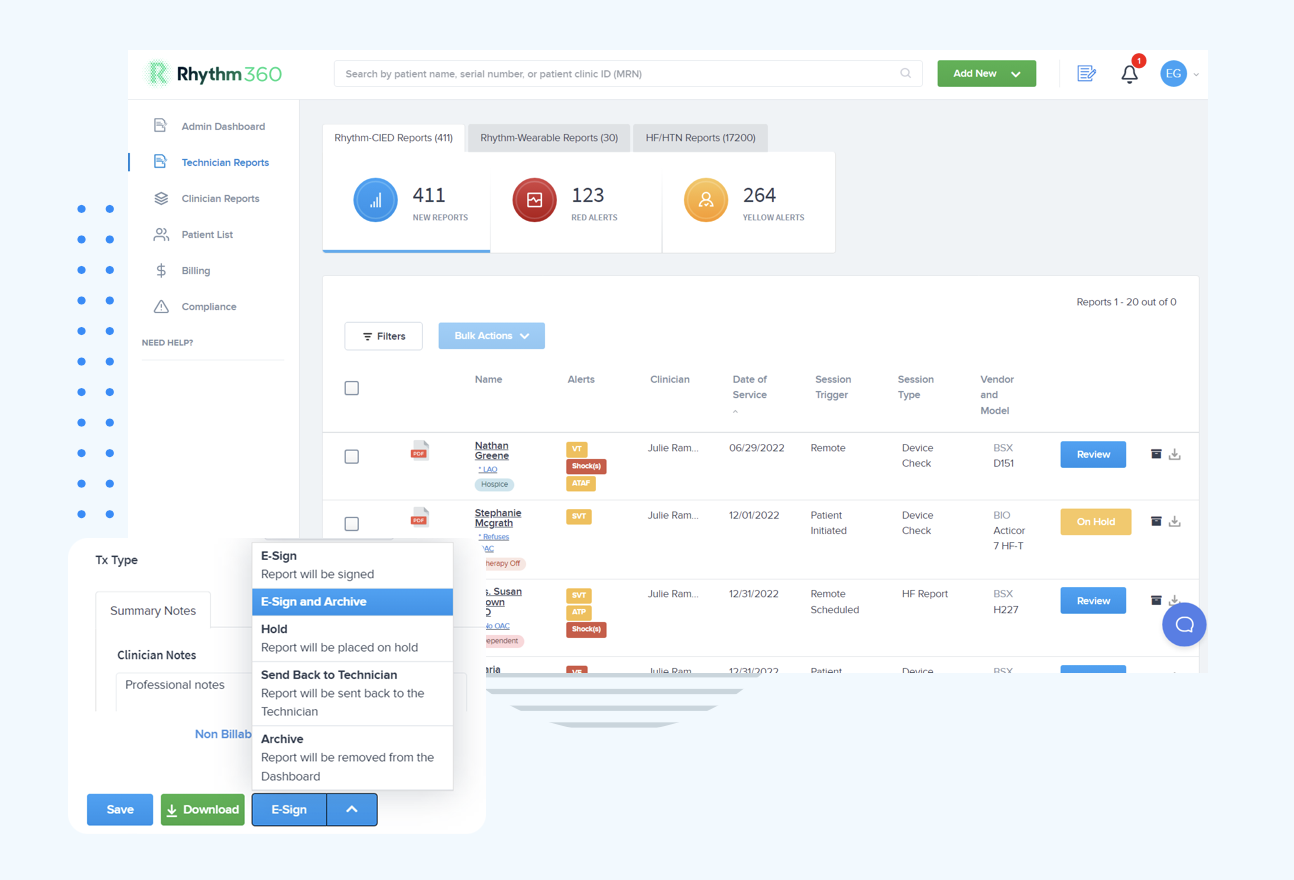
Rhythm360 provides a vendor-neutral platform that consolidates cardiac device and heart failure RPM workflows in a single system.

Vendor-neutral data unification: Rhythm360 aggregates data from all CIEDs and heart failure monitoring devices into one workspace. The system uses API connections, HL7, XML, and computer vision for PDF parsing to normalize data and maintain more than 99.9 percent data transmissibility through redundant feeds and AI-based extrapolation.

AI-driven alert triage: Rhythm360 applies AI to rank alerts by clinical relevance, which reduces alert fatigue and supports faster action on high-risk events. Practices report up to an 80 percent reduction in response times for critical alerts.

Streamlined clinical and operational workflows: The platform automates ingestion of device and RPM data, generates structured reports, supports bi-directional EHR integration, and documents time and activity for billing. These workflows allow clinical staff to spend more time on direct patient care.

Integrated multi-modality management: Rhythm360 manages CIED patients and heart failure or hypertension RPM within the same environment. This multi-modality approach supports consistent protocols, shared work queues, and more efficient staffing.

Schedule a Rhythm360 demo to see how this platform can support your heart failure management strategy.

How Leading Platforms Compare For Heart Failure Management

The table below summarizes how several leading platforms align with key criteria for scalable heart failure management.

Feature or capability

Rhythm360

Murj

PaceMate

Implicity

Data integration

Vendor-neutral, all CIEDs plus heart failure RPM (CardioMEMS, scales, blood pressure cuffs), AI-based normalization

Cloud-based, CIEDs

Cloud-based, CIEDs

CIEDs, selective RPM

Workflow automation

Data ingest, reporting, billing, bi-directional EHR integration

Strong workflow focus

Workflow automation

AI-based alert filtering

AI-powered insights

Advanced triage, more than 99.9 percent data reliability

Moderate

Moderate

High emphasis on alert filtering

Heart failure-specific RPM

Yes, integrated heart failure and hypertension service lines with compliance support

CIED focus

CIED focus

CIED focus

Murj: Workflow Automation Focus

Murj emphasizes cloud-based workflow automation for cardiac device management and integrates well with existing processes. Rhythm360 extends this concept by combining similar workflow strengths with broader vendor-neutral integration and dedicated heart failure RPM support.

PaceMate: Comprehensive Remote Monitoring

PaceMate delivers remote monitoring for CIEDs and incorporates PaceArt, an older on-premise system. It provides robust monitoring and reporting for device patients. Rhythm360 differs by pairing these capabilities with advanced AI for data reliability and integrated management of heart failure parameters within the same platform.

Implicity: AI-Powered Alert Filtering

Implicity has a strong focus on AI-based alert filtering for CIED data. The platform reduces alert volume by suppressing non-actionable events. Rhythm360 builds on similar AI strengths while also normalizing data across a broader set of cardiac devices and embedding structured heart failure RPM workflows.

Practices that manage diverse cardiac devices and growing heart failure populations benefit from vendor-neutral platforms that unify these modalities. Rhythm360 offers this approach while supporting faster alert response and structured billing. A remote monitoring program at UMass Memorial Health cut 30-day heart failure readmissions in half using AI-enabled workflows, illustrating the potential impact of well-designed platforms.

Request a Rhythm360 consultation to review how the platform compares with your current heart failure workflows.

Frequently Asked Questions About Scalable Heart Failure Management

How does Rhythm360 handle data from both CIEDs and heart failure remote monitoring devices?

Rhythm360 ingests and normalizes data from all major CIED manufacturers, including Medtronic, Boston Scientific, Abbott, and Biotronik, along with heart failure RPM devices such as CardioMEMS and connected scales and blood pressure cuffs. APIs, HL7, XML, and computer vision support a unified patient record.

Can Rhythm360 help a practice comply with CPT codes for heart failure RPM?

Rhythm360 supports documentation for heart failure RPM codes such as 99453, 99454, and 99457. The system automates data collection, tracks time, and generates auditable reports to support compliant billing and consistent revenue capture.

How does AI improve heart failure management on the Rhythm360 platform?

Rhythm360 AI services filter non-actionable alerts and elevate clinically meaningful events. This triage process reduces alert fatigue, supports earlier interventions, and contributes to faster responses for critical changes while maintaining high data reliability.

What makes Rhythm360 a scalable heart failure management platform?

Rhythm360 uses a cloud-based architecture, vendor-neutral integration, and configurable workflows that adapt to different clinic sizes and service lines. Rapid implementation and SaaS pricing allow practices to grow their RPM programs without major infrastructure changes.

How does Rhythm360 address data security and patient privacy?

Rhythm360 applies enterprise-grade encryption, secure transmission protocols, role-based access, and detailed audit trails to support HIPAA compliance and protect patient information.

Conclusion: Improving Outcomes and Efficiency With Scalable Heart Failure Management

Scalable heart failure management platforms now play a central role in balancing outcomes, clinician workload, and financial performance. Platforms that unify device and RPM data, apply AI for triage, and automate billing workflows give practices a more sustainable model for growth.

Rhythm360 provides this combination through vendor-neutral integration, AI-supported insight generation, and structured RPM workflows for heart failure and hypertension. These capabilities help teams act earlier on clinical risk while maintaining clear documentation and reimbursement pathways.

Schedule a Rhythm360 demo to explore how the platform can support your 2026 heart failure management strategy.

Advisory Tags
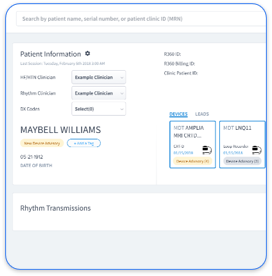
Our automatic tagging and tracking keeps getting better - identify, manage and track multiple advisories more efficiently.
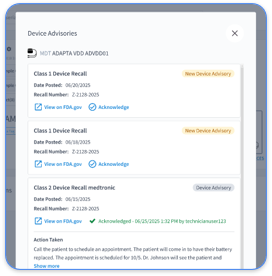
View and Acknowledge Recalls
Staff can document steps taken to resolve the recall for continuity of communication, tracking, and accountability.
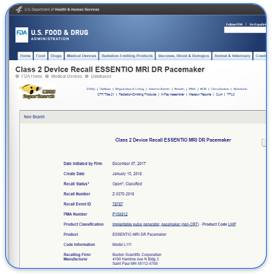
Links Straight to FDA
Rhythm360 provides direct access to all the advisory details you need without additional searching and clicks.