
HIPAA-Compliant Cardiology Telehealth Platforms: 2026 Guide
Compare HIPAA-compliant telehealth platforms built for cardiology. See how Rhythm360 closes compliance gaps & boosts revenue. Request a demo today.

Last updated: June 28, 2026
Key Takeaways for Cardiology Telehealth Leaders
- HIPAA compliance for cardiology telehealth extends beyond a basic BAA to include field-level encryption, MFA, and complete audit logging for every CIED transmission.
- Multi-OEM data fragmentation creates compliance gaps, billing leakage, and administrative overload that a vendor-neutral platform can eliminate.
- Key evaluation criteria include BAA coverage of all sub-processors, AES-256/TLS encryption across ingestion methods, and bi-directional EHR integration for CPT documentation.
- Rhythm360 delivers up to 80% faster critical-alert response, 99.9% transmissibility, and up to 300% revenue improvement through AI triage and automated billing workflows.
- See how Rhythm360 consolidates multi-OEM monitoring while strengthening your HIPAA posture by scheduling a demo.
How Multi-OEM Portals Undercut Compliance, Billing, and EHR Workflows
A cardiology practice implanting devices from Medtronic, Boston Scientific, Abbott, and Biotronik must maintain active credentials in four separate, non-interoperable manufacturer portals. Each portal uses a proprietary data schema, a distinct alert taxonomy, and a separate login workflow. Staff rotate between these portals manually, transcribing findings into the EHR, which introduces transcription errors, delays billable documentation, and creates compliance gaps.
CPT codes 93298 and 99454 require documented evidence of remote monitoring activity within defined time windows. When that documentation lives across four portals and a disconnected EHR, billing staff routinely miss the window or submit incomplete records, which produces claim denials. The same fragmentation that drives administrative overload also suppresses revenue capture for the monitoring work clinicians already perform.
EHR integration often compounds the problem. Epic, Cerner, and Athenahealth each support HL7 messaging, but a unidirectional feed from an OEM portal does not automatically populate the structured fields that CPT billing requires. Bi-directional integration, where the monitoring platform both receives patient demographics from the EHR and writes completed reports back into the chart, creates an operational standard that eliminates manual transcription entirely.
Core Compliance Framework for Cardiology RPM Platforms
Cardiology leaders need a clear checklist when they evaluate the HIPAA posture of any remote patient monitoring platform, and that checklist should be applied before signing a pilot agreement.
BAA Verification: Confirm the BAA explicitly names every sub-processor handling PHI, including OEM data intermediaries, cloud infrastructure providers, and communication vendors. This comprehensive coverage is critical because a BAA that covers only the primary platform vendor leaves sub-processor relationships unprotected, which creates a compliance gap even when the primary vendor is fully compliant.
Encryption and MFA: Verify AES-256 encryption at rest, TLS 1.2 or higher in transit, and MFA enforcement for all user roles including mobile access. These baseline protections must extend to every data pathway, so confirm that PDF parsing pipelines, which extract data from OEM-generated reports, apply the same encryption standards as structured API feeds to avoid a security gap in unstructured data handling.
Data-Ingestion Methods: A vendor-neutral CIED monitoring platform must ingest data via API, HL7, XML, and unstructured PDF using computer vision (OCR). Reliance on a single ingestion method creates a single point of failure. Rhythm360 achieves greater than 99.9% transmissibility through redundant data feeds, computer vision, and AI-powered extrapolation, which means that if an OEM server experiences downtime, a redundant feed pathway maintains data continuity without manual intervention.
Audit Readiness: Every transmission review, alert acknowledgment, and report signature must generate a time-stamped, immutable log entry. This log functions as the primary artifact in a HIPAA audit and as the supporting documentation for CPT billing compliance.
Strategic Platform Choices: Consolidation, Build vs Buy, and Staffing
Cardiology practices evaluating platform strategy face three structural decisions: vendor-neutral consolidation versus single-OEM tools, build versus buy, and in-house staffing versus monitored service models.
Single-OEM tools, such as manufacturer-provided portals, are free at the point of access but impose a hidden cost. Every additional OEM device implanted requires a separate portal, a separate login, and a separate workflow. Practices managing more than one OEM report that staff spend a disproportionate share of their day navigating between portals instead of reviewing clinically significant data. A vendor-neutral platform removes that overhead by consolidating all OEM data into one dashboard.
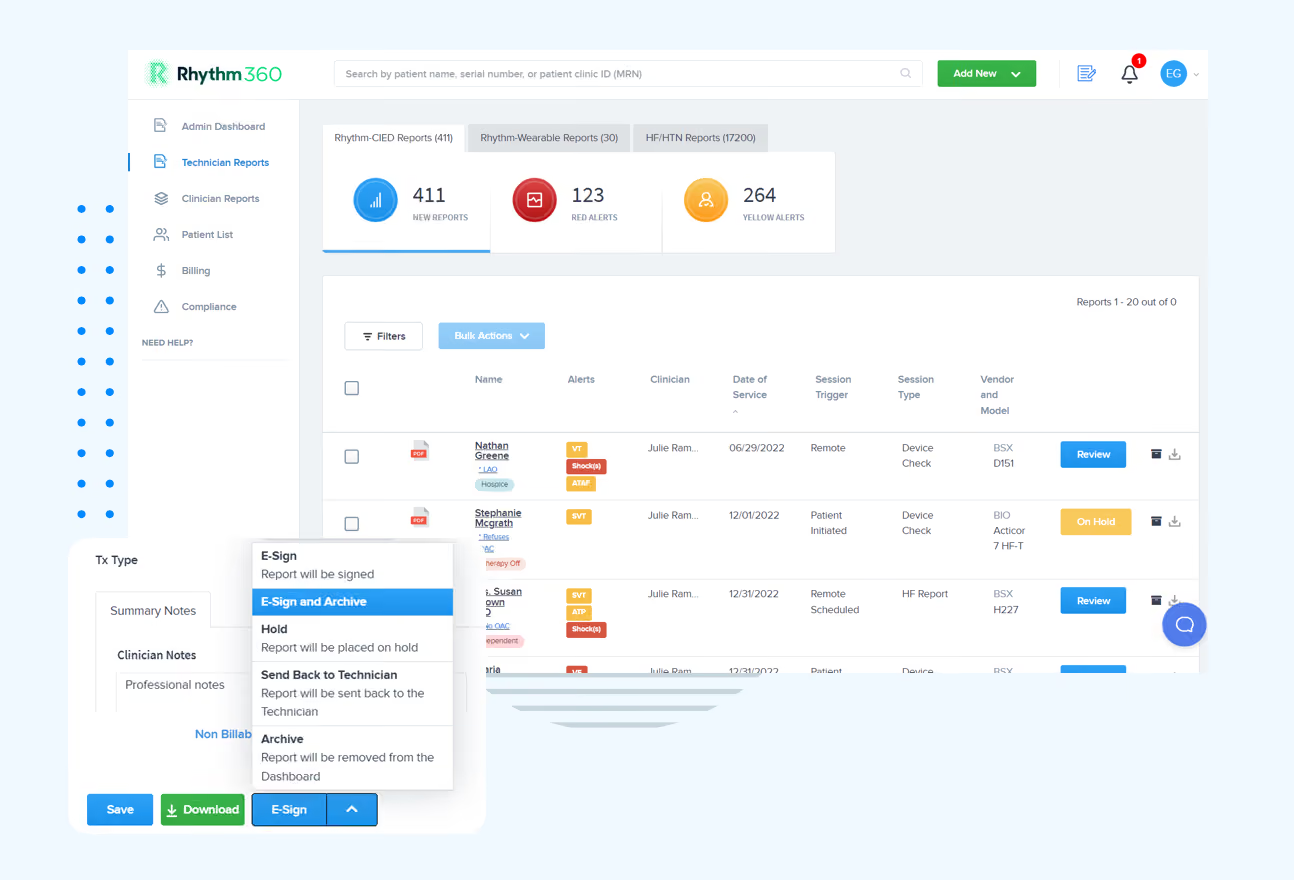
Build-versus-buy decisions often underestimate the engineering complexity of maintaining live API connections to multiple OEM servers, each of which updates its data schema on its own release cycle. A purpose-built SaaS platform absorbs that maintenance burden. An internally developed solution instead requires dedicated engineering resources to track OEM schema changes indefinitely and to maintain uptime.
Staffing models range from fully in-house device technicians to outsourced monitoring services. The strategic choice between these models often hinges on coverage gaps during nights and weekends versus the cost of permanent headcount. Rhythm360 addresses this tradeoff by supporting both approaches, so practices can operate the platform with their own clinical staff or supplement with optional 24/7/365 oversight from certified cardiac technicians (CCTs) supervised by physicians, which provides coverage during high-volume periods without adding permanent headcount.
Implementation Readiness and EHR Integration Checklist
Modern cloud-based cardiac monitoring platforms reach production in days to weeks rather than months. The critical path items are EHR integration configuration, OEM credential transfer, and staff training on the unified dashboard.
A practical EHR integration checklist includes confirming HL7 message types supported by the EHR, such as ADT, ORU, and MDM. It also includes establishing bi-directional feed credentials, mapping device report fields to EHR structured data elements, and validating that completed reports write back to the correct chart location for CPT documentation. Rhythm360 supports bi-directional integration with Epic, Cerner, Athenahealth, eClinicalWorks, and Greenway Health, among others.
Mobile access readiness progresses on a parallel track. Clinicians who take call outside the office require a HIPAA-compliant mobile application that enforces MFA, displays prioritized alerts, and allows report signature without VPN access to an on-premise system. Rhythm360's mobile app provides this capability and enables clinicians to review transmissions, sign reports, and coordinate care from any location.
Operational Pitfalls: Missed Alerts, Billing Leakage, and Alert Fatigue
Fragmented CIED monitoring environments most often fail through missed critical alerts, billing leakage, and alert fatigue, which are closely linked. When a platform generates a high volume of non-actionable notifications, clinical staff begin to deprioritize alert review. That deprioritization creates conditions in which a genuinely critical event, such as new-onset atrial fibrillation, ventricular tachycardia, or a lead integrity alert, is delayed or missed entirely.
Billing leakage follows a similar pattern. When alert review is delayed, the billable monitoring activity is not documented within the CPT-required time window, and the claim either cannot be submitted or is denied on audit. Practices that rely on manual processes to track billable events across multiple portals consistently under-capture revenue relative to the monitoring work their staff already perform.
AI-powered alert triage addresses the root cause by filtering non-actionable transmissions before they reach the clinical queue and surfacing only events that meet configurable clinical significance thresholds. This approach reduces the total alert volume that staff must process and concentrates attention on the transmissions that require a clinical response.
Measuring Impact: Response Time, Revenue, and Audit Readiness
Three quantitative metrics define platform performance in a cardiology RPM environment: critical-alert response time, revenue capture rate, and audit-readiness documentation completeness.
The up to 80% reduction in critical-alert response time mentioned earlier results from three compounding factors. First, AI-powered alert triage filters non-actionable transmissions before they reach the clinical queue, which reduces the total volume of alerts and concentrates attention on clinically significant events. Second, consolidating all OEM data into a single dashboard eliminates the time staff spend navigating between separate manufacturer portals to determine whether an alert has already been reviewed. Third, the HIPAA-compliant mobile application allows on-call clinicians to receive prioritized notifications, review the full transmission, and initiate a clinical response from any location, which removes delays tied to the next business day or the next scheduled portal login. University of Chicago Medicine reviewed more than 73,000 reports annually through Rhythm360 in calendar year 2025, and clinicians could address issues earlier rather than waiting for a 3-month visit, calling patients in for evaluation when remote data indicated a change in status.
The revenue improvements of up to 300% cited earlier are achieved through automated CPT code documentation, elimination of missed billing windows, and the addition of RPM service lines for heart failure and hypertension patients under codes 99453, 99454, and 99457. UCM reported improved billing and accountability for patients after the Rhythm360 integration.
Audit readiness is measured by the completeness of the time-stamped log for every transmission review, the availability of signed reports in the EHR, and the traceability of each billable event to a documented clinical action. Rhythm360's integrated communication hub logs all patient contacts, including automated messages and manual calls, within the patient record, which provides a clear audit trail.
Platform Comparison: General Telehealth vs Rhythm360
PlatformHIPAA BAA AvailableCardiology / CIED WorkflowCPT 93298 / 99454 Automation Doxy.meYesGeneral telehealth video only, no CIED data ingestionNot supported Zoom for HealthcareYesGeneral video conferencing with EHR integrationsNot supported SimplePracticeYesBehavioral and general health focusNot supported Rhythm360 (RhythmScience)Yes, covers all OEM sub-processorsVendor-neutral, ingests all major OEM CIED data, AI triage, >99.9% transmissibilityAutomated documentation and billing support for 93298, 93299, 99453, 99454, 99457
General telehealth platforms such as Doxy.me, Zoom for Healthcare, and SimplePractice provide HIPAA-compliant video infrastructure suitable for synchronous patient consultations. None of these platforms ingest asynchronous CIED telemetry, normalize multi-OEM device data, or generate the structured documentation required for remote monitoring CPT billing. A cardiology practice using a general telehealth platform for CIED monitoring must maintain separate OEM portals and manual billing workflows, which negates the consolidation benefit that a purpose-built platform delivers.
Frequently Asked Questions
What does a HIPAA-compliant BAA need to cover for a cardiology remote monitoring platform?
A BAA for a cardiology remote monitoring platform must explicitly identify every entity that handles protected health information on behalf of the covered entity. In a CIED monitoring context, this list includes the platform vendor, the cloud infrastructure provider, all OEM data-feed intermediaries, and any communication service providers used for patient messaging. A BAA that names only the primary software vendor leaves sub-processor relationships outside the agreement, which constitutes a compliance gap under 45 CFR §164.308(b). Practices should request a sub-processor list from any platform vendor and confirm that downstream BAAs are in place before transmitting any patient data.
How does Rhythm360 achieve an 80% reduction in critical-alert response times?
The 80% reduction in critical-alert response time results from three compounding factors. First, AI-powered alert triage filters non-actionable transmissions before they reach the clinical queue, which reduces the total volume of alerts that staff must process and concentrates attention on clinically significant events. Second, consolidating all OEM data into a single dashboard eliminates the time staff spend navigating between separate manufacturer portals to determine whether an alert has already been reviewed. Third, the HIPAA-compliant mobile application allows on-call clinicians to receive prioritized notifications, review the full transmission, and initiate a clinical response from any location, which eliminates the delay associated with waiting until the next business day or the next scheduled portal login. University of Chicago Medicine's experience with Rhythm360 demonstrates this in practice, as clinicians were able to identify abnormalities and call patients in for evaluation earlier rather than waiting for a scheduled 3-month visit.
How does Rhythm360 automate CPT billing documentation for codes 93298 and 99454?
Rhythm360 automates CPT billing documentation by generating structured reports at the point of transmission review, time-stamping each clinical action, and writing completed documentation back to the EHR via bi-directional HL7 integration. For CPT 93298, which covers remote monitoring of implantable cardiac devices with physician analysis and report, the platform captures the transmission data, the clinician's review, and the resulting clinical decision in a single auditable record. For CPT 99454, which covers remote physiological monitoring device supply and daily recordings, the platform tracks the number of days with recorded data and flags when a patient meets the threshold for a billable period. This automated tracking eliminates the manual process of cross-referencing portal logs against billing records, which represents the primary source of missed billing windows and claim denials in fragmented monitoring environments. Practices implementing Rhythm360 have reported revenue increases of up to 300% through this combination of automated documentation and expanded RPM service lines.
How long does it take to implement Rhythm360 and integrate it with an existing EHR?
The implementation timeline for Rhythm360, including EHR integration, typically ranges from a few days to a few weeks depending on the complexity of the EHR environment and the number of OEM data feeds being consolidated. The platform supports bi-directional integration with Epic, Cerner, Athenahealth, eClinicalWorks, Greenway Health, and other systems via HL7. The critical path items are EHR credential configuration, OEM data-feed setup, and staff training on the unified dashboard. Rhythm360 operates as a cloud-based SaaS platform, so no on-premise hardware installation is required, which removes the longest phase of traditional medical software deployments.
Conclusion: Choosing a Telehealth Platform Built for Cardiology
A HIPAA-compliant telehealth platform for cardiology in 2026 must satisfy requirements that general telehealth tools are not designed to meet. These requirements include a BAA covering OEM sub-processors, encryption across data-ingestion methods, AI-powered alert triage to reduce fatigue and accelerate critical response, automated CPT documentation for codes 93298 and 99454, and bi-directional EHR integration that eliminates manual transcription. General platforms such as Doxy.me, Zoom for Healthcare, and SimplePractice address synchronous video compliance but leave the asynchronous CIED monitoring workflow entirely unaddressed.
Rhythm360 is purpose-built for this operational environment. Its vendor-neutral architecture ingests data from all major OEMs, supports high transmissibility through redundant feeds and AI, accelerates critical-alert response, and improves revenue capture through automated billing documentation, as demonstrated at scale in real-world cardiology practices managing tens of thousands of device transmissions annually.
.avif)