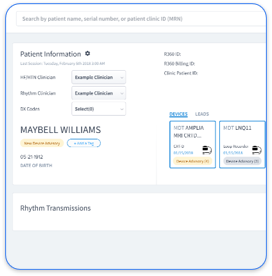
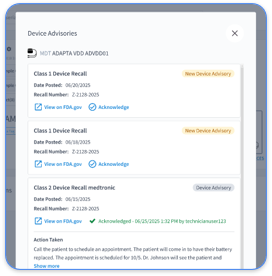
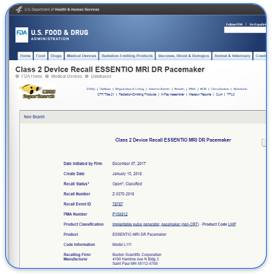
The cardiac implant monitoring ecosystem now spans multiple Original Equipment Manufacturers (OEMs), device types, and remote portals. As device volumes increase, practices must log into several systems, reconcile conflicting data, and track alerts manually. This fragmentation creates data silos that make it difficult to maintain a complete and current view of each patient.
Extracting health data effectively and equitably from multiple sources remains a central challenge. Device technicians spend valuable time navigating between platforms rather than focusing on triage and patient outreach. The growing mix of implantable loop recorders, CRT devices, ICDs, and sensors such as CardioMEMS further increases complexity and room for error.
Disjointed monitoring increases the chance that critical events such as new atrial fibrillation, ventricular tachycardia, or device malfunctions are overlooked or addressed late. High alert volumes, inconsistent signal quality, and incomplete data transmission all contribute to alert fatigue and safety concerns.
Financial performance is affected as well. When monitoring teams cannot reliably track billable events or produce complete, compliant documentation, practices lose revenue on complex remote monitoring codes (93298, 93299, 99454). Over time, this results in higher overhead, more denials, and limited capacity to scale remote services.
A unified cardiac implant monitoring system replaces fragmented device portals with a single, vendor-neutral platform. The system aggregates and normalizes data from all Cardiac Implantable Electronic Devices (CIEDs), including pacemakers, ICDs, implantable loop recorders, CRT and CCM devices, and hemodynamic sensors.
Vendor-neutral interoperability allows the platform to communicate with all major manufacturers while preserving data fidelity. Clinicians gain one consistent view of device status, alerts, and historical data, which simplifies decision-making and documentation.
Artificial intelligence strengthens unified monitoring by converting raw device data into prioritized, clinically meaningful insights. Algorithms help confirm data completeness, identify patterns that warrant attention, and reduce the number of low-value alerts that reach clinicians.
Effective AI triage focuses staff attention on the most important events, which lowers alert fatigue and supports faster intervention when a patient's condition changes.
Unified systems can support:
The global wearable cardiac devices market was valued at USD 3.87 billion in 2025 and is projected to reach USD 25.97 billion by 2034, which underscores the need for scalable, efficient monitoring infrastructure.
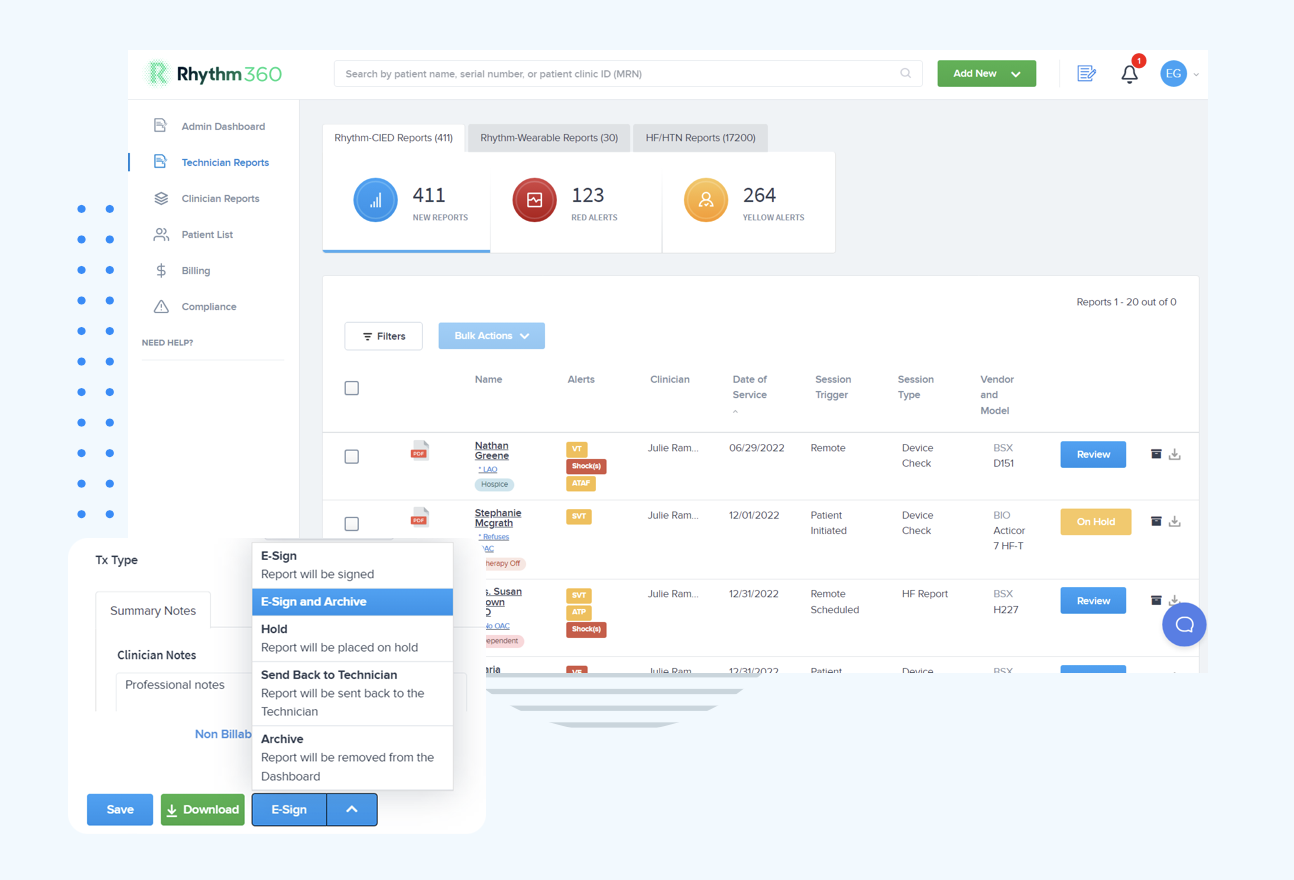
Rhythm360 provides a cardiology platform that consolidates all CIED and Remote Physiological Monitoring (RPM) data into one dashboard. Device technicians can review holistic patient reports without moving between OEM portals, which reduces administrative work and the risk of missing key information.
The platform uses redundant data feeds, computer vision, and analytics to reach data transmissibility rates above 99.9 percent. This high reliability helps ensure that clinicians base decisions on complete and current information.
AI-driven alert triage and automated reporting tools support rapid response workflows. Optional 24/7 coverage by certified cardiac technicians (CCTs) offers additional oversight for higher-risk patients and busy programs.
Rhythm360 also supports chronic disease RPM programs, including heart failure and hypertension, with standardized onboarding, monitoring, and billing workflows that align with CPT codes 99453, 99454, and 99457.
Organizations using Rhythm360 report faster response times for critical alerts and higher capture of eligible CPT codes. Practices often see improvements in staff productivity, reduced time spent on portal management, and more predictable revenue from remote services.
Schedule a demo of Rhythm360 to review how these capabilities can support your specific device mix, staffing model, and growth plans.
Successful implementation starts with alignment across leadership, clinical teams, and IT. Key steps include:
IT teams should review the existing environment, including EHR systems such as Epic, Cerner, or athenahealth, network security, and data retention policies to ensure HIPAA-compliant integration.
A clear integration plan should address data mapping, alert routing, and how information will appear in the EHR. Bi-directional interfaces reduce double documentation and help maintain a single source of truth for the care team.
Data migration plans need to describe how historical device data will move into the unified platform and how active patients will transition without gaps in monitoring.
Practices can track ROI by measuring:
Longer-term metrics, such as staff satisfaction, reduced burnout, and patient outcome trends, help quantify the broader value of unified monitoring.
Home care settings accounted for 37.84 percent of wearable cardiac device revenue in 2025, reflecting the shift toward remote and self-managed cardiac care. Platforms must incorporate data from wearables and implants while maintaining clinical-grade accuracy and understandable workflows for staff.
AI in remote monitoring of cardiac implantable devices offers significant potential but introduces integration and governance challenges. Programs that choose vendor-neutral platforms and invest in thoughtful configuration will be better positioned to adopt new algorithms safely.
Many practices underestimate the operational cost of staying with fragmented systems, including time spent on manual reconciliation, higher error risk, and recurring billing issues. Others commit to vendor-locked solutions that restrict future device choices and limit data portability.
Effective change management is essential. Clear protocols, role-based training, and phased go-lives help staff adapt to new workflows and use the platform consistently.
How does a unified system improve patient outcomes beyond traditional monitoring?
Unified systems consolidate all device data in one place, supported by AI that highlights high-risk events. This structure enables faster review, clearer triage, and earlier intervention than fragmented portal-based workflows.
What are the main financial benefits of a unified cardiac implant monitoring solution?
Key benefits include higher capture of billable remote monitoring codes, fewer claim denials due to incomplete documentation, and lower administrative costs from automation. Practices can also add new RPM service lines with more predictable staffing and billing processes.
How does a vendor-neutral platform address interoperability challenges with various devices?
Vendor-neutral platforms integrate with multiple manufacturers through a single interface. The system normalizes data into a consistent format so staff view one coherent record instead of juggling several OEM portals.
Is a unified system suitable for smaller cardiology practices?
Smaller practices benefit from reduced manual work, more reliable billing, and improved visibility into patient status. Scalable platforms and flexible pricing models allow practices with modest patient volumes to adopt unified monitoring without building large in-house teams.
Unified, AI-enabled cardiac implant monitoring has shifted from an optional upgrade to a practical requirement for modern cardiovascular programs. Consolidated data, vendor-neutral interoperability, and structured workflows support safer care, more efficient operations, and stronger reimbursement.
Rhythm360 offers a unified platform that addresses these clinical and operational challenges while supporting expansion into broader RPM programs. Connect with Rhythm360 to evaluate whether a unified monitoring approach fits your practice's 2026 strategy.