Last updated: March 30, 2026
A vendor neutral archive for cardiac imaging and device data is a cloud-based repository that stores, normalizes, and retrieves multi-format cardiac information from any manufacturer without vendor dependency. The system ingests DICOM imaging data from echocardiography, CT, and MRI alongside HL7 and XML device data from cardiac implantable electronic devices (CIEDs), ECGs, and remote patient monitoring systems.
The VNA architecture operates through three sequential stages. First, data input via OEM APIs, HL7 interfaces, and computer vision processing captures information from diverse sources. Next, AI-powered normalization, with greater than 99.9% reliability, standardizes this heterogeneous data. Finally, unified output through integrated dashboards and EHR alerts delivers consistent information to clinicians and creates a single source of truth for cardiology practices.
These unified data capabilities directly address the mounting challenges cardiology practices face from fragmented systems that create operational inefficiencies and clinical risks. A vendor neutral archive resolves these pain points through comprehensive data unification and workflow automation.
The comparison below shows how a VNA reshapes four core operational areas, with the largest gains in alert response and revenue capture.
| Challenge | Without VNA | With VNA | Impact |
|---|---|---|---|
| Data Silos | Multiple OEM portals | Single unified dashboard | Up to 80% faster alert responses |
| Administrative Workload | Manual data entry across systems | Automated data consolidation | Reduced staff overhead |
| Alert Management | Alert fatigue from multiple sources | AI-powered alert triage | Prioritized critical events |
| Revenue Capture | Manual CPT code documentation | Automated billing workflows | Up to 300% revenue increase |
The elimination of vendor lock-in represents a fundamental benefit, because practices can select best-of-breed solutions without proprietary data constraints. HIPAA-compliant mobility then ensures clinicians can access critical patient information from any location, which helps prevent missed events during off-hours coverage. See how Rhythm360 delivers vendor independence and secure mobile access in your practice.
Modern cardiac VNAs rely on established healthcare interoperability standards to support imaging and device data across modalities. DICOM Supplement 241 introduces the Structural Heart Structured Report (SR) Template, achieving Standard/Final Text status in the 2025a edition and incorporation into the DICOM 2026b base standard for archiving cardiac imaging data.
The table below shows how three complementary standards divide responsibilities across cardiac data types, with each standard tuned for specific workflows.
| Standard | Cardiac Data Type | VNA Support | Example Application |
|---|---|---|---|
| DICOM SR | Echo/CT/MRI reports | Structured archiving | Supplement 241 cardiac templates |
| HL7 aECG | ECG waveforms | Real-time processing | CIED transmission data |
| FHIR R4 | RPM device data | API integration | Remote monitoring workflows |
DICOM Supplement 239 defines Waveform Annotation Structured Reports, achieving Standard/Final Text status in the 2024b edition for ECG and CIED waveform data archiving. Together, these standards create a consistent framework for cardiac data interoperability across vendor neutral archives.
PACS systems work well for traditional radiology workflows, while vendor neutral archives provide broader capabilities for hybrid cardiac imaging and device data management. The architectural differences create distinct advantages for cardiology practices that manage multi-modal data streams.
| Feature | PACS | VNA | Preferred for Cardiology |
|---|---|---|---|
| Vendor Neutrality | Limited to specific vendors | Complete manufacturer independence | VNA |
| Device Data Integration | Poor CIED support | AI-powered device unification | VNA |
| Billing Automation | No RPM billing support | Automated CPT code capture | VNA |
VNA software is projected to grow at a 10.72% CAGR through 2031, driven by demand for interoperability and elimination of proprietary fees, while PACS held 63.41% market share in 2025. This growth pattern reflects the stronger long-term value of vendor neutral archives for modern cardiology workflows, while PACS remains suitable for imaging-only environments.
The cardiac VNA market includes several established players, each with distinct strengths for imaging and device data management. The comparison below evaluates three leading solutions across four critical dimensions and shows how OEM support and AI reliability align with improvements in clinical response and revenue capture.
| Solution | OEM Support | AI Reliability | RPM Billing | Response Reduction |
|---|---|---|---|---|
| Merge/Fujifilm | Major vendors | High | Partial | 50% |
| PaceMate/Implicity | Limited | Moderate | Basic | 40% |
| Rhythm360 | All major OEMs | >99.9% | Full CPT automation | 80% |
Rhythm360 stands out through comprehensive AI-powered data extrapolation for CIED and RPM data, seamless Twilio communication integration, and bi-directional EHR connectivity with Epic and Cerner systems. This combination supports reliable clinical decisions and efficient workflows for cardiology practices that depend on cardiac device data.

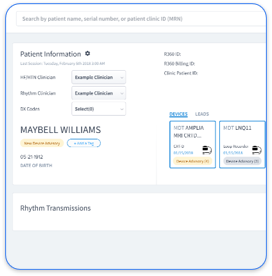
Rhythm360 addresses core cardiology practice pain points with cloud-native architecture and AI-powered data unification. The platform removes the workload of managing multiple OEM portals by consolidating all CIED and RPM data into a single, intuitive dashboard that reduces logins and manual data transcription.
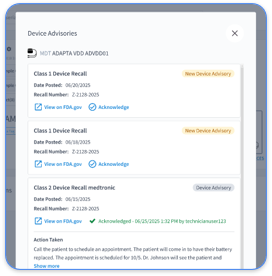
AI-powered alert triage cuts through non-actionable notifications so clinicians can focus on critical events like new-onset atrial fibrillation or ventricular tachycardia. Once these events are identified, bi-directional integration with Epic, Cerner, and Twilio communication systems documents the clinical response and generates compliant billing records, which supports CPT code accuracy and coordinated patient care.
Mobile accessibility helps prevent missed events, because clinicians can respond to weekend emergencies such as atrial fibrillation detection with immediate anticoagulation protocols. A representative case study shows how one clinic achieved the response time improvements and revenue gains described earlier through automated RPM billing optimization. Discover how your practice can achieve similar response and revenue results.
Successful cardiac VNA implementation follows a structured three-phase approach that includes comprehensive data silo assessment, rapid system integration, and focused staff training. The assessment phase identifies existing OEM portals, data formats, and workflow bottlenecks that increase administrative work and clinical risk.
Integration typically requires days to weeks, depending on EHR complexity and device manufacturer diversity. Cloud-hosted VNA deployments are expected to grow at an 11.02% CAGR through 2031, promising up to 30% reductions in total cost of ownership for imaging workflows. This trend highlights the economic advantages of cloud-native solutions compared with traditional on-premise systems.
ROI measurement focuses on three quantifiable areas: time savings from eliminated manual processes, the revenue gains from automated CPT code capture, and reduced clinical liability from faster alert responses. However, achieving these returns requires avoiding two common pitfalls, which include underestimating AI training requirements and insufficient staff change management. Practices that navigate these challenges successfully track progress through alert response time reduction, billing capture rate improvement, and staff satisfaction scores.
A vendor neutral archive in cardiology is a cloud-based repository that stores and normalizes cardiac imaging data from echocardiography, CT, and MRI alongside device data from CIEDs, ECGs, and remote monitoring systems. The system operates independently of device manufacturers and enables unified data access across all OEM platforms through standardized DICOM, HL7, and FHIR interfaces.
Yes, Rhythm360 provides comprehensive support for all major CIED manufacturers including Medtronic, Abbott, Boston Scientific, and Biotronik. The platform ingests data through multiple channels such as direct API connections, HL7 messaging, and AI-powered computer vision processing to ensure complete data capture regardless of the originating device or transmission method.
Vendor neutral archives automate remote patient monitoring billing by generating compliant documentation for CPT codes 93298, 93299, and 99454. The system tracks patient engagement, device connectivity, and clinical interventions to create audit-ready billing records, which can deliver up to 300% revenue increases through improved capture rates and fewer claim rejections.
VNAs excel in cardiac workflows through superior device data integration, AI-powered alert management, and automated billing capabilities that PACS systems do not provide. PACS focuses primarily on imaging storage and retrieval, while VNAs deliver comprehensive cardiac data unification that includes waveforms, structured reports, and remote monitoring alerts essential for modern cardiology practice.
Rhythm360 leads the market for cardiac device data management through its cloud-native architecture, industry-leading AI reliability, and the response time reductions outlined earlier. The platform’s comprehensive OEM support, automated CPT billing, and seamless EHR integration make it a strong choice for cardiology practices that want to eliminate data silos and improve revenue capture.
Modern cardiac VNAs rely on DICOM Structured Reports for imaging data archiving, HL7 aECG standards for waveform transmission, and FHIR R4 for remote patient monitoring integration. These interoperability standards support comprehensive data coverage across cardiac modalities while maintaining vendor neutrality and enabling EHR connectivity for efficient clinical workflows.
Vendor neutral archives address the data fragmentation challenges facing modern cardiology practices by eliminating silos, protecting revenue streams, and supporting unified patient care through comprehensive cardiac data management. Rhythm360 delivers a complete solution for practices ready to escape vendor lock-in and improve their clinical workflows. Start your journey to unified cardiac data management and stronger revenue capture.