Remote cardiac monitoring across multiple Original Equipment Manufacturer (OEM) portals creates a heavy administrative load for cardiology practices. When teams manage devices from more than one manufacturer, including Medtronic, Boston Scientific, Abbott, or Biotronik, staff must log into separate portals that do not share data. This setup produces data silos, raises the chance of manual transcription errors, and requires many hours of duplicate data entry.
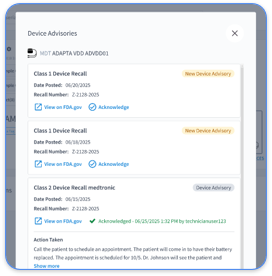
Many systems generate large volumes of low-value alerts while still leaving gaps around critical events such as new-onset atrial fibrillation, ventricular tachycardia, or device malfunction. Unreliable transmissions and manual workflows increase the risk that important findings go unnoticed. Clinical teams then face both alert fatigue and anxiety about patient safety.
The absence of a centralized monitoring platform can reduce reimbursement for complex remote monitoring CPT codes (93298, 93299, 99454) and increase claim denials. Incomplete documentation and limited audit trails create exposure for HIPAA and payer compliance reviews. Practices experience revenue leakage when monitoring work is performed but not captured, coded, or billed accurately.
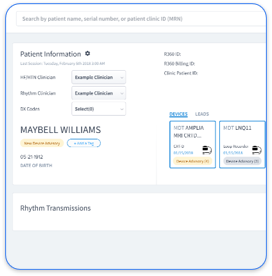
Rhythm360 offers an integrated remote cardiac monitoring platform that focuses on workflow clarity, reliable data, and revenue support.
Schedule a Rhythm360 demo to see how a unified platform can support your cardiac monitoring program.
Murj focuses on workflow simplicity and automation for multi-vendor device data, with streamlined reporting and clinician dashboards that help reduce routine monitoring tasks. Rhythm360 offers similar workflow support while also emphasizing AI-driven data reliability, chronic disease management, and revenue tools for practices that want one workspace for CIED and RPM programs.
Implicity emphasizes AI-based alert filtering for practices with high alert volumes, which can be helpful for large monitoring operations that struggle with alert overload. Rhythm360 combines alert triage with broad, vendor-neutral data integration and a strong focus on data reliability, which can better support practices that use multiple device manufacturers.
Octagos applies AI to filter non-actionable transmissions and is known for two-way EHR integration, supporting device data workflows that align with existing health IT systems. Rhythm360 pairs high data reliability, measured above 99.9 percent, with bi-directional EHR connectivity and CPT automation, so teams can manage both clinical and financial tasks in one environment.
Rhythm Management Group delivers a bundled model that includes both software access and monitoring services from clinical staff. Some practices prefer this option when they want to outsource a larger portion of day-to-day monitoring activity. Rhythm360 supports a flexible approach that combines its platform with optional 24/7/365 review by certified cardiac technicians, allowing practices to adjust coverage levels as programs grow.
Many cardiology programs still manage remote monitoring through individual OEM portals from Medtronic, Boston Scientific, Abbott, and Biotronik, which increases login volume, manual data handling, and the risk of missed alerts or incomplete documentation. Rhythm360 replaces this model with a single, vendor-neutral platform that consolidates device data into one dashboard, reducing administrative burden and supporting more consistent follow-up.
EHR-native remote monitoring modules may work well for basic data capture but often lack deep CIED integrations or advanced AI features for complex device workflows. Rhythm360 maintains bi-directional integrations with Epic, Cerner, Athenahealth, eClinicalWorks, and Greenway Health via HL7 while offering specialized cardiac analytics and device-specific context.
RPM platforms that focus only on conditions like hypertension or heart failure often sit apart from CIED management, which adds yet another portal for clinical teams. Rhythm360 offers integrated service lines for both Rhythm-CIED and HF/HTN RPM so practices can manage device and physiological data in the same workspace and reduce cross-system friction.
Feature | Rhythm360 Benefits | Murj Capabilities | Implicity Capabilities |
Vendor-neutral integration | Multi-vendor support, but with a narrower integration scope | Vendor-specific integrations with expanding multi-vendor support | |
AI-powered alert triage | Advanced AI that can reduce time to act on critical events by about 80 percent | AI that focuses on workflow automation and routing | AI filtering designed for high alert volumes |
Chronic disease management | Integrated heart failure and hypertension RPM service lines with aligned CPT workflows | Primary focus on CIED management | Primary focus on CIED management |
Billing automation | Automated CPT capture and documentation that can support revenue increases of up to 300 percent | Limited automation features | Limited automation features |
Fragmented cardiac monitoring workflows can strain staff capacity, create blind spots in patient care, and reduce reimbursement. Rhythm360 offers vendor-neutral integration, high data reliability, focused alert triage, and automated billing support so practices can run scalable, compliant cardiac monitoring programs.
Schedule a Rhythm360 demo to review how the platform aligns with your clinical and financial goals.
Rhythm360 uses APIs, HL7, XML, and computer vision for PDF parsing to ingest and normalize data from all major CIED manufacturers. This approach supports data transmissibility above 99.9 percent and reduces the need to access multiple OEM portals, creating a single source of truth for cardiac device information.
Rhythm360 uses AI-driven alert triage that highlights clinically significant events and filters low-value notifications. Optional 24/7/365 oversight by certified cardiac technicians further shortens response times for urgent alerts and supports proactive follow-up.
Rhythm360 automates CPT code capture and documentation for CIED monitoring and HF/HTN RPM. This automation helps practices capture work that was previously unreimbursed and can support profitability increases of up to 300 percent through complete, auditable records.
Rhythm360 implementation typically ranges from a few days to a few weeks, depending on program complexity. Cloud-based architecture and pre-built integrations with major EHRs, including Epic and Cerner, allow deployment with limited disruption.
Rhythm360 is a HIPAA-compliant platform with security controls for data transmission and storage, along with detailed audit trails. These safeguards help practices protect sensitive cardiac patient data and maintain compliance with healthcare regulations.