Cardiology practices across the United States manage growing CIED volumes with systems that are often fragmented, labor-intensive, and difficult to scale. These gaps affect patient safety, staff workload, and practice revenue.
Alert burden from remote monitoring has become a significant time-consuming process for CIED clinic staff due to many invisible clinical and nonclinical tasks, including phone calls, troubleshooting connectivity, triaging alerts, and coordinating in-person follow-up. This work reduces time for direct patient care.
The fragmentation problem extends into clinical data and billing. Fragmented RCM systems create data silos across multiple manufacturer portals that hinder clinical decision-making and billing accuracy, and clinicians must move between Medtronic, Boston Scientific, Abbott, Biotronik, and other portals with different interfaces and data structures.
Alert fatigue adds a clear safety concern. Alert fatigue from nonactionable alerts poses a serious patient safety risk by potentially causing clinicians to miss time-critical alerts that require immediate intervention. Critical events such as new-onset atrial fibrillation, ventricular tachycardia, or device malfunction can be harder to identify in a high volume of low-value alerts.
The financial impact is substantial. Revenue loss from fragmented systems can amount to hundreds of thousands of dollars annually due to missed billable events, including CIED-specific CPT codes (93298, 93299) and RPM codes (99453, 99454, 99457). Incomplete tracking and documentation leave reimbursement on the table.
Rhythm360 by RhythmScience addresses these challenges with a unified, vendor-neutral platform designed to support clinical quality, operational efficiency, and financial performance.
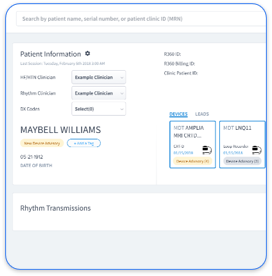
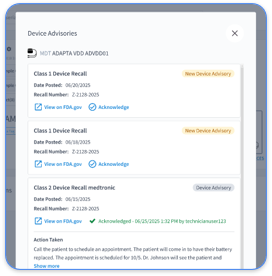
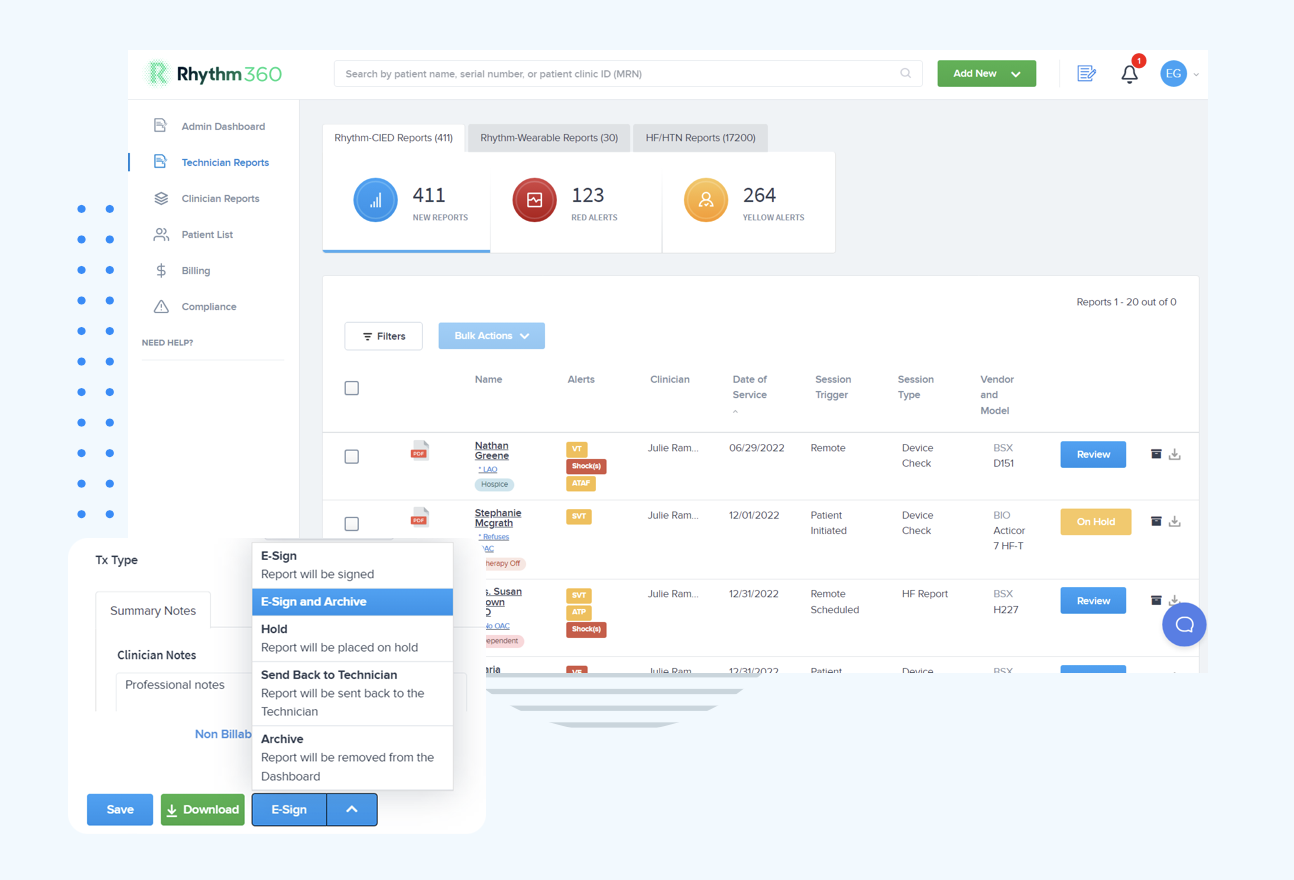
Rhythm360 uses a cloud-based, vendor-neutral infrastructure that captures and standardizes data from all CIED types, including pacemakers, ICDs, implantable loop recorders, CRT devices, and sensors such as CardioMEMS pulmonary artery monitors. A single dashboard replaces multiple OEM portals and gives teams one source for device data and reports.
The platform targets more than 99.9 percent data transmissibility through redundant data feeds, computer vision, and AI-supported extrapolation. It ingests APIs, HL7, XML, and unstructured PDFs through OCR, helping reduce the risk that critical data is lost because of technical failures or connectivity gaps.
Rhythm360 applies AI-powered triage to filter nonactionable notifications and prioritize clinically significant events. Practices can cut time spent on low-value alerts and focus on arrhythmias, device issues, or connectivity problems that require action, supporting response times reduced by up to 80 percent for critical events.
The platform includes an integrated Twilio framework that logs calls, texts, and other patient touchpoints with full audit trails. This structure supports coordinated care teams and complete documentation for compliance and quality review.
Rhythm360 automates tracking and documentation for billable events, including CIED codes (93298, 93299) and RPM codes (99453, 99454, 99457). The system helps practices close revenue gaps and reduce manual billing work, with the potential for substantial gains in net reimbursement.
Practices that want a unified approach to cardiac implant monitoring and revenue capture can request a personalized walkthrough at RhythmScience's contact page.
Unified data access improves efficiency by replacing multiple portals and manual reconciliation steps with one coordinated workflow. Staff members no longer need to maintain separate logins, learn several interfaces, or manually compare reports from different manufacturers.
Rhythm360 consolidates data from all major device vendors into a single dashboard. Manual data entry across scattered platforms is error-prone and time-consuming, diverting technician attention from patient care and contributing to burnout. Automated ingestion and normalization allow more time for patient-facing tasks and clinical review.
Feature | Traditional Fragmented Systems | Rhythm360 Unified Platform | Operational Impact |
Data Access | Multiple OEM portals | Single dashboard | Reduces redundant logins |
Workflow | Manual data entry | Automated ingestion | Lowers administrative workload |
Data Integrity | Inconsistent, gaps in data | AI-supported reliability (>99.9%) | Improves confidence in decisions |
Staff Burden | High, frequent burnout | Streamlined workflows | Supports retention and training |
The administrative view gives real-time insight into patient compliance, open alerts, and revenue opportunities based on CPT requirements. Leadership teams can monitor volumes, allocate staff, and refine workflows with current performance data.
Effective alert management supports safer care and more predictable workloads. Lack of standardized alert parameters and inconsistent alert interpretation across systems creates a major data management challenge, and generalized settings generate many nonclinically significant alerts.
Rhythm360 addresses this challenge with AI-powered rules that prioritize events such as concerning arrhythmias, device malfunctions, and urgent connectivity issues. Low-value alerts move down the queue so teams can focus on transmissions that affect outcomes.
AI-powered alert triage systems prioritize alerts intelligently to reduce alert fatigue and enable more efficient clinical response compared to manual approaches. Clinics using structured triage can respond more quickly to high-risk events and distribute work more evenly across the week.
A secure, HIPAA-compliant mobile application extends this workflow beyond the clinic. Clinicians can review transmissions, sign reports, and coordinate care from smartphones, which supports timely intervention even when providers are away from their desks.
Reliable reimbursement supports long-term access to remote monitoring services. Insufficient funding and inadequate reimbursement models are prominent barriers to CIED remote monitoring implementation, so practices benefit from tools that close documentation gaps.
Rhythm360 automates CPT capture and generates supporting documentation for CIED and RPM codes. Teams can see which patients have met time and transmission thresholds, which reports are ready for billing, and where follow-up is still needed.
The platform also supports turnkey HF and HTN RPM service lines with structured onboarding checklists and billing workflows. These options help practices expand chronic disease programs without building every process from the ground up.
Deep bi-directional EHR integration with API and HL7 connectivity is essential for efficient data flow, yet many systems lack robust integration. Rhythm360 connects with leading EHRs such as Epic, Cerner, Athenahealth, eClinicalWorks, and Greenway Health, so billing data can move into existing revenue cycle processes with less manual entry.
Teams that want to improve revenue capture from CIED and RPM programs can request more information or a demo at RhythmScience's contact page.
Rhythm360 uses AI-powered triage to filter nonactionable notifications and prioritize clinically meaningful events. This structure reduces total alert volume, directs staff attention to high-risk situations, and supports response times reduced by up to 80 percent for critical alerts.
Rhythm360 offers bi-directional integrations with leading EHR systems, including Epic, Cerner, Athenahealth, eClinicalWorks, and Greenway Health, using HL7 and other interfaces. Most implementations complete within a few days to a few weeks, depending on infrastructure and local requirements.
Vendor neutrality means Rhythm360 aggregates and normalizes data from all major cardiac implant manufacturers, including Medtronic, Boston Scientific, Abbott, and Biotronik, into one platform. Staff members no longer need to log into separate OEM portals, which reduces data fragmentation and administrative effort.
Fragmented workflows can cause missed or delayed billing for CIED and RPM services. Rhythm360 automates CPT capture and documentation for codes 93298, 93299, 99453, 99454, and 99457, helping ensure that billable events are recognized, documented, and submitted.
Some manufacturer portals limit local control of alert settings. Rhythm360 processes alerts after ingestion, applies AI-based triage, and highlights actionable events for review, which reduces effective alert burden even when OEM parameters remain fixed.
Cardiology practices in 2026 need monitoring programs that protect patient safety, support staff, and sustain reimbursement. Current models of care do not fully account for the additional work generated by remote monitoring implementation, especially around alert management and documentation.
Rhythm360 provides a unified, AI-supported platform that addresses data silos, alert fatigue, and revenue leakage in a single environment. Practices can spend less time managing portals and manual tasks, and more time focusing on patient care and program growth.
Clinics that want to evaluate a unified approach to cardiac implant monitoring and RPM can connect with RhythmScience at RhythmScience's contact page to discuss their goals and see the platform in action.