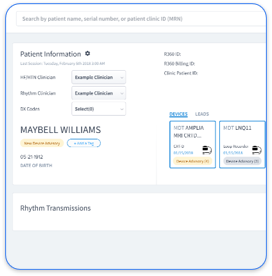
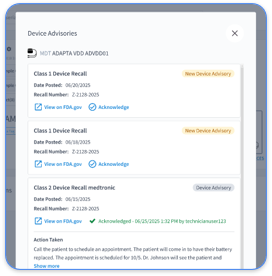
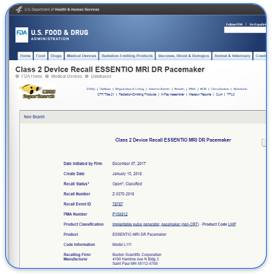
Slow or missed responses to critical alerts create serious risk for patients with new-onset atrial fibrillation, ventricular tachycardia, or device malfunctions. Stroke, syncope, hospitalization, and mortality become more likely when clinicians do not see transmissions in time. Continuous monitoring for early detection of decompensation can reduce hospital admissions, but delayed review of data reduces this benefit. Timely detection of arrhythmias with implantable cardiac monitors supports prevention of serious events, so faster response times directly support better outcomes.
Cardiology staff often manage separate portals for Medtronic, Boston Scientific, Abbott, Biotronik, and other OEMs. Each platform requires its own login, workflow, and documentation process. This fragmented setup consumes hours each day that could otherwise support direct patient care. Manual data entry between systems increases the risk of transcription errors and lost information. Over time, device technicians and nurses may experience burnout from repetitive, low-value tasks, which contributes to turnover and staffing instability.
High volumes of routine device alerts reduce clinician attention to events that truly matter. Many legacy systems send frequent, non-actionable alerts for minor or expected findings. Clinicians begin to tune out notifications, which makes it easier to overlook the rare but critical transmission that signals decompensation or device malfunction. That pattern creates a dangerous gap between continuous monitoring and timely intervention.
Manual workflows often lead to incomplete documentation for CPT codes such as 93298, 93299, and 99454. Missed billable events, undercoded services, and rejected claims all erode revenue. Highly trained clinicians and technicians spend time on tasks that automation could handle, which raises operational costs. Practices that cannot scale monitoring efficiently may limit the number of patients they enroll, reducing both access to care and potential revenue.
Cardiology groups that want to improve patient safety, reduce staff burden, and stabilize revenue need a more unified approach to cardiac implant monitoring.
Rhythm360 provides a cloud-based platform that centralizes device data, automates routine work, and supports faster action on critical alerts. The design focuses on practical improvements in workflow, clinician focus, and billing accuracy.
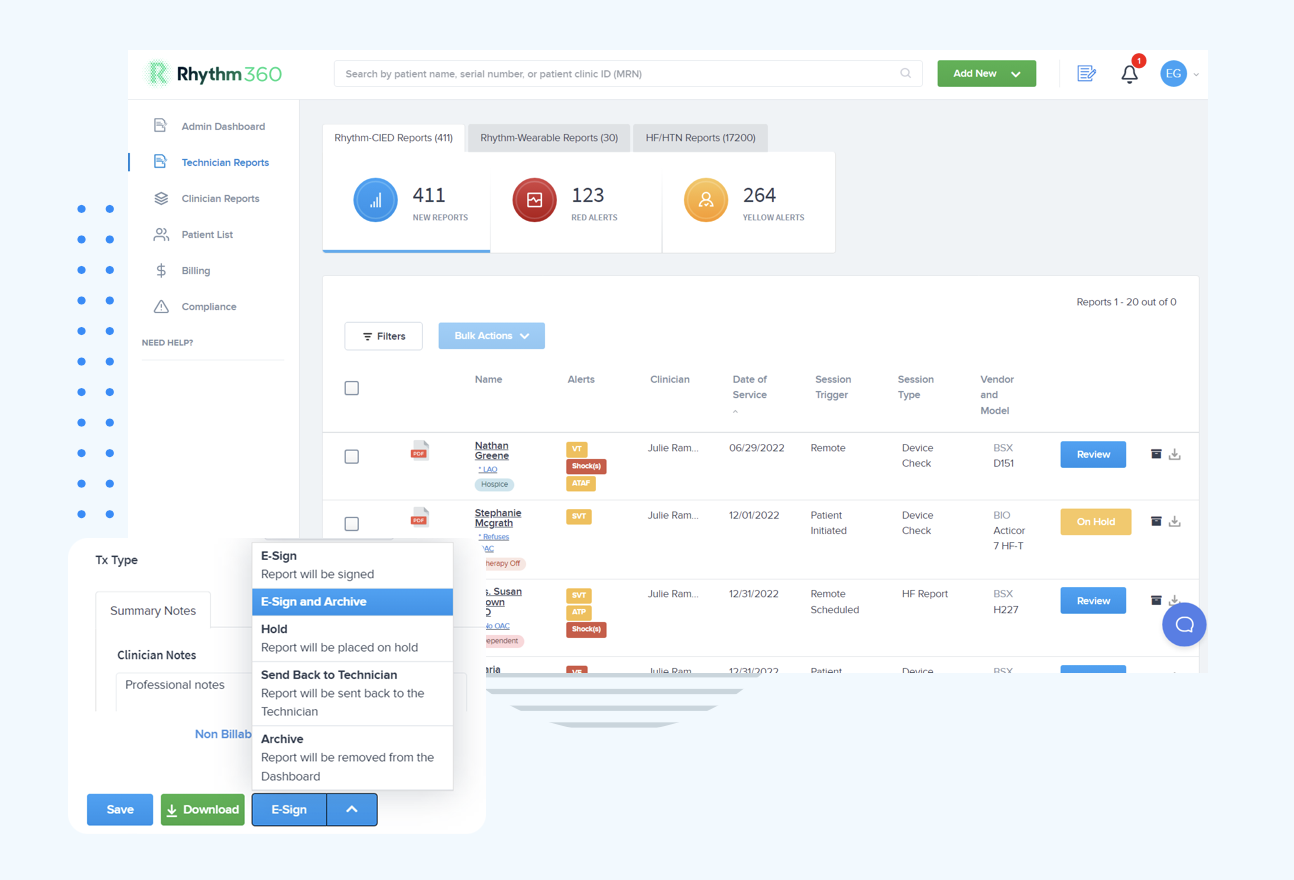
Rhythm360 aggregates all Cardiac Implantable Electronic Device (CIED) and Remote Patient Monitoring (RPM) data from major manufacturers into a single dashboard. Clinicians work from one login and one interface instead of moving between multiple OEM portals. This approach improves data consistency and gives the care team a clear, unified view across the entire monitored population.
The platform uses AI to filter routine notifications and highlight clinically significant alerts. This triage process supports up to 80% faster response times for high-priority events, because staff spend less time sorting through low-value alerts. Teams can focus attention on transmissions that most directly affect patient safety.
Rhythm360 automates data ingestion, report generation, and billing documentation. Structured workflows help ensure that reports reach the right clinician, that findings are documented consistently, and that billable events are tracked. Automation reduces manual clicks and typing, which lowers the chance of errors and frees clinicians to focus on clinical decisions.
The platform connects with leading EHR systems such as Epic, Cerner, and athenahealth. Bi-directional integration moves patient and report data between systems without manual transcription. This integration preserves data integrity, reduces duplicate work, and helps keep the medical record complete and current.
Clinicians can review transmissions and sign reports from a secure, HIPAA-compliant mobile application. The ability to act away from a workstation supports faster review of critical events and more flexible scheduling for busy providers.
Rhythm360 ingests and normalizes data from APIs, HL7 feeds, XML files, and unstructured PDFs using computer vision. Data transmissibility greater than 99.9% supports confident clinical decision-making based on a complete record. One consistent source of truth reduces time spent searching for information and lowers the risk of overlooking important details.
AI-driven alert triage reduces non-actionable notifications so that critical events stand out. Practices that adopt this approach can see up to an 80% reduction in response times for high-priority alerts. Clinicians receive clear signals about which transmissions require immediate attention and which can follow routine review.
Automated reporting paths, standardized templates, and integrated EHR documentation all contribute to faster clinical action. Reports route to the right provider without extra steps. Documentation occurs as part of the workflow instead of as a separate task. These efficiencies shorten the time between device transmission, review, and intervention.
Rhythm360 supports CIED monitoring and heart failure or hypertension RPM on the same platform. Continuous monitoring enables early detection of decompensation, and a unified system helps teams act on that information across multiple cardiac conditions. Practices can expand monitoring programs without adding separate tools for each modality.
Cardiology practices that want to evaluate this approach can schedule a demo of Rhythm360 and review how the platform fits existing staffing and workflows.
Feature | Legacy monitoring systems | Rhythm360 (AI-powered platform) |
Data aggregation | Multiple OEM portals | Single, unified platform for all manufacturers |
Alert management | High alert volume and fatigue | AI-filtered and prioritized alerts, up to 80% faster critical response |
Workflow | Manual entry and time-consuming documentation | Automated reporting and bi-directional EHR integration |
Accessibility | Monitoring tied to specific workstations | Secure, HIPAA-compliant mobile access |
Rhythm360 uses AI-based alert triage to filter non-actionable notifications and elevate clinically relevant events. Lower alert volume and clearer prioritization help clinicians maintain focus on critical transmissions and reduce the risk of missing significant findings.
Rhythm360 functions as a vendor-neutral platform that aggregates data from major CIED manufacturers, including Medtronic, Boston Scientific, Abbott, and Biotronik. Data ingestion methods include APIs, HL7, XML, and computer vision for unstructured PDFs. Clinicians access all device information from a single dashboard instead of logging into multiple OEM portals.
Faster response to critical device alerts supports earlier treatment of arrhythmias and decompensation, which can help prevent stroke, syncope, and other serious cardiovascular events. Continuous monitoring combined with timely review strengthens the link between detection and intervention.
Rhythm360 tracks billable monitoring activities and generates documentation that supports complex CPT codes. Automated capture of billable events reduces the chance of missed charges and helps practices submit more complete claims while aligning with CMS requirements.
Cardiology practices can address slow cardiac implant monitoring response times by replacing fragmented portals and manual processes with a unified, AI-enabled platform. Rhythm360 supports patient safety, staff efficiency, and financial stability through consolidated data, prioritized alerts, automated workflows, and integrated billing documentation.
Cardiology leaders who want to improve response times and strengthen monitoring programs in 2026 can schedule a demo with RhythmScience and see Rhythm360 in action for their teams and patients.