

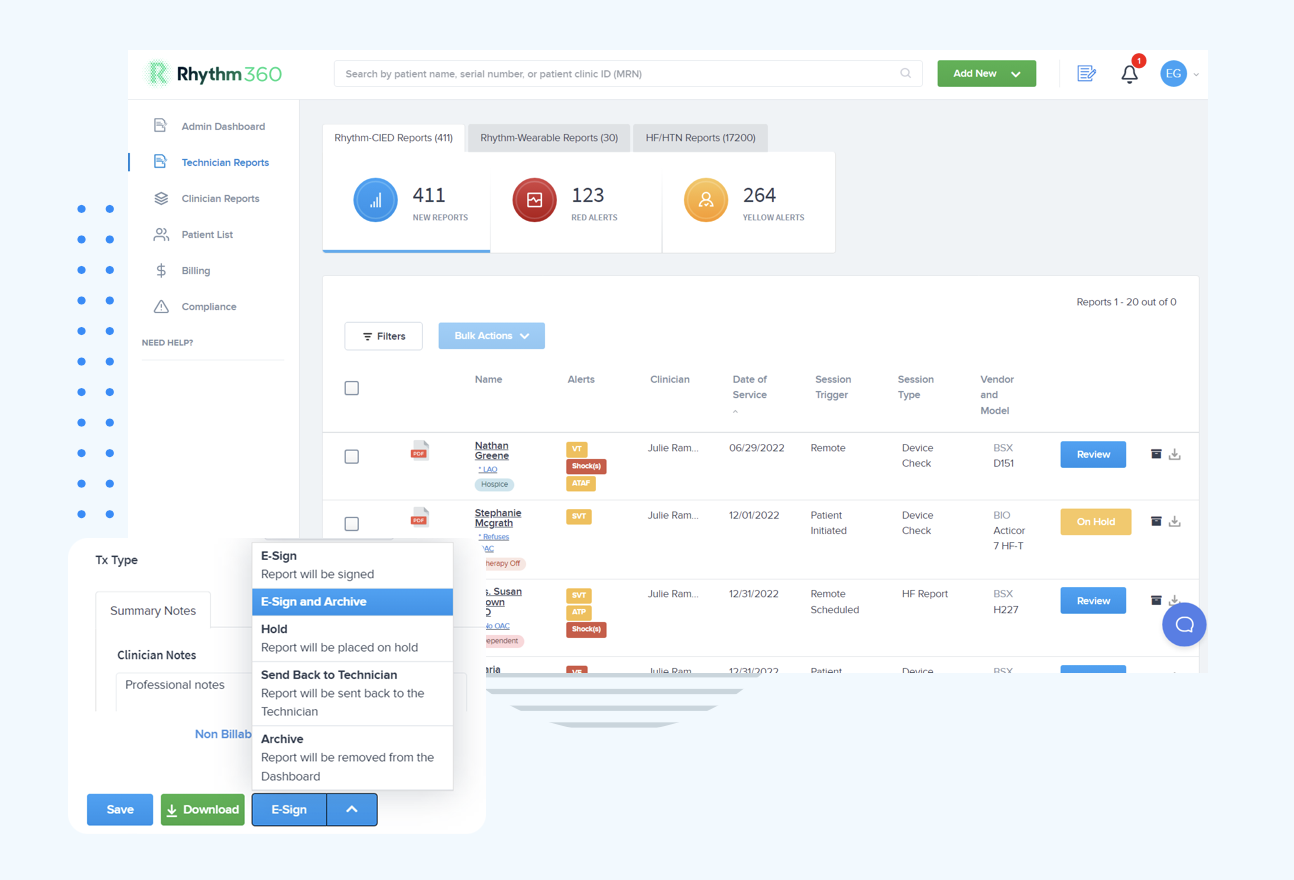
Cardiology practices now manage large CIED populations across multiple manufacturer portals and disconnected workflows. Care for 1,000 CIED patients with remote monitoring typically consumes about 30 to 46 clinical hours each week. Much of this time goes to logging into separate systems, rekeying data, and reconciling records.
Staff members must learn and maintain proficiency in several OEM platforms with different interfaces, workflows, and data formats. Training takes longer, routine tasks slow down, and error risk rises when teams piece together information from incompatible systems.
Fragmented monitoring also raises the risk of missed clinically meaningful events. Clinicians report significant workflow pressure from unmanaged alert volume and limited standardization for interpreting remote data. When notifications for new atrial fibrillation, ventricular tachycardia, or device malfunction blend into hundreds of low-priority alerts, important signals can be overlooked.
Critical alerts may sit in cluttered queues across several OEM portals, which increases the chance of delayed responses and compromised safety. Teams often work reactively instead of proactively, which limits opportunities for early intervention that could prevent stroke, hospitalization, or decompensation.
Fragmented systems create gaps in documentation and billing as well. New RPM and CIED CPT codes are often underused when relevant clinical work is documented in different systems that do not connect to billing workflows. Codes such as 93298, 93299, and 99454 become harder to capture reliably when staff must track time and activity across several portals.
The constant administrative burden contributes to clinician burnout and makes it difficult to retain experienced device technicians. Each departure forces practices to repeat lengthy onboarding and training cycles, which further strains remaining staff and resources.
Rhythm360, developed by RhythmScience, is a cloud-based, vendor-neutral, HIPAA-compliant remote patient monitoring platform built for CIED and chronic cardiac care in 2026. The platform supports patients with Cardiac Implantable Electronic Devices and chronic conditions such as heart failure and hypertension within a single environment.
Rhythm360 focuses on a unified, practical experience for clinical teams by providing:
Cardiology leaders who want to evaluate a unified, scalable monitoring approach can schedule a demo of Rhythm360 and review how it fits their current workflows.
Scalable platforms such as Rhythm360 give clinicians a single, comprehensive view of each patient, which supports faster and more confident decisions. AI-driven triage flags new atrial fibrillation, high-risk ventricular arrhythmias, and device performance issues so teams can act before complications develop.
Unified, near real-time data across device metrics, symptoms, and comorbid conditions reduces diagnostic uncertainty. Clinicians can adjust medications, schedule earlier follow-ups, or coordinate procedures based on consistent information rather than partial snapshots from separate portals.
Effective CIED remote monitoring depends on specialized staff and appropriate resource allocation. Rhythm360 supports these teams by automating routine data ingestion, normalizing manufacturer formats, and generating structured reports.
Bi-directional EHR integrations with systems such as Epic, Cerner, and Athenahealth reduce manual entry and copy-paste work. Device technicians can spend more time on clinical review and patient communication instead of managing credentials for multiple OEM portals.
Rhythm360 incorporates revenue workflows into daily clinical operations. The platform tracks billable activities for remote monitoring codes such as 93298, 93299, and 99454 and links them to supporting documentation.
Unified revenue cycle management for cardiac remote monitoring helps practices prevent missed claims and improve financial performance. Some organizations report profit increases of up to 300 percent after recovering underbilled services and expanding reimbursable monitoring programs.
Centralized data access, automated report creation, and integrated communication tools reduce manual steps for nurses, technicians, and physicians. Teams can complete daily responsibilities in fewer clicks and with less repetition, which supports better morale and reduces overtime.
Lower administrative load also helps retain experienced device technicians. Staff members can focus on higher-value clinical activities, mentorship, and quality improvement instead of constant portal management and spreadsheet tracking.
Patient engagement represents a key gap in many current monitoring programs. Many cardiac organizations still lack structured approaches for post-implant education and ongoing communication. Rhythm360 addresses this by using integrated communication tools powered by Twilio for automated reminders, call logging, and documented outreach.
Patients receive consistent follow-up, clear instructions, and timely responses to device-related issues, which supports better adherence to monitoring and therapy plans.
The table below summarizes how Rhythm360 compares with traditional multi-portal monitoring and legacy on-premise systems.
Feature | Rhythm360 (Scalable Platform) | Traditional Multi-Portal Monitoring | Legacy On-Premise Systems |
Data Aggregation | Unified, vendor-neutral from all OEMs | Fragmented, multiple manufacturer portals | Single OEM or limited integration |
Data Reliability | >99.9% with AI and redundant feeds | Inconsistent, prone to connectivity issues | Manual reconciliation, potential data gaps |
Alert Management | AI-powered triage, 80% faster response | High alert fatigue, manual interpretation | Basic reactive alerts, slow response |
Revenue Capture | Automated CPT workflow, up to 300% profit increase | Significant leakage, manual billing | Limited RCM, underbilling risks |
Cardiology practices that move from fragmented systems to a scalable platform like Rhythm360 can reduce workflow friction, improve response to high-risk events, and better align clinical work with reimbursement. Leaders interested in these capabilities can request a Rhythm360 demo and review specific use cases for their organization.
Common barriers include limited patient education about remote monitoring, gaps in staffing and funding, difficult data management, and inconsistent engagement strategies. Platforms such as Rhythm360 help address these barriers through unified data workflows, automated alerts, and built-in communication tools for structured education and follow-up.
Care for 1,000 CIED patients with traditional remote monitoring approaches often requires 30 to 46 hours of staff time each week for data retrieval, alert triage, outreach, and billing support. Rhythm360 reduces this load through automated data ingestion, AI-based alert management, and EHR-integrated documentation.
Scalable platforms can improve billing accuracy by tracking remote monitoring activities and linking them to CPT codes such as 93298, 93299, and 99454. Practices using Rhythm360 report higher capture of eligible services and, in some cases, profit increases of up to 300 percent after aligning documentation, coding, and workflows.
Rhythm360 integrates data from major CIED manufacturers, including Medtronic, Boston Scientific, Abbott, and Biotronik, using APIs, HL7, XML, and computer vision for PDF extraction. The platform normalizes this information and presents it in a single dashboard with more than 99.9 percent data transmissibility through redundant feeds.
AI in platforms such as Rhythm360 supports normalization of disparate data, prioritization of alerts based on clinical relevance, intelligent handling of partial transmissions, and automated report creation. These capabilities help reduce alert fatigue and shorten response times for high-risk findings by as much as 80 percent.
Modern cardiac care in 2026 requires more than individual manufacturer portals and manual workflows. Fragmented systems add administrative pressure, increase the risk of missed events, and leave revenue on the table for essential remote monitoring work.
Rhythm360 offers a unified, vendor-neutral platform that combines reliable data ingestion, AI-supported alert management, and integrated revenue cycle tools. Practices that adopt this approach can support safer patient care while improving operational and financial performance. Cardiology leaders ready to explore this model can schedule a Rhythm360 demo and assess how a scalable cardiac implant monitoring platform fits their strategy.





