Optimize RCM for Remote Patient Monitoring in 2026
Master cardiac RPM billing with automated workflows. Rhythm360 helps reduce denials by 50%+ and boost revenue. Schedule a demo today!

Key Takeaways
- Master 2026 CMS-compliant cardiac RPM CPT codes like 99445 and 99470 to reduce billing barriers and capture more revenue.
- Automate patient eligibility, consent, and EHR integrations to cut denials by over 50% and speed onboarding.
- Unify OEM data silos from Medtronic, Abbott, and others into a single source of truth for complete visibility and accuracy.
- Deploy AI-powered alert triage and real-time KPI dashboards targeting <5% denial rates and 300% revenue uplift.
- Implement this 10-step playbook with Rhythm360 automation. Schedule a demo today to transform your cardiology RPM profitability.
1. Master Cardiac RPM CPT Codes for 2026
Cardiology practices that fully understand 2026 cardiac RPM billing codes capture more revenue with fewer denials. CMS finalized two new CPT codes for 2026: 99445 for RPM device supply with 2–15 days of data, and 99470 for the first 10 minutes of RPM management time. The updated requirements significantly reduce barriers to billing, with 99453 now requiring only 2 days of readings instead of 16.
| CPT Code | Description | Cardiac Use Case | 2026 Updates |
|---|---|---|---|
| 93298 | CIED interrogation | Pacemaker/ICD monitoring | No changes |
| 93299 | CIED programming | Device adjustments | No changes |
| 99453 | Initial setup/education | Patient onboarding | 2-day minimum data |
| 99445 | Device supply (2-15 days) | Short-term monitoring | New for 2026 |
Implementation checklist:
- Train billing staff on 2026 code changes and requirements.
- Update practice management systems with new CPT codes.
- Establish protocols for tracking minimum data transmission days.
- Create templates for cardiac-specific documentation requirements.
2. Automate Eligibility and Consent for Faster RPM Enrollment
Automated eligibility and consent workflows remove bottlenecks that slow cardiac RPM enrollment and increase denials. Pre-enrollment checks reduce denials by over 50% when practices automate them. Streamlined digital consent keeps your program compliant while moving patients into monitoring quickly.
Automation priorities:
- Integrate real-time insurance verification with patient scheduling systems.
- Deploy digital consent forms with electronic signature capabilities.
- Establish automated prior authorization workflows for high-risk procedures.
- Create patient education materials specific to cardiac device monitoring.
- Implement automated reminder systems for consent renewals.
3. Unify OEM Cardiac Device Data in One Platform
Unified OEM data gives your team a single, accurate view of every cardiac device for each patient. Fragmented OEM portals create data silos that compromise patient safety and billing accuracy. Rhythm360 ingests data from Medtronic, Abbott, Boston Scientific, Biotronik, and others through API integrations, HL7 messaging, and computer vision for PDF parsing.
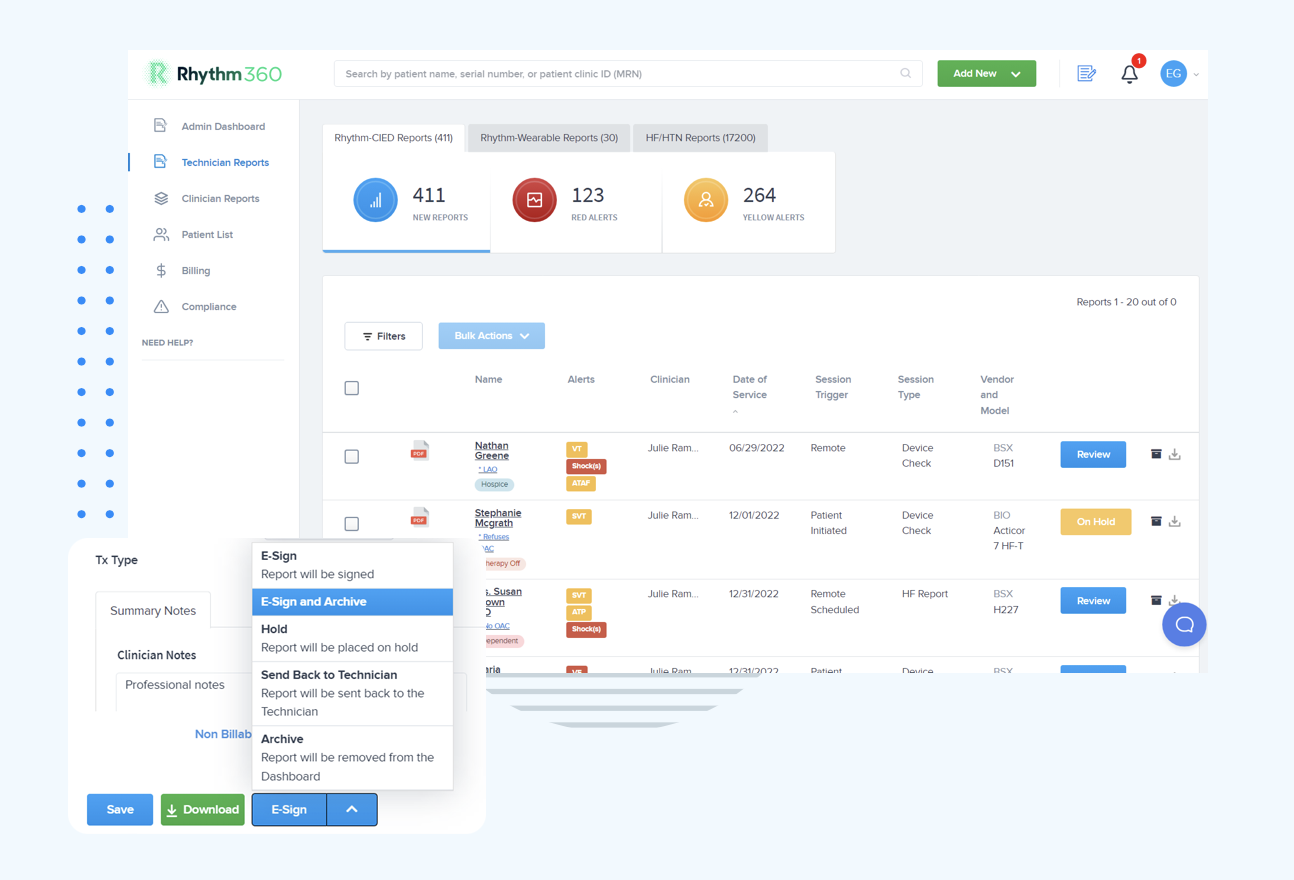
This unified approach delivers complete visibility across all cardiac devices for every patient.
Integration benefits:
- Eliminate manual portal logins and data transcription errors.
- Achieve >99.9% data transmissibility through redundant feeds.
- Standardize data formats across different OEM systems.
- Enable real-time cross-device patient monitoring.
4. Use AI Alert Triage to Capture Billable Cardiac Events
AI-powered alert triage helps clinicians focus on critical cardiac events and capture associated billable work. Alert fatigue hides urgent issues inside routine notifications and puts both patients and revenue at risk. AI systems can cut response times for critical alerts by up to 80%, which supports timely interventions and clean documentation.
Picture a Saturday morning scenario. An AI engine flags new-onset atrial fibrillation in a patient with an implantable loop recorder. The system triggers anticoagulation protocols and generates billable CPT 93298 documentation. The team may prevent a stroke while capturing revenue that often goes unbilled.
AI triage capabilities:
- Prioritize life-threatening arrhythmias and device malfunctions.
- Filter non-actionable alerts to reduce clinician fatigue.
- Automatically generate billing documentation for interventions.
- Track response times and clinical outcomes for quality metrics.
5. Connect RPM and EHR Systems with Bi-Directional Integrations
Bi-directional EHR integrations remove manual data entry and close documentation gaps that cause denials. Rhythm360 connects with Epic, Cerner, Athenahealth, eClinicalWorks, Greenway Health, and other systems via HL7. These connections keep clinical data and billing records aligned without extra clicks for your staff.
This automation reduces transcription errors and supports complete, compliant RPM documentation.
Schedule a demo to see how Rhythm360 improves revenue cycle performance for remote cardiac monitoring.
Integration essentials:
- Configure automated data mapping between RPM and EHR systems.
- Establish real-time synchronization for patient demographics and clinical data.
- Implement automated report generation and delivery workflows.
- Create audit trails for all data exchanges and modifications.
6. Track RPM Revenue with Real-Time KPI Dashboards
Real-time KPI dashboards keep your RPM revenue cycle on track and highlight issues before they erode margins. AAHAM recommends maintaining denial rates below 5% for cardiology claims. Optimized RPM programs achieve 300% revenue uplifts through accurate billing and expanded services.
| KPI Metric | Industry Benchmark | Rhythm360 Target | Revenue Impact |
|---|---|---|---|
| Denial Rate | 12-30% | <5% | Reduced revenue leakage |
| Data Capture Rate | 85-95% | >99.9% | Complete billing documentation |
| Alert Response Time | 24-48 hours | <4 hours | Improved patient outcomes |
| Revenue Per Patient | $1,200-2,400 | $3,600+ | 300% uplift potential |
7. Automate RPM Documentation and Coding Compliance
Automated documentation protects compliance and accelerates billing for cardiac RPM programs. Rhythm360 generates structured clinical reports that align with CMS requirements for RPM CPT codes. Your team spends less time on paperwork and more time on patient care.
Automation features:
- Generate time-stamped clinical reports for all patient interactions.
- Automatically calculate and document minimum data transmission requirements.
- Create audit-ready documentation for CMS compliance reviews.
- Integrate coding suggestions based on clinical findings and interventions.
8. Reduce RPM Denials and Standardize Appeals
Strong denial management turns inconsistent RPM cash flow into predictable revenue. Optimized cardiology practices reduce denial rates from 12% to 4% with prevention workflows and fast appeals. Lower denial rates directly improve cash flow and cut rework for your billing team.
Denial reduction strategies:
- Implement real-time claim scrubbing before submission.
- Establish automated appeals workflows with supporting documentation.
- Track denial patterns to identify and address root causes.
- Create specialized training programs for common RPM denial scenarios.
- Maintain detailed audit trails for all billing activities.
9. Standardize OEM-Agnostic Training for Your Team
OEM-agnostic training templates help staff work confidently across every cardiac device platform. Training separately on each OEM system slows onboarding and increases errors. Standardized, vendor-neutral workflows keep processes consistent while supporting high-quality care.
Training components:
- Develop standardized protocols for all major cardiac device types.
- Create competency assessments for RPM billing and clinical workflows.
- Establish ongoing education programs for regulatory updates.
- Implement cross-training to reduce dependency on specialized staff.
10. Grow Revenue with HF and HTN RPM Service Lines
Heart failure and hypertension RPM programs expand your revenue beyond traditional device monitoring. Cardiology practices generate over $150,000 in additional annual revenue by adding HF and HTN RPM. These programs use your existing RPM infrastructure while reaching broader chronic cardiovascular populations.
Service line expansion:
- Implement blood pressure and weight monitoring for HF and HTN patients.
- Establish protocols for RPM CPT codes 99453-99458 billing.
- Create patient education materials for chronic disease management.
- Develop clinical pathways for medication adjustments based on RPM data.
- Track outcomes metrics to demonstrate value-based care improvements.
How RCM Drives RPM Revenue Growth
Revenue cycle management converts RPM clinical activity into clean claims and reliable reimbursement. Strong RCM processes support accurate coding, minimize denials, and protect payment for every billable service. Automated workflows, real-time KPI tracking, and proactive denial management create a scalable financial engine for RPM growth.
Frequently Asked Questions
What are the top causes of RPM billing denials?
The most common RPM denial causes include insufficient data transmission days, missing patient consent documentation, incorrect CPT code selection, inadequate clinical documentation for time-based codes, and failure to meet interactive communication requirements for management codes 99457 and 99458. The 2026 updates that reduce data requirements to 2 days help address one major denial driver. Manual processes significantly increase these error rates compared to automated systems.
How can cardiology practices achieve 300% RPM revenue increases?
Cardiology practices reach 300% RPM revenue growth by combining several improvements. Automated compliance reduces denials, unified data capture surfaces previously missed billable events, and new HF and HTN service lines expand billable volume. Workflow automation lowers administrative costs, while better outcomes and engagement improve patient retention. Together, these changes typically deliver 200-400% revenue gains.
What are the key 2026 CMS updates for RPM billing?
The 2026 CMS updates introduce two new CPT codes, 99445 and 99470, and reduce data transmission requirements for initial setup billing from 16 days to 2 days. Code 99445 covers device supply for 2-15 days of data. Code 99470 covers shorter clinical management periods of 10-19 minutes. These changes make RPM billing more accessible while preserving quality standards.
How does OEM data unification reduce billing denials?
OEM data unification reduces denials by giving staff one complete, accurate record instead of multiple partial views. Teams no longer move between portals or retype data, which cuts transcription errors and delays. A single source of truth supports faster clinical decisions and complete documentation for every claim. Practices that unify OEM data often see denial rates fall from 12-30% to under 5%.
What KPIs should cardiology practices track for RPM success?
Key RPM KPIs include denial rates (target <5%), data capture rates (target >99.9%), alert response times (target <4 hours), and revenue per patient per month. Practices should also track patient engagement, clinical outcome improvements, and staff efficiency. Together, these metrics show both financial performance and clinical impact for the RPM program.
Conclusion: Turn Cardiac RPM into a Profitable Service Line
This 10-step playbook gives cardiology practices a clear path to profitable cardiac RPM. The 2026 CMS updates create new billing opportunities for teams that adopt vendor-neutral automation and strong revenue cycle management. Rhythm360 supports every step, from OEM data unification to automated documentation and denial prevention, helping leading practices reach 300% revenue gains.
Do not let manual workflows and disconnected systems cap your RPM potential. Schedule a demo today to strengthen your revenue cycle for remote patient monitoring and stay ahead in cardiac care.